
International return ticket prices for flights to Tanzania in 2027 average $950 to $1,450 for economy class from North America, $750 to $1,150 from Europe, and $650 to $950 from the Middle East during standard shoulder months, surging to $1,600 to $2,400+ during peak safari windows in July, August, and late December. The critical booking decision rests on matching your arrival airport to your regional itinerary: book Kilimanjaro International Airport (JRO) for northern circuit safaris and Kilimanjaro climbs, Abeid Amani Karume International Airport (ZNZ) for direct beach holidays, and Julius Nyerere International Airport (DAR) in Dar es Salaam for southern parks or lower baseline long-haul airfares.
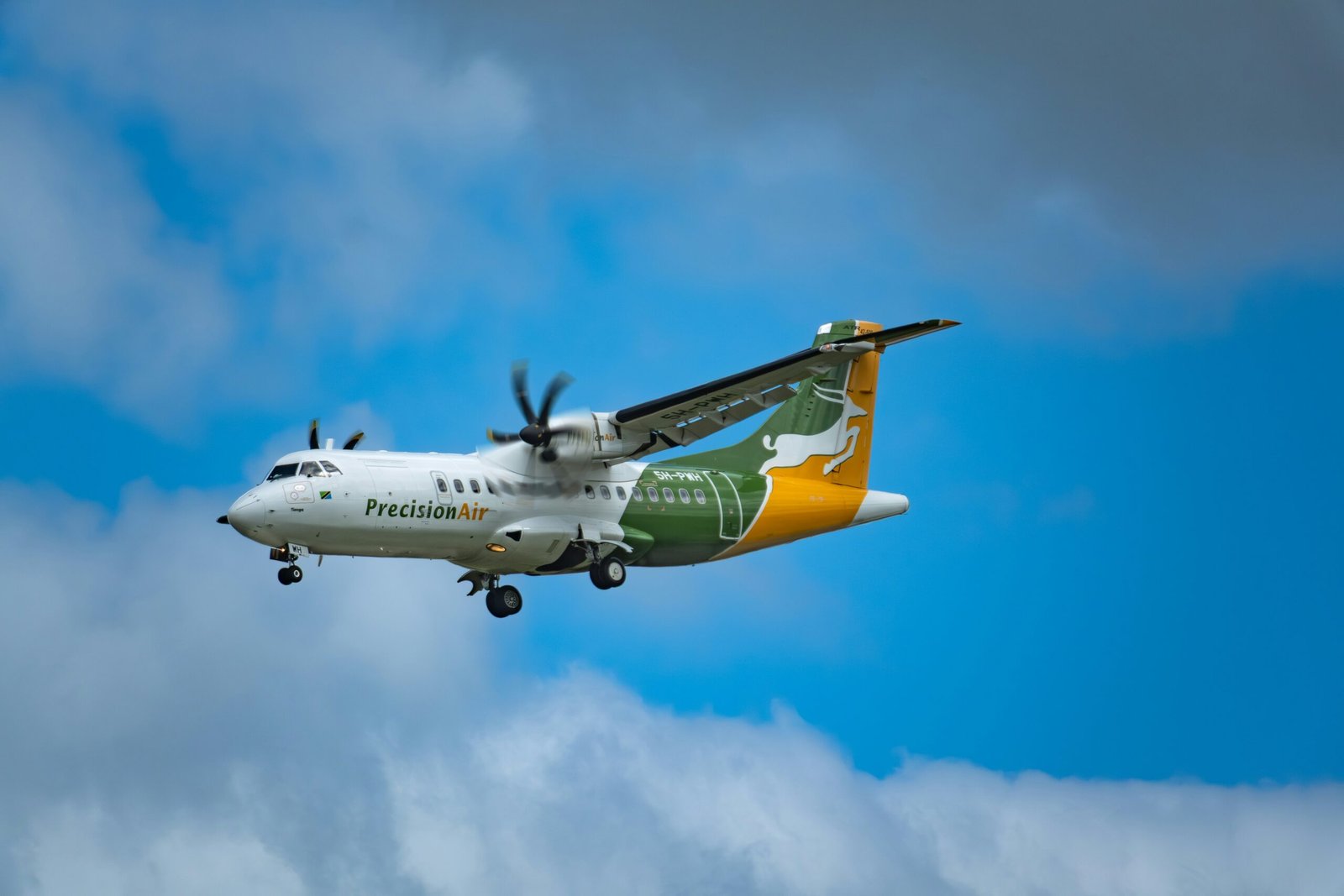

Expected 2027 Flight Ticket Prices by Region & Cabin Class
Planning international air travel into East Africa requires an unvarnished look at fare baselines. Flights to Tanzania operate under constrained long-haul capacity compared to mass-transit hubs like Nairobi or Johannesburg. For departures in 2026 and 2027, airfare models reflect elevated fuel benchmarks, revised environmental surcharges across European transfer hubs, and high seasonal demand driven by safari tourism.
A round-trip economy ticket booked six to nine months out rarely drops below $750 from Western Europe or $950 from the US East Coast, even during mid-tier shoulder months. Premium cabins experience sharp surges: business class seats to Kilimanjaro International Airport (JRO) on carriers like Qatar Airways and KLM routinely command $3,400 to $5,200 in regular months, climbing past $6,000 for July and August departures.
Baseline Budget Rule for 2027: Always cross-compare total routing costs rather than base ticket price alone. A round-trip flight arriving into Dar es Salaam (DAR) that costs $200 less than a direct ticket into Kilimanjaro (JRO) is often wiped out once you factor in an internal domestic flight ($120–$180 one way), airport taxi transfers, and an unplanned transit hotel night.
The table below summarizes projected round-trip airfare ranges for 2027 across major points of origin, categorized by cabin tier for travelers coordinating wilderness itineraries with local operators.
| Departure Region | Primary Gateway | Economy (Off-Peak / Shoulder) | Economy (Peak Safari Season) | Business Class (Average) |
|---|---|---|---|---|
| US East Coast (JFK, IAD, ATL) | JRO or DAR | $950 – $1,350 | $1,550 – $2,250 | $3,800 – $5,600 |
| US West Coast (LAX, SFO, SEA) | JRO or DAR | $1,150 – $1,550 | $1,750 – $2,450 | $4,200 – $6,200 |
| United Kingdom (LHR, LGW, MAN) | JRO or ZNZ | $750 – $1,050 | $1,250 – $1,750 | $2,800 – $4,200 |
| Western Europe (AMS, FRA, CDG) | JRO, DAR, ZNZ | $720 – $1,000 | $1,180 – $1,650 | $2,600 – $3,950 |
| Middle East (DXB, DOH) | DAR or ZNZ | $550 – $800 | $850 – $1,250 | $1,900 – $3,100 |
| Australia / NZ (SYD, MEL) | DAR or JRO | $1,450 – $1,950 | $2,100 – $2,800 | $4,600 – $6,800 |
When reviewing these figures, account for the seasonal splits in our Tanzania safari cost breakdown including park fees and accommodation. Booking your long-haul flight during expensive holiday peak periods directly inflates every other segment of your ground travel, from vehicle private charters to luxury lodge surcharges.
Choosing Your Tanzania Gateway: JRO, DAR, or ZNZ?
Choosing the wrong arrival airport is the single most frequent routing mistake international visitors make. Tanzania spans nearly one million square kilometers. Landing at Dar es Salaam when your primary objective is trekking Mount Kilimanjaro or tracking wildlife across the Serengeti adds logistical friction, unexpected costs, and lost daylight hours.
Kilimanjaro International Airport (Code: JRO)
JRO sits between the cities of Moshi (approximately 40 kilometers to the east) and Arusha (approximately 50 kilometers to the west). This is the undisputed main gateway for northern Tanzania. If your plans center on climbing Mount Kilimanjaro, Mount Meru, or taking a classic northern circuit safari through Tarangire, Lake Manyara, the Ngorongoro Crater, and the Serengeti, JRO is the correct destination.
Arriving at JRO allows you to transfer directly to your base hotel in Arusha or Moshi within 45 to 60 minutes via private vehicle transfer arranged by Top Guide Adventures. This avoids domestic connecting flights, eliminates urban traffic bottlenecks, and keeps your luggage on a single through-checked international baggage tag. Note, however, that JRO carries higher average landing fees, which airlines reflect in slightly higher retail ticket prices than Dar es Salaam.
Julius Nyerere International Airport, Dar es Salaam (Code: DAR)
Located on the central mainland coast, DAR is Tanzania’s largest and busiest international transport hub. It serves the highest volume of legacy flag carriers, freight, and long-haul connections. Consequently, flights into DAR often price $100 to $300 lower per person than flights terminating at JRO.
DAR is the logical airport if you are venturing into the southern or western wildlife sanctuaries—such as Nyerere National Park (formerly Selous), Ruaha National Park, or Katavi. It is also an efficient jumping-off point for coastal excursions to Mafia Island or historical excursions toward Bagamoyo. However, if your itinerary is purely northern wildlife, landing at DAR requires booking a separate domestic flight to Arusha Airport (ARK) or JRO, transitioning between international and domestic terminals at Terminal 3 and Terminal 2, and absorbing potential flight delays that can jeopardize morning safari departures.
Abeid Amani Karume International Airport, Zanzibar (Code: ZNZ)
Zanzibar’s international terminal has seen extensive modernization, attracting scheduled services from European charters, Middle Eastern hubs, and regional African airlines. Direct flights into ZNZ are ideal for travelers booking purely coastal retreats or those planning an “island-first” itinerary before transferring to the mainland for wilderness tracks.
If you are coordinating a combined bush-and-beach holiday—for instance, paired with our Tanzania safari packages with Serengeti, Ngorongoro, and Zanzibar—flying straight into ZNZ or utilizing an open-jaw ticket (into JRO, out of ZNZ) prevents redundant backtrack transfers through mainland hubs.
Major Airlines Serving Tanzania: Routes, Hubs, and Aircraft
International air service into Tanzania is anchored by several premier global networks, along with dependable intra-African carriers. Your choice of airline dictates not only the baseline fare, but also baggage handling policies, transit comfort, and your operational arrival time in-country.
KLM Royal Dutch Airlines
KLM remains the gold standard for travelers originating in Western Europe and North America who want frictionless access to northern Tanzania. Operating daily out of Amsterdam Airport Schiphol (AMS), KLM utilizes modern Boeing 777 and 787 Dreamliner equipment on its East African triangle route.
- Routing Pattern: AMS → JRO → DAR → AMS. The outbound aircraft lands at Kilimanjaro in the early evening (typically around 19:30 to 20:30), disembarks northern circuit passengers, continues for an hour down to Dar es Salaam, and embarks homeward-bound travelers back to Amsterdam overnight.
- Key Advantage: Smooth single-ticket connections from dozens of North American cities (New York, Chicago, Atlanta, Toronto, Houston) with one transfer in Amsterdam.
- Logistical Consideration: Evening arrivals at JRO mean your first night is strictly an overnight rest in Moshi or Arusha; safari drives or mountain briefings begin the following morning.
Qatar Airways
Operating through Hamad International Airport (DOH) in Doha, Qatar Airways provides exceptionally strong global coverage, pulling passengers from North America, Europe, Australia, and Asia. Qatar routinely operates dedicated routes direct to Kilimanjaro (JRO) and Dar es Salaam (DAR), as well as services touch-pointing Zanzibar (ZNZ).
- Service Style: Widely regarded for elite in-flight service, high reliability, and generous cabin luggage thresholds.
- Transit Experience: Doha’s streamlined transit environment makes six-to-eight-hour layovers straightforward, with day-room options inside the departure concourse.
- Arrival Timing: Daytime and mid-afternoon arrivals into JRO provide ample daylight for transfers to accommodation in the foothills of Mount Meru.
Ethiopian Airlines
As the largest aviation network on the African continent, Star Alliance member Ethiopian Airlines offers extensive schedules into all three Tanzanian gateways: JRO, DAR, and ZNZ, via its primary hub at Bole International Airport (ADD) in Addis Ababa.
- Value Proposition: Often the most competitive price point from North American gateways (Washington-Dulles, Newark, Chicago, Atlanta) and major European cities. Ticket prices routinely beat Gulf and European carriers by $150 to $350.
- Schedule Density: Operates multiple daily frequencies into Tanzania, often featuring mid-day landings that let you integrate ground transfers smoothly before sunset.
- Transit Caveat: Short layovers in Addis Ababa can occasionally run tight during peak morning connection waves; verify that transfer buffers exceed 90 minutes to ensure your checked baggage makes the connecting flight.
Turkish Airlines, Emirates, and Flydubai
Turkish Airlines routes through Istanbul (IST), serving Dar es Salaam and Zanzibar with convenient one-stop connections across wider Europe and North America. Their flights into DAR often land during late-night or early-morning windows (02:00 to 04:00), requiring pre-booked transfers and immediate hotel access for rest.
Emirates operates widebody flights directly into Dar es Salaam from Dubai International (DXB), while its sister airline Flydubai manages direct narrowbody frequencies into Zanzibar (ZNZ) and Kilimanjaro (JRO). These Gulf routes offer critical flexibility for travelers departing from Australasia, the Middle East, and central Asian departures.
Understanding High, Low, and Shoulder Season Pricing Dynamics
Airfare to Tanzania follows the country’s dual weather patterns and corresponding wildlife movements. Because safari operations rely on clear seasonal rhythms—such as dry river crossings or calving cycles—flight demand tracks these ecological windows closely.
The Long Dry Season: July to October (Peak Airfares)
This is the prime window for northern circuit game viewing and climbing Kilimanjaro under crisp, clear skies. It also coincides with summer holidays in North America and Europe. Demand outstrips supply across premier carriers.
Economy fares during July and August consistently reach $1,600 to $2,300 from North America and $1,200 to $1,700 from Europe. Seat availability in standard economy inventory classes (such as V, L, or T class) dries up as early as seven to eight months prior to departure. If you are targeting our dry-season Tanzania mid-range safari packages, book long-haul seats well ahead of local lodge cutoffs.
The Short Dry Season: January to Mid-March (Shoulder-to-Peak Airfares)
Featuring warmer temperatures, this window is world-renowned for the southern Serengeti wildebeest calving season in Ndutu, alongside optimal summit conditions on Mount Kilimanjaro. Flight demand is robust, especially from late December through early February.
Prices spike aggressively over Christmas and New Year (reaching mid-summer levels), before moderating into attractive shoulder pricing through late January and February (averaging $1,050 to $1,350 from North America). This period represents an outstanding value balance for travelers who want premium wildlife conditions without mid-summer airfare premiums.
The Long Rains: April to May (Low-Season Airfare Deals)
During the long rains, regional cloudbursts transform the landscape into lush green plains. While certain unpaved bush airstrips can become waterlogged, national parks remain open, crowd density drops dramatically, and airlines actively discount unsold capacity.
Airlines roll out promotional fares during April and May, with round-trip economy flights dropping into the $700 to $900 range from Europe and $900 to $1,150 from the United States. For travelers comfortable with daily showers and tactical game drives, this window delivers the year’s lowest overall transit expenditure.
The 2026-2027 Booking Window: When to Lock In Fares
Unlike short-haul domestic flights within Europe or the US, international flights to East Africa do not benefit from last-minute algorithmic fare cuts. As flight dates near, remaining capacity is purchased by business travelers, diplomatic personnel, and commercial film crews, driving late fares steadily upward.
Check Availability for Flights To Tanzania : Ticket Prices, Airlines & Booking Guide 2026-2027
Ready to compare dates, prices, and the best option for your group? Send the package name and travel month so the team can reply with a clear quote, availability, and what is included.

Direct Flights To Tanzania: Airlines, Airports & Ticket Prices 2026-2027
Direct Flights to Tanzania: Airlines, Airports & Ticket Prices is explained with current 2026-2027 planning, price, itinerary and booking information.
View package details
One-Way Flights To Tanzania: Prices And Airlines 2026-2027
One-Way Flights to Tanzania: Prices and Airlines is explained with current 2026-2027 planning, price, itinerary and booking information.
View package detailsCheap Flights To Tanzania: Best Airlines, Routes & Ticket Deals 2026-2027
Cheap Flights to Tanzania: Best Airlines, Routes & Ticket Deals is explained with current 2026-2027 planning, price, itinerary and booking information.
View package details
Tanzania Flight Ticket Prices In Usd: Complete Travel Guide 2026-2027
Tanzania Flight Ticket Prices in USD: Complete Travel Guide is explained with current 2026-2027 planning, price, itinerary and booking information.
View package details
How Much Are Flights To Tanzania? International Airfare Prices 2026-2027
How Much Are Flights to Tanzania? International Airfare Prices 2026–2027 is explained with current 2026-2027 planning, price, itinerary and booking.
View package detailsNo closely related package is available yet for this topic.

Our Guest Reviews, Currently Feedback from Clients in 2026
Reviews from different sources, including Google Business, Tripadvisor, other platforms, and social media.