
The best Serengeti safari tours for Big Five wildlife photography are dedicated private 4×4 mobile itineraries running 6 to 10 days, operated in modified open-sided or pop-up roof safari vehicles with guaranteed window rows, built-in beanbag mounts, and 220V in-vehicle charging. To photograph lion, leopard, elephant, buffalo, and the endangered black rhino alongside seasonal wildebeest movement, a tailored private Tanzania safari paired with the Ngorongoro Crater floor delivers the essential spatial angles, low perspective clearance, and unhurried tracking time that standard scheduled group tours cannot accommodate. For the 2026-2027 seasons, prime photographic tours range from $450 to $1,150 per person per day depending on whether you choose private mid-range wilderness tented camps or high-end mobile photography camps situated adjacent to seasonal predator corridors.


Core Criteria: What Separates a Serious Photo Safari from a Standard Tourist Drive
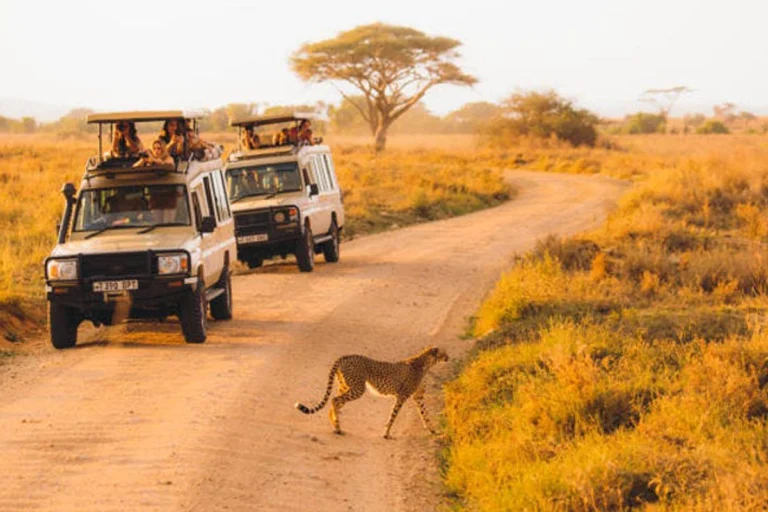
Taking exceptional wildlife images across the endless plains of the Serengeti requires fundamentally different operational decisions than general game viewing. On a conventional holiday safari, a vehicle holds six or seven passengers sharing a single elevated pop-up roof. The driver stops briefly for sightings, cuts the engine when guests point their mobile phones, and departs after five or ten minutes to satisfy a checklist of animals before lunch. For a dedicated wildlife photographer, this operational rhythm produces unusable compositions, cluttered vehicle frames, lens vibration, and missed behavior sequences.
A specialized photographic tour designed around the Big Five (lion, leopard, African elephant, Cape buffalo, and black rhino) prioritizes position over speed. Your driver-guide must understand how light strikes an animal’s eye, anticipate predatory hunting vectors, and park the Land Cruiser relative to the sun azimuth, background clutter, and expected animal trajectory. Rather than racing between sightings, photo safaris spend hours parked beside a single granite kopje waiting for an apex predator to stretch, yawn, groom, and hunt during golden-hour light.
The Core Difference: Serious wildlife photography requires absolute control over time, vehicle positioning, and hatch space. In standard group-joining safaris, if three guests wish to move on while two photographers want to wait 90 minutes for a leopard to descend an acacia limb, someone leaves disappointed. True photographic packages require maximums of two to three photographers per extended vehicle, ensuring everyone has both an entire row of seats and simultaneous access to left, right, and top shooting angles.
Planning a Big Five portfolio expedition for 2026-2027 means matching park permits, camp logistics, and seasonal wildlife density. While lions, elephants, and Cape buffalo are consistently abundant across multiple habitats, leopards require riverine knowledge, and black rhinos demand specific logistical detours into the Moru Kopjes or down into the floor of the nearby caldera on a combined Tanzania wildlife safari covering Serengeti and Ngorongoro. Without an itinerary engineered specifically for dynamic focal lengths and long-wait field sessions, you risk returning with snapshots rather than gallery-grade prints.
The Serengeti Big Five Photography Breakdown: Species, Angles, and Focal Lengths
Photographing the Big Five within Serengeti National Park and its surrounding ecosystems presents completely distinct optical and behavioral challenges. Each species inhabits different ecological niches, reacts uniquely to vehicle proximity, and requires tailored optical equipment to capture cleanly.
1. Lion (Panthera leo) — Drama, Kopjes, and Pride Interactions
The Serengeti hosts Africa’s densest concentration of lions, numbering well over 3,000 individuals. From a photographic perspective, their behavior changes dramatically across the day. Midday light flattens their tawny coats and leaves them resting motionless under dense brush, which ruins clean composition.
- Key Habitats: Central Seronera Valley, Gol Kopjes, Maasai Kopjes, and the Simba Kopje outcrops.
- Visual Highlights: Lions elevated atop weathered granite boulders, pride cubs interacting at dawn, and coordinated pack ambushes along seasonal river courses.
- Focal Length Recommendations: 70-200mm f/2.8 for wide-angle environmental portraits placing the lion against vast skies; 400mm to 600mm for intimate behavioral portraits and eye contact.
- Shooting Challenge: Mitigating heat shimmer (convection currents) over the open savannah during late morning drives. Getting low in the vehicle early in the day is critical before ground heat rises.
2. African Leopard (Panthera pardus) — Canopy Contrasts and Foliage Obstructions
Leopards thrive in the riverine belts of the Central and Western Serengeti, particularly along the Seronera, Retima, and Grumeti rivers. Unlike lions, leopards spend substantial daytime hours draped over branches of sausage trees (Kigelia africana) and yellow-barked fever acacias.
- Visual Highlights: Leopards hoisting or guarding kills in tree canopies, downward stalking sequences down rough bark trunks, and nocturnal transitions into dusk light.
- Focal Length Recommendations: 500mm or 600mm prime lenses, paired with high-ISO camera sensors capable of handling dense shade within forest canopies.
- Shooting Challenge: Harsh dynamic range. Bright equatorial sunlight piercing tree canopies creates mottled, zebra-pattern shadows across the leopard’s rosettes. You must expose for highlights or use multi-point evaluative metering alongside low-angle fill lighting from horizon dawns.
3. African Bush Elephant (Loxodonta africana) — Textures, Scale, and Dust Baths
Serengeti elephants are massive, dramatic subjects whose weathered skin, amber tusk textures, and collective herd dynamics make for compelling black-and-white or high-contrast imagery. Herds are prominent in northern Kogatende, Seronera, and the woodlands surrounding Lobo.
- Visual Highlights: Massive breeding herds trailing through golden grass, playful juvenile mud wallowing at oxbow waterholes, and atmospheric red-dust scattering back-lit by low afternoon sun.
- Focal Length Recommendations: 24-70mm f/2.8 or 100-400mm zoom. Elephants often approach within ten meters of stationery vehicles, meaning long prime lenses will crop their trunks and feet entirely out of the frame.
- Shooting Challenge: Framing scale without perspective distortion. When close to large bulls, high shooting angles from the vehicle roof foreshorten their bodies awkwardly. Drop to the side window line for a true, ground-hugging sense of towering mass.
4. Cape Buffalo (Syncerus caffer) — Dark Hides and Aggressive Portraits
Cape buffalo present an exposure challenge: deep black coats situated under bright savannah light. Flocks of red-billed and yellow-billed oxpeckers perched on their horns add exceptional narrative value to portraits.
- Visual Highlights: Head-on portraits of mud-caked “dagga boys” (solitary older bulls), sweeping wide shots of 500-strong herds churning up dust storms, and oxpecker interaction.
- Focal Length Recommendations: 300mm to 500mm at wide apertures (f/2.8 to f/4) to separate the buffalo’s dark silhouette from chaotic background brush.
- Shooting Challenge: Dynamic range clipping. Metering on the buffalo’s eye often blows out the golden background grass completely. Spot metering combined with bracketed RAW capture is vital during extreme midday contrasts.
5. Eastern Black Rhinoceros (Diceros bicornis michaeli) — Distance and Rare Encounters
The black rhino is the rarest and most difficult Big Five member to photograph in the Serengeti. Decimated by historical poaching, the remaining indigenous population is strictly protected and concentrates around the rugged Moru Kopjes in south-central Serengeti, managed under high-security TANAPA anti-poaching surveillance.
- Visual Highlights: Prehistoric head profiles against sweeping savannah, solitary foraging among low-lying scrub, and early-morning misty portraits.
- Focal Length Recommendations: 600mm f/4 to 800mm (or 600mm paired with 1.4x teleconverters). Vehicles cannot leave designated tracks in the Moru rhino sanctuary, which means rhinos are frequently 150 to 400 meters distant.
- The Strategic Workaround: Because black rhino photography in the Serengeti proper is often constrained by distance and off-road driving bans, high-success photographic itineraries pair the Serengeti with one or two dedicated dawn descents into the nearby Ngorongoro Crater floor. In Ngorongoro, habituated black rhinos regularly graze open alkaline plains near park roads, permitting crisp, fill-the-frame compositions at 400-600mm.
Custom Safari Vehicle Rigging: Mounts, Beanbags, and Eye-Level Perspectives
Your photographic platform is the 4×4 vehicle itself. If a safari operator provides a standard passenger minivan or an unaltered commercial safari cruiser, your ability to capture gallery-quality imagery plummets. When evaluating photographic packages for 2026-2027, specific mechanical and interior modifications dictate your workflow.
| Vehicle Feature | Standard Tour Vehicle | Dedicated Photo Safari Land Cruiser | Photographic Advantage |
|---|---|---|---|
| Passenger Density | 6 to 8 travelers across all rows | Maximum 2 to 3 photographers | Unobstructed 360-degree shooting angles; rapid side-to-side transitions |
| Window Openings | Fixed sliding glass; narrow vertical slit | Drop-down canvas sides or completely removed glass panes | Shoots at ground level; zero glare or glass refraction distortions |
| Support Systems | No mounting fixtures provided | Heavy-fill canvas beanbags; custom Gimbal / Arca-Swiss plate clamps | Eliminates camera shake with heavy 400mm-600mm lenses at slow shutter speeds |
| In-Vehicle Power | 1x 12V dashboard cigarette socket | 220V inverter outlets and multi-gang strips at every seat | Simultaneous charging of multi-bay camera batteries, laptops, and field drives |
| Roof Configuration | Standard push-up canopy with support bars blocking side angles | Roll-back canvas roof or cantilever pop-top with unobstructed rail lines | Clean upward panning when birds in flight or tree-dwelling leopards ascend |
A major photographic mistake is resting heavy optical equipment directly on vibrating metal or timber rails while the engine is running. Professional photography guides instinctively shut off the diesel engine the second the vehicle reaches its shooting position, preventing low-frequency hull vibrations from introducing micro-blur into long exposures. For moving tracking shots, clamp mounts using ballheads or gimbal setups on horizontal vehicle bars provide effortless pan-and-tilt tracking without fatigue.
Equally critical is the ability to drop down to the lowest possible vantage point. Shooting from the standard elevated pop-top roof provides an unnaturally high downward perspective. This perspective flattens depth, exposes unsightly bare ground beneath your subject, and distances the viewer from the animal’s world. To create visceral, emotionally compelling wildlife portraits, you need a vehicle that lets you shoot directly out of the open passenger window line or down near wheel level, looking slightly upward into the eyes of a lion or elephant.
Geographic Photography Sectors: Central Seronera, Northern Mara River, and Southern Plains
The Serengeti encompasses roughly 14,763 square kilometers of continuous savanna, woodland, and rocky kopjes. Understanding the geographic distribution of Big Five species across this vast ecosystem is vital when booking safari tours for 2026-2027, as seasonal animal movement shifts photographic opportunities hundreds of kilometers across the park.
The table below summarizes how each sector matches specific Big Five photography goals, tracking difficulty, and recommended seasonal windows:
| Serengeti Sector | Primary Big Five Targets | Photographic Strengths | Trade-offs & Challenges | Prime 2026-2027 Months |
|---|---|---|---|---|
| Central Seronera Valley | Lion, Leopard, Elephant, Cape Buffalo | Extremely high resident predator density; classic acacia backdrops | High vehicle volume around prime leopard sightings; busy transit corridors | Year-round (Exceptional June-October & January-March) |
| Moru Kopjes & South | Black Rhino, Lion, Cheetah, Buffalo | Only territory in Serengeti proper housing resident black rhinos; dramatic granite rock forms | Strict off-track driving rules; rhinos frequently stay at long optical distances | December to April (Aligns with southern calving herds) |
| Northern Kogatende & Mara | Lion, Elephant, Leopard, Buffalo | Dynamic river landscapes; dramatic predator-prey ambushes along river banks | Black rhinos are essentially absent; long transfer flight or rugged drive to reach | July to October (Great Migration river crossings) |
| Western Corridor (Grumeti) | Elephant, Lion, Giant Nile Crocodiles, Buffalo | Lush riverine forests; rare colobus monkeys; massive elephant gatherings | Dense vegetation can complicate clean focus; tsetse flies prominent in thicker scrub | May to July |
| Ngorongoro Crater Floor (Add-on) | Black Rhino, Lion, Cape Buffalo, Elephant | Virtually guaranteed black rhino sightings in open short grass; 600m caldera rim backdrop | Strict 6-hour permit limits; high tourist traffic; fixed conservation tracks | Year-round (Best November-May for green caldera floors) |
Central Seronera: The Predator Heartbeat
If your photographic goal is capturing apex feline behavior, the Central Seronera is your mandatory base. Fed by permanent water tables, this network of rivers supports dense year-round concentrations of herbivores, maintaining dozens of resident lion prides and high leopard populations. Solitary granite kopjes rise out of the yellow grass plains, providing iconic perches where lions survey the landscape. However, because Seronera is centrally located, it experiences the highest safari vehicle density. Professional photographers overcome this by leaving camp at 05:45 AM—reaching prime kopjes well before standard lodge convoys arrive—and staying out with packed bush breakfasts until mid-afternoon light fades.
Northern Serengeti (Kogatende & Lamai Wedge): Raw Action and Herd Chaos
Running up to the border of Kenya’s Maasai Mara, the Northern Serengeti transforms between July and October into a theatre of survival. Massive columns of wildebeest and zebra plunge into crocodile-filled river waters, while riverbank lion prides position themselves for explosive ambushes. Elephants roam the rolling hills in large, stable family units. While the northern sector does not reliably produce black rhino sightings, the sheer physical drama of predator-prey combat along the Mara River delivers action photography that central plains cannot replicate.
For travelers organizing bespoke travel logistics, understanding how accommodation pricing, transit permits, and regional flight strips match up is essential. Reviewing detailed breakdown models on how much a private Serengeti safari costs for two people helps establish realistic baseline budgets before committing to specific lodge bases.
Lighting, Weather, and Seasonal Timelines for 2026-2027
Light is the currency of wildlife photography. Positioned between 1 and 3 degrees south of the equator, the Serengeti experiences rapid twilight transitions. The golden hour is intense, brief, and unforgiving: the soft, warm horizontal sun typically lasts only 40 to 50 minutes after dawn and roughly 45 minutes before dusk.
Field Rules for Equatorial Light Management
- Dawn Apertures (06:00 – 07:15): Shoot wide open (f/2.8 to f/4) at elevated ISO settings (1600 to 6400) to maintain minimum shutter speeds of 1/1000s for active predators.
- Midday Heat Shimmer Mitigation (10:30 – 15:30): Atmospheric heat shimmer over the open plains renders optical captures beyond 150 meters soft, regardless of lens quality. Shift shooting priorities to close-range woodland subjects, detailed macro textures, or shaded riverine birds during these hours.
- Late Afternoon Backlighting (16:30 – 18:30): Position your vehicle with the setting sun directly behind dust-kicking herds or running predators to create rim-lit halos and silhouettes.
- Night Sky Integration: If camping in private wilderness reserves or mobile tented camps, bring ultra-wide lenses (14-24mm f/2.8) to capture the Milky Way towering over solitary acacia trees and sleeping vehicle silhouettes.
Weather patterns also dictate photographic mood across 2026 and 2027. The dry season from June to October provides crisp skies, thinned vegetation that exposes hunting predators, and reliable waterhole action. Conversely, the “green season” from January to March paints the southern plains of Ndutu with lush green grass, bringing tens of thousands of calving wildebeest, intense big cat chases, minimal airborne dust, and dynamic cloud formations that elevate wide-angle landscape compositions.
For photographers navigating between seasons or combining wild savannah photography with coastal locations, reviewing our specialized guides on Tanzania safari packages including Serengeti, Tarangire, and Ngorongoro clarifies how varying national park weather patterns interact throughout the year.
Essential Camera Gear, Focal Ranges, and Field Power Management
Choosing an optical and camera setup for an African photographic expedition requires balancing focal reach, mobility, and airline baggage constraints. On regional bush flights connecting Kilimanjaro Airport (JRO) or Arusha Airport (ARK) to Serengeti airstrips (such as Seronera SEU or Kogatende KOT), strict aviation limits enforce a 15 kg (33 lbs) to 20 kg total baggage allowance in soft-sided duffel bags, including photography hardware.
Check Availability for Best Serengeti Safari Tours For Big Five Wildlife Photography 2026-2027
Ready to compare dates, prices, and the best option for your group? Send the package name and travel month so the team can reply with a clear quote, availability, and what is included.
Best Southern Serengeti Safari Tours For February Wildlife Photography
Best Southern Serengeti Safari Tours for February Wildlife Photography is explained with current 2026-2027 planning, price, itinerary and booking information.
View package details
Can A Serengeti Safari Guide Guarantee A River Crossing Sighting? 2026-2027
A detailed travel planning assessment clarifying why no ethical safari guide can guarantee a wildebeest river crossing in the Serengeti, detailing herd dynamics, crossing points, and field...
View package details
Can I Book A Serengeti Safari With A Hot Air Balloon Experience? 2026-2027
Can I Book a Serengeti Safari with a Hot Air Balloon Experience? is explained with current 2026-2027 planning, price, itinerary and booking information.
View package details
Is Ngorongoro Crater Better Than Serengeti For A Short Safari? 2026-2027
Is Ngorongoro Crater Better Than Serengeti for a Short Safari? is explained with current 2026-2027 planning, price, itinerary and booking information.
View package details
Best Serengeti Safari Camps For Couples And Honeymooners 2026-2027
Best Serengeti Safari Camps for Couples and Honeymooners is explained with current 2026-2027 planning, price, itinerary and booking information.
View package details
Best Serengeti Safari Packages With Two Nights Inside The Park 2026-2027
Best Serengeti Safari Packages with Two Nights Inside the Park is explained with current 2026-2027 planning, price, itinerary and booking information.
View package details
Central Serengeti Vs Northern Which Is Better For Safari? 2026-2027
Central Serengeti vs Northern Serengeti: Which Is Better for Safari? is explained with current 2026-2027 planning, price, itinerary and booking information.
View package details6 Day Ndutu Serengeti And Ngorongoro Safari With Private Guide 2026-2027
6 Day Ndutu Serengeti and Ngorongoro Safari with Private Guide is explained with current 2026-2027 planning, price, itinerary and booking information.
View package details
5 Day Ndutu And Serengeti Calving Season Safari Packages 2026-2027
5 Day Ndutu and Serengeti Calving Season Safari Packages is explained with current 2026-2027 planning, price, itinerary and booking information.
View package details
4 Day Southern Serengeti Migration Safari With Tented Accommodation 2026-2027
4 Day Southern Serengeti Migration Safari with Tented Accommodation is explained with current 2026-2027 planning, price, itinerary and booking information.
View package details
Best Serengeti Safari Camps Close To Wildebeest Migration Areas 2026-2027
Best Serengeti Safari Camps Close to Wildebeest Migration Areas is explained with current 2026-2027 planning, price, itinerary and booking information.
View package details
6 Day Northern Serengeti Migration Safari With Luxury Tented Camps 2026-2027
6 Day Northern Serengeti Migration Safari with Luxury Tented Camps is explained with current 2026-2027 planning, price, itinerary and booking information.
View package detailsNo closely related package is available yet for this topic.

Our Guest Reviews, Currently Feedback from Clients in 2026
Reviews from different sources, including Google Business, Tripadvisor, other platforms, and social media.



