
The best Serengeti Mara River crossing safari tours in August are 4- to 8-day itineraries centered directly in the Northern Serengeti (Kogatende and Lamai Wedge), accessed either via a direct bush flight into Kogatende Airstrip or an extended overland route through Central Serengeti. In August, roughly 1.5 million wildebeest and zebras mass along the banks of the Mara River to plunge across crocodile-filled rapids into the northern pastures; experiencing this spectacle reliably requires staying within 20 to 45 minutes of active crossing points (Points 1 through 10) in a dedicated 4×4 vehicle with an experienced local guide. Mid-range safari packages for August 2026-2027 run between $550 and $850 per person per day, while premier luxury mobile tented camps range from $1,100 to $2,200+ per person per day. The single most critical decision travelers face is choosing between a high-efficiency fly-in safari directly into Kogatende or a slower, multi-day overland drive from Arusha that splits time with Seronera and the Ngorongoro Crater.
Understanding August Mara River Crossings: Great Migration Mechanics
August represents the undisputed zenith of the Great Migration river crossings in Tanzania. By late July, the mega-herds have exhausted the dry, overgrazed pastures of the Western Corridor and the Central Serengeti, pushing relentlessly northward toward the permanent waters of the Mara River basin. Unlike the Grumeti River crossings in June—which are brief, seasonal, and often hindered by low water levels—the Mara River is a deep, fast-flowing waterway flanked by steep, eroded dirt embankments and populated by apex Nile crocodiles.
For travelers booking Tanzania wildlife safari expeditions in 2026 and 2027, timing your arrival for August gives you the highest statistical probability of witnessing multiple river crossings. However, understanding the biological reality of this movement is essential. The herds do not simply cross the river once and remain quietly in Kenya’s Maasai Mara. Instead, they oscillate back and forth between Tanzania’s Kogatende/Lamai regions and the Kenyan border for weeks, driven by localized rain clouds, grass quality, and sheer herd panic.
Why August Stands Out from July and September
July marks the arrival phase. The front-runners of the migration—often large, skittish herds of plains zebras followed by dense columns of blue wildebeest—reach the southern perimeter of the river around mid to late July. During this transition, river crossings are erratic. Some herds will pause on the southern banks for three to four days without drinking or crossing, paralyzed by the scent of predators and steep drop-offs.
By August, the full mass of the migration has arrived. Tens of thousands of animals gather in concentrated pockets between the Bologonja springs, Wogakuria kopjes, and the Mara River escarpment. The pressure of numbers forces the animals into explosive movements. If one panicked zebra leaps off a 10-foot embankment into the brown water, the herd instinct triggers an unstoppable cascade: hundreds, sometimes thousands, of animals leap simultaneously in a thundering cloud of red dust, grunting bellows, and splashing foam.
September remains a solid month for crossings, but herd density begins to fragment. In September, large portions of the herds have already pushed deep into the Mara Triangle in Kenya or settled in the northern Lamai Wedge, meaning your driver-guide must cover significantly longer distances to pinpoint active crossings. August concentrates the greatest number of animals squarely along the Tanzanian side of the river banks.
The Anatomy of a Crossing: Herd Dynamics, False Starts, and River Bank Tension
Witnessing a Mara River crossing requires rewiring your safari expectations. This is not an experience of passive cruising; it is a waiting game of intense tension and psychological buildup. A typical morning along the river unfolds with disciplined observation:
- The Staging Phase (07:30 to 10:30): Herds move down from the elevated ridge-lines and open red oat-grass plains toward the riverbanks. They graze erratically, eyes darting toward the treeline. Experienced guides position vehicles on designated high-ground tracks, observing the dust trails through binoculars without crowding the riverbank.
- The Standoff (10:30 to 13:00): The animals gather at the lip of a crossing point. They may stand shoulder-to-shoulder for two or three hours. A single herd member will cautiously step down the dirt incline, take two sips of water, catch the silhouette of a floating crocodile or hear a rustle in the riverine bush, and bolt back up the slope. This false start often sends the entire group running 300 meters back into the grassland.
- The Push (13:00 to 16:00): As the midday heat intensifies and thousands more wildebeest press from the rear, the pressure becomes unbearable. A brave matriarch or a determined stallion commits to the plunge. Once the first twenty animals hit the water and gain swimming momentum, the river erupts into a frenzied river crossing that can last anywhere from six minutes to more than an hour.
Safari travelers who fail to secure a knowledgeable local guide often demand to drive right down to the water’s edge while the herds are staging. Doing so invariably spooks the lead animals, breaking the herd formation and ruining the crossing for every vehicle in the valley. Professional operations respect Tanzania National Parks (TANAPA) regulations, which mandate keeping a 100-meter buffer from the bank until the crossing is fully underway.
Field Rule for Northern Serengeti Crossings: Never pressure your driver-guide to leave the staging area early. Professional guides coordinate quietly over low-frequency radio channels to monitor crossing points 1 through 10. When a herd genuinely commits, your driver will safely navigate to the bank view-line. Patience is the single highest-value commodity on an August Mara safari.
Tour Styles Compared: Fly-in Safaris vs. Overland Bush Circuits
The vast geographic scale of the Serengeti National Park (nearly 15,000 square kilometers) means that simply getting to the Mara River is a major logistical undertaking. The river sits at the extreme northern apex of the park, directly bordering Kenya. When choosing between the best Serengeti Mara River crossing safari tours in August, your core routing decision lies between an efficient fly-in safari and an overland expedition starting from Arusha.
Direct Fly-in Safaris via Kogatende Airstrip (Fast Access & High Wildlife Hours)
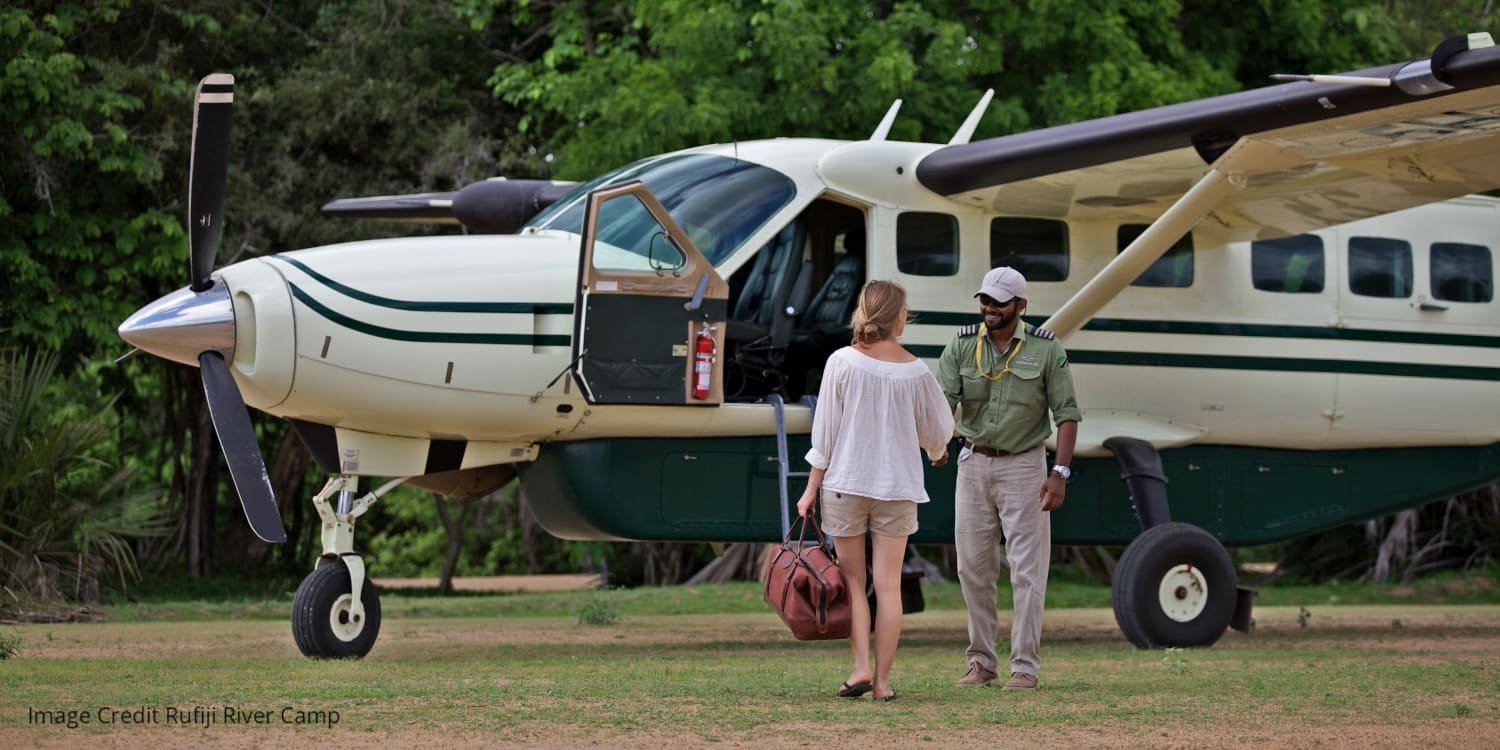
Fly-in safaris use scheduled light bush aircraft (typically Cessna Grand Caravans operated by Coastal Aviation, Auric Air, or Regional Air) departing from Arusha Airport (ARK), Kilimanjaro International Airport (JBO/JRO), or Zanzibar (ZNZ). You land directly at Kogatende Airstrip (IATA: KOG), which sits right in the heart of the northern crossing ecosystem.
The flight from Arusha takes approximately 1 hour and 45 minutes, flying past the volcanic peaks of the Great Rift Valley, Ngorongoro Highlands, and the endless plains of Seronera before landing on Kogatende’s packed-gravel runway. Within 20 minutes of touchdown, you are met by your private 4×4 safari cruiser and guide, immediately starting your game drive along the Wogakuria ridges and riverbanks.
Who it suits: Travelers with limited vacation windows (4 to 6 days), families with younger children or senior travelers who wish to avoid 8 to 10 hours of bone-jarring corrugations on dirt roads, and dedicated wildlife photographers who want to maximize every possible hour parked near river crossing lines. For luxury travelers, our 5-day Serengeti luxury tented camp packages utilize this fly-in model to cut down fatigue and maximize riverbank positioning.
The Trade-offs: Bush flights enforce strict luggage restrictions: exactly 15 kilograms (33 lbs) per passenger in soft-sided duffel bags, including hand luggage and camera gear. Hard suitcases with rigid frames or wheels are routinely rejected at Arusha and Zanzibar check-in desks. Additionally, charter or bush flights add $300 to $450 per person per flight leg to your overall tour price.
Overland Drive Circuits from Arusha via Central Serengeti (Seronera)
An overland safari drives through the Northern Safari Circuit. Departing Arusha, the vehicle covers paved roads to Karatu, traverses the Ngorongoro Conservation Area, enters Southern Serengeti via Naabi Hill Gate, and continues through Central Serengeti (Seronera) before grinding another 4 to 6 hours north across the Bologonja or Lobo sectors to reach Kogatende.
This route cannot be done safely or enjoyably in a single day. A properly structured overland migration safari requires at least 6 to 8 days, typically staying one or two nights in Central Serengeti to explore the big cat populations of the Seronera Valley before spending three nights in the far north at Kogatende, then returning via the Ngorongoro Crater floor.
Who it suits: Travelers who want the full, classic East African overland journey, groups seeking lower per-person transport costs, and visitors who want to contrast the dense resident lion, leopard, and cheetah populations of Central Serengeti with the raw migratory chaos of the northern river ecosystem. Exploring this circuit with a mid-range Serengeti and Ngorongoro package is the most cost-effective way to combine multiple ecosystems into one journey.
The Trade-offs: Extended drive times. The drive from Central Serengeti to Kogatende covers roughly 120 to 140 kilometers of washboard gravel roads that can rattle passengers and turn dusty or muddy depending on mountain runoffs. You lose almost two half-days purely to transit driving rather than dedicated riverbank surveillance.
| Factor | Direct Fly-In Safari (Kogatende) | Overland Drive Circuit (Arusha – Central – North) |
|---|---|---|
| Transit Time to River | 1 hr 45 min flight from Arusha | 2 to 3 days of progressive driving stages |
| Luggage Limits | Strict 15 kg (33 lbs) in soft duffels | Flexible (up to vehicle capacity, ~20-25 kg) |
| Minimum Ideal Days | 4 to 5 Days | 6 to 8 Days |
| Road Fatigue Level | Low (only local game tracks around river) | Moderate to High (hundreds of km on rough dirt) |
| Multi-Park Diversity | Focused almost exclusively on Northern Serengeti | Includes Lake Manyara/Tarangire, Central Serengeti, Ngorongoro |
| 2026-2027 Cost Range | Higher ($750 – $1,800+ p/p/day including airfare) | Moderate ($500 – $950+ p/p/day split over group) |
| Best Suited For | Time-pressed travelers, photographers, luxury seekers | First-timers wanting comprehensive multi-park coverage |
2026-2027 Cost Breakdown: What You Pay for an August Mara River Safari
Planning for the 2026 and 2027 migration seasons requires facing cold commercial realities: August is the single most expensive, highest-demand month in the Tanzanian safari calendar. Operating in the remote Northern Serengeti incurs massive logistical overhead for operators. Every liter of diesel, fresh cabbage, cut of meat, clean bedsheet, and drinking water bottle must be trucked 12 hours over unforgiving roads from Arusha or flown in via cargo charters.
Check Availability for Best Serengeti Mara River Crossing Safari Tours In August 2026-2027
Ready to compare dates, prices, and the best option for your group? Send the package name and travel month so the team can reply with a clear quote, availability, and what is included.

Can A Serengeti Safari Guide Guarantee A River Crossing Sighting? 2026-2027
A detailed travel planning assessment clarifying why no ethical safari guide can guarantee a wildebeest river crossing in the Serengeti, detailing herd dynamics, crossing points, and field...
View package details
Northern Serengeti Migration Safari With Accommodation Near Mara River
Northern Serengeti Migration Safari with Accommodation Near Mara River is explained with current 2026-2027 planning, price, itinerary and booking information.
View package details
4 Day Southern Serengeti Migration Safari With Tented Accommodation 2026-2027
4 Day Southern Serengeti Migration Safari with Tented Accommodation is explained with current 2026-2027 planning, price, itinerary and booking information.
View package details
Best Serengeti Safari Camps Close To Wildebeest Migration Areas 2026-2027
Best Serengeti Safari Camps Close to Wildebeest Migration Areas is explained with current 2026-2027 planning, price, itinerary and booking information.
View package details
6 Day Northern Serengeti Migration Safari With Luxury Tented Camps 2026-2027
6 Day Northern Serengeti Migration Safari with Luxury Tented Camps is explained with current 2026-2027 planning, price, itinerary and booking information.
View package details
Private Serengeti Migration Safari With Flexible Game Drive Schedules
Private Serengeti Migration Safari with Flexible Game Drive Schedules is explained with current 2026-2027 planning, price, itinerary and booking information.
View package details
Can I See The Great Migration During A 3 Day Serengeti Safari? 2026-2027
Can I See the Great Migration During a 3 Day Serengeti Safari? is explained with current 2026-2027 planning, price, itinerary and booking information.
View package details
Can I Book A Serengeti Safari With A Hot Air Balloon Experience? 2026-2027
Can I Book a Serengeti Safari with a Hot Air Balloon Experience? is explained with current 2026-2027 planning, price, itinerary and booking information.
View package details
Is Ngorongoro Crater Better Than Serengeti For A Short Safari? 2026-2027
Is Ngorongoro Crater Better Than Serengeti for a Short Safari? is explained with current 2026-2027 planning, price, itinerary and booking information.
View package details
Best Serengeti Safari Camps For Couples And Honeymooners 2026-2027
Best Serengeti Safari Camps for Couples and Honeymooners is explained with current 2026-2027 planning, price, itinerary and booking information.
View package details
Best Serengeti Safari Packages With Two Nights Inside The Park 2026-2027
Best Serengeti Safari Packages with Two Nights Inside the Park is explained with current 2026-2027 planning, price, itinerary and booking information.
View package details
Central Serengeti Vs Northern Which Is Better For Safari? 2026-2027
Central Serengeti vs Northern Serengeti: Which Is Better for Safari? is explained with current 2026-2027 planning, price, itinerary and booking information.
View package detailsNo closely related package is available yet for this topic.

Our Guest Reviews, Currently Feedback from Clients in 2026
Reviews from different sources, including Google Business, Tripadvisor, other platforms, and social media.



