
Yes, you can see the Great Migration during a 3 day Serengeti safari, but only if your entry point matches the exact seasonal location of the herds or if you book a fly-in bush flight directly to the active sector. Because overland transit from Arusha takes 7 to 9 hours each way across the Ngorongoro Conservation Area, an overland 3-day itinerary only offers realistic migration viewing when the mega-herds occupy the southern short-grass plains between January and March or transit through Central Seronera between April and June; tracking the Northern Serengeti river crossings from July to October requires flying straight into Kogatende or Lamai Airstrip.
The Operational Reality: Time, Transit, and Herd Positions
Planning a Tanzania Great Migration safari around a strict 3-day window introduces sharp logistical boundaries. The Serengeti ecosystem covers nearly 15,000 square kilometers, and the two million wildebeest, zebras, and gazelles comprising the migration do not gather in one permanent location. Instead, they follow an annual, rain-driven circular route that stretches from the southern border of Ngorongoro up to Kenya’s Maasai Mara.
When travelers ask whether a 3-day timeframe is sufficient, the honest answer depends entirely on your transport mechanism and the calendar month. On an overland safari starting in Arusha or Moshi, the vehicle must cross roughly 280 to 330 kilometers of mixed paved highway and corrugated volcanic dirt road just to reach the central valley of Seronera. That transit consumes 7 to 9 hours of your first day, and returning to Arusha requires the same 7 to 9 hours on day three. That leaves roughly 24 to 28 hours of pure wilderness time in the park.
Consequently, if the herds are grazing in the Northern Serengeti near the Mara River—a transit distance of 12 to 14 driving hours from Arusha—it is physically impossible to reach them, watch a river crossing, and return to Arusha on an overland 3-day circuit. Attempting that driving itinerary results in 22 hours spent staring at corrugated dirt tracks through a car window, arriving after gate closure, and leaving before the animals begin moving. To experience the northern river crossings during a compact 72-hour holiday in 2026-2027, your only functional choice is booking a domestic scheduled flight from Kilimanjaro International Airport (JRO), Arusha Airport (ARK), or Zanzibar (ZNZ) directly into a northern airstrip.
Conversely, if your travel falls between January and March during the synchronized calving season in Ndutu and Kusini, the Southern Serengeti sits directly alongside the western boundary of the Ngorongoro Conservation Area. This positioning cuts transfer times significantly, making an overland 3-day trip genuinely productive. Understanding this physical geography prevents unrealistic expectations and ensures you match your safari design to what the land and logistics allow.
Fly-in Bush Flights vs. Overland Driving: The Decisive Choice
The core decision point for a 3-day Serengeti migration trip is choosing between a 4×4 overland safari and a fly-in bush flight package. Neither approach is inherently superior; rather, each serves distinct priorities regarding budget, physical stamina, and seasonal timing.
Key Deciding Factor: If you are traveling between July and October and your primary dream is witnessing dramatic Mara River crossings, eliminate overland driving entirely. A scheduled domestic flight on carriers such as Coastal Aviation or Auric Air lands you at Kogatende Airstrip in approximately 50 minutes from Arusha or 2 hours from Zanzibar, converting 16 hours of grueling transit into active wildlife viewing.
Overland driving remains the most budget-conscious method. It provides an overland cross-section of northern Tanzania, climbing the Great Rift Valley escarpment, circling the rim of the Ngorongoro Crater, and descending into the boundless plains. However, the physical toll is substantial. Corrugated dirt roads cause severe vehicle vibration, commonly known locally as the “African massage.” If you select an overland vehicle for a 3-day itinerary, your effective safari time is roughly 50% driving between destinations and 50% dedicated game drives.
Bush flights fundamentally alter this arithmetic. By flying straight into an interior strip—such as Seronera (SEU) in the center, Ndutu (NND) in the south, or Kogatende (KOT) in the north—your safari vehicle and certified private guide meet you on the dirt runway. You step off the aircraft, clear park logistics in fifteen minutes, and start tracking the herds immediately. On the final morning, you conduct an early dawn game drive, return to the strip by 10:00 AM, and board an outward flight that connects directly to international departures at Kilimanjaro or a beach lodge in Zanzibar before late afternoon.
If you want to review options for traveling as a solo traveler on group vehicles, you can explore whether solo travelers can join a 3 day Serengeti safari without paying prohibitive single vehicle charter rates. However, group-joining departures almost universally operate overland routes to Central Seronera, meaning they cannot adjust route lines dynamically to chase remote northern herds.
Month-by-Month Migration Feasibility on a 3-Day Window
Because the wildebeest move continuously in response to rainfall and grass phosphorus content, evaluating your probability of encountering dense migration columns over three days requires examining your specific travel calendar:
- January to March (Southern Plains / Ndutu): Highly Feasible Overland or Fly-in. The herds carpet the open plains of Southern Serengeti and Northern Ngorongoro. Because this sector lies closest to Arusha, overland vehicles access the calving grounds on afternoon one. Thousands of calves are born daily, drawing intense predator activity from lions, cheetahs, and spotted hyenas.
- April to May (Western Corridor & Central Seronera): Feasible Overland. As the long rains sweep East Africa, herds funnel northwest toward the Grumeti River. Transit roads become muddy, but vehicles operating in Central Seronera regularly intercept long columns passing through the central valleys. While rainfall is heavy, wildlife density remains high, and accommodation rates drop noticeably.
- June to Early July (Grumeti to Northern Transit): Moderately Feasible. The migration shifts rapidly northwards through the Ikorongo Game Reserve and western concessions. Catching large herds requires flexible guiding, as the mega-columns are on fast marches toward dry-season grazing grounds. Central Seronera remains a practical staging hub.
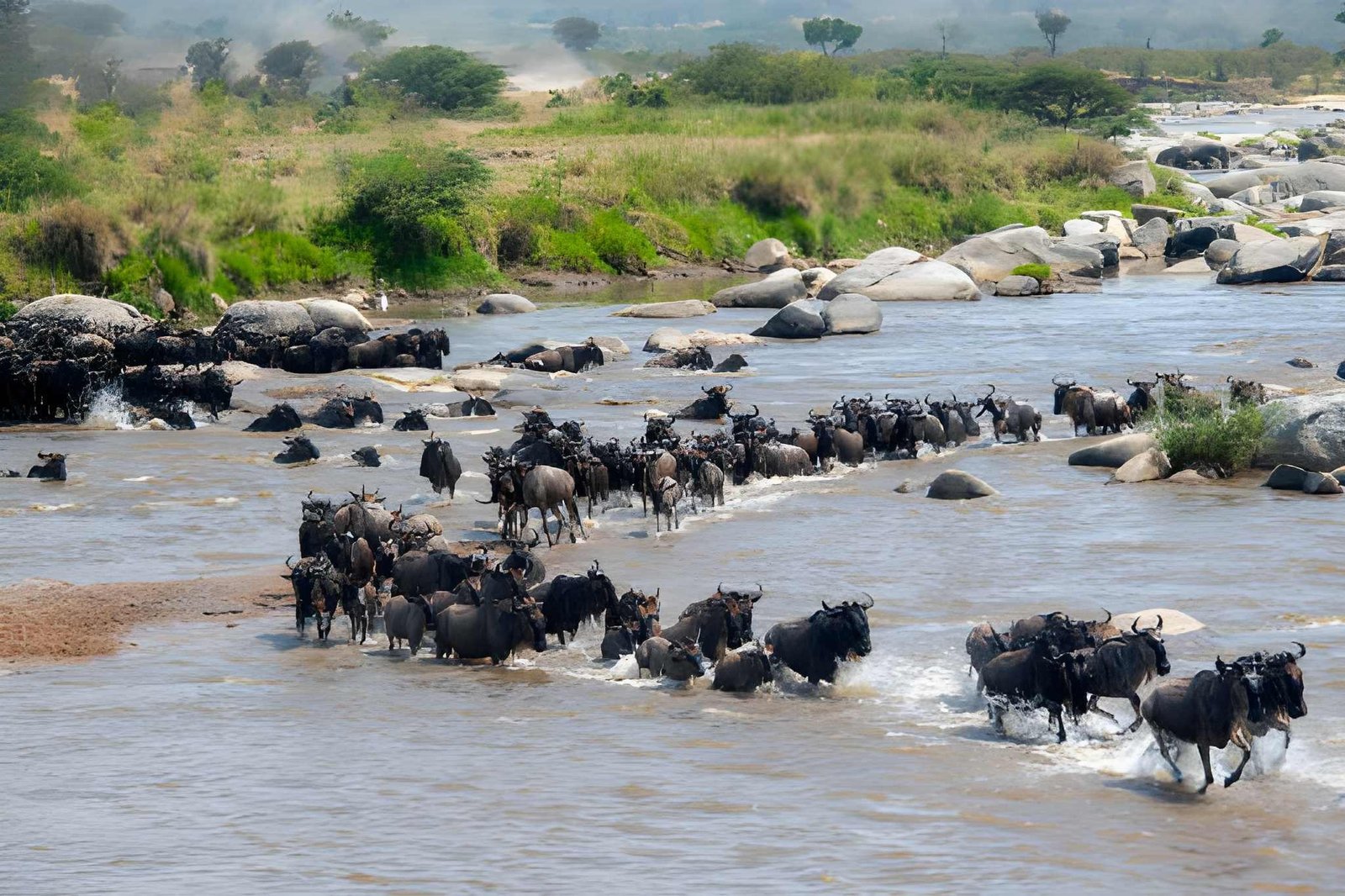
- July to October (Northern Serengeti / Mara River): Fly-in Only. The mega-herds assemble along both banks of the Mara River. Watching chaotic crossings requires positioning in the Kogatende, Lamai, or Wogakuria sectors. An overland 3-day trip simply cannot reach these points safely without violating park operating regulations and exhaustively over-driving travelers. Fly directly into Kogatende to make a 3-day trip work during these months.
- November to December (Short Rains Return South): Moderately Feasible Overland. Triggered by brief seasonal showers, the herds move south through the eastern plains (Loliondo and Lobo) back toward Seronera and the southern grasslands. Viewing relies on monitoring rain patterns, making basecamps in Central Seronera practical for sweeping north or south within short radii.
For visitors specifically interested in mid-year planning, examining where to see the wildebeest migration in Tanzania in July clarifies why northern logistics demand dedicated flights and specialized mobile tented camps.
3-Day Great Migration Route Comparison (2026-2027)
The following planning breakdown outlines the realistic parameters, logistics, and migration visibility across the three primary 3-day route variants available for 2026-2027 travel planning:
| Route Variant | Transport Style | Target Migration Sector | Best Calendar Window | Migration Probability |
|---|---|---|---|---|
| Southern Plains Route | Overland 4×4 or Fly-in (Ndutu) | Ndutu, Kusini, Southern Plains | January – March | 90% – 95% (Calving Season) |
| Northern River Route | Fly-in Bush Flight Only (Kogatende) | Kogatende, Lamai Wedge, Mara River | July – October | 85% – 90% (River Crossings) |
| Central Valley Route | Overland 4×4 or Fly-in (Seronera) | Central Seronera Valley | April – June & Nov – Dec | 60% – 75% (Transit Columns) |
Pricing across these itineraries varies substantially based on whether bush flights are included. A standard overland 3-day safari to Central Seronera typically sits between $850 and $1,450 per person for budget camping or mid-range shared setups, whereas private mid-range lodge packages average $1,500 to $2,300 per person. When scheduled domestic flights to Kogatende or Ndutu are incorporated alongside high-season conservation fees and remote mobile camp bookings, expect realistic prices ranging from $2,200 to $3,800+ per person for 2026-2027 departures.
Option A: The 3-Day Southern Plains Calving Itinerary (Overland or Fly-in)
Operating between January and March, this route delivers exceptional value because it is the only time the primary migration herds can be accessed reliably by an overland vehicle without exhausting passenger endurance. The Southern Serengeti and the adjoining Ndutu basin are characterized by sweeping, nutrient-rich alkaline grasslands where over 8,000 wildebeest calves arrive every single day.
Day 1: Arusha / Kilimanjaro to Southern Serengeti (Ndutu Sector)
Your safari begins with an early pickup at 06:00 AM from Arusha. You head west in an extended 4×4 Land Cruiser through the agricultural market towns of Monduli and Karatu, climbing the dramatic red wall of the Great Rift Valley. By mid-morning, you enter the Ngorongoro Conservation Area gate, driving through high-altitude montane forest along the crater rim before descending the western slope toward the Malanja Depression.
You branch off the main transit spine toward the Ndutu plains, arriving at your camp by 01:30 PM for lunch. Afternoon game viewing starts immediately across the open plains and surrounding acacia woodlands. Unlike the central national park, parts of the Ndutu conservation border allow controlled off-road driving under strict guide supervision, allowing vehicles to track cheetahs hunting along herd peripheries. You return to camp at sunset for dinner and overnight under canvas.
Day 2: Full Day Tracking the Calving Herds & Apex Predators
A full day dedicated to tracking the mega-herds across the short-grass plains. Starting at 06:15 AM with a packed bush breakfast, your guide follows recent herd movements toward Lake Ndutu or Lake Masek, where soda flats attract concentrated bands of flamingos alongside thousands of wildebeest and zebra pairs. February represents the absolute peak of the synchronized calving phenomenon.
Predator interactions during this window are frequent. Prides of lions take advantage of the calving bounty, while spotted hyenas patrol the low ridges. You spend midday resting at camp or enjoying a picnic under an umbrella acacia before continuing an intensive afternoon loop. The landscape here is flat and open, providing uninterrupted 360-degree photography angles without obstructing tree canopy. Return to your lodge or seasonal mobile camp before dark.
Day 3: Dawn Plains Drive & Return Transit via Ngorongoro to Arusha
Take advantage of the final morning with a short, focused sunrise drive from 06:00 AM to 08:30 AM, capturing golden-hour light as gazelles and calves wake up. After breakfast at the lodge, pack your luggage and begin the return journey eastward.
Your route climbs back through the Ngorongoro highlands, offering a brief viewpoint stop over the sunken caldera floor before descending into Karatu for lunch. You arrive back in Arusha by roughly 05:30 PM, connecting to international flights at Kilimanjaro Airport (JRO) or transferring to a local hotel. (Note: Travelers opting for the fly-in variation simply board a flight at Ndutu Airstrip at 10:45 AM on Day 3, landing in Arusha or Zanzibar well before lunch).
Travelers evaluating shorter regional circuits often compare this route against alternatives like the one day safari to Ngorongoro Crater from Arusha. However, the open expanse and sheer biomass of the Ndutu calving season deliver a wildlife scale that a single-day crater descent cannot replicate.
Option B: The 3-Day Mara River Crossing Itinerary (Fly-in Only)
If your Tanzania holiday is booked between July and October, the migration herds are locked in the remote northern boundary along the Mara River, bordering Kenya. Attempting this itinerary by road within 3 days is impossible. This fly-in circuit is engineered specifically for travelers who have limited total vacation days but insist on viewing the famous river crossings without compromise.
Day 1: Scheduled Bush Flight to Kogatende & Initial River Survey
Board an early morning scheduled bush flight (typically departing Arusha Airport at 08:00 AM or Zanzibar at 07:00 AM). The light aircraft passes over the Great Rift Valley and the vast Seronera river network before touching down on the dirt strip at Kogatende Airstrip around 09:30 AM to 10:15 AM.
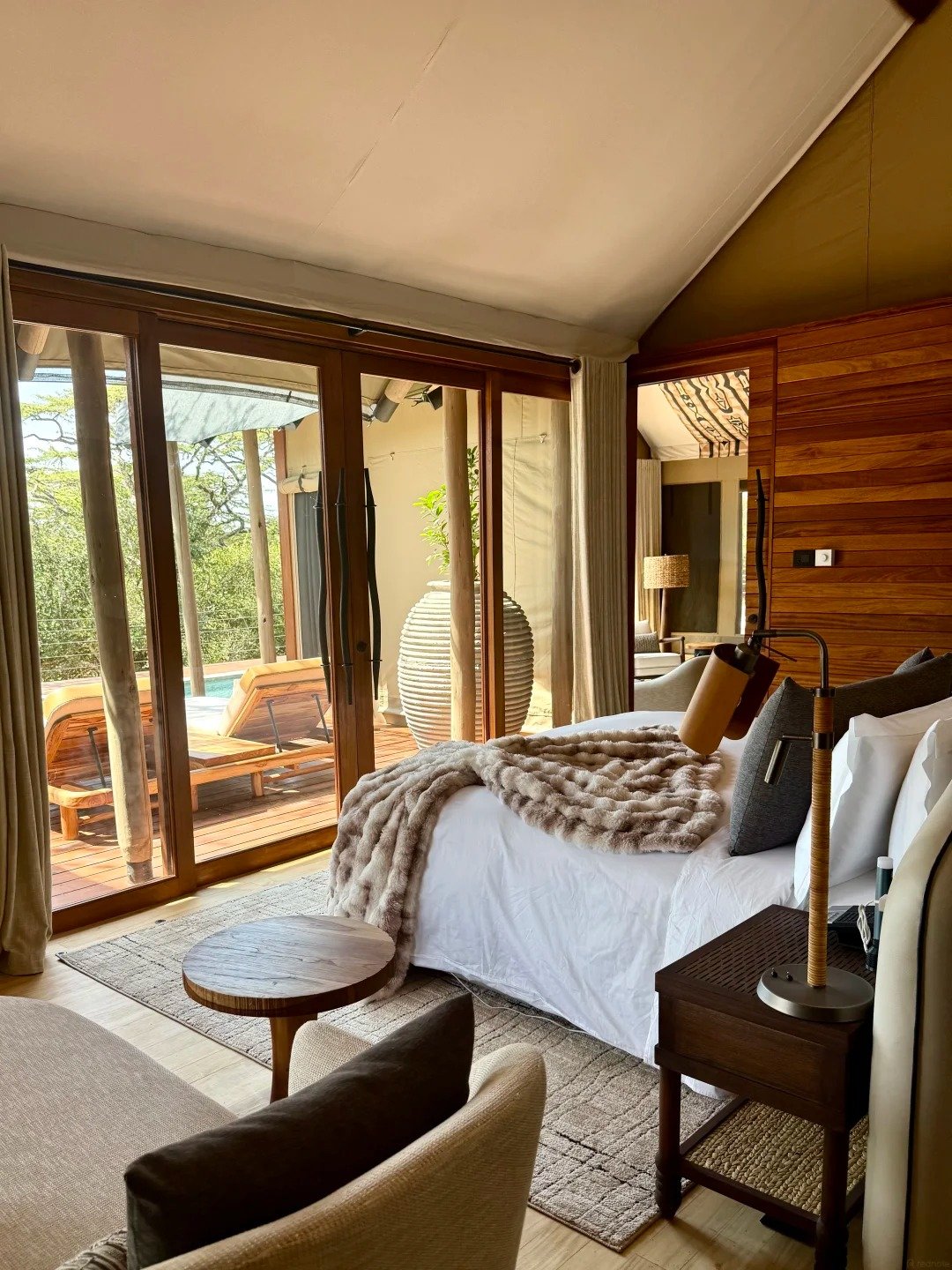
Your private Top Guide Adventures safari guide and customized pop-up roof Land Cruiser meet you right at the aircraft steps. After stowing your duffels, you drive directly onto the northern tracks. The morning is spent surveying active crossing points (numbered from Crossing Point 1 through Crossing Point 10 along the Mara River). Wildebeest gather in dense nervous knots along the rocky banks, testing the waters while massive Nile crocodiles wait in the deep currents. Check into a seasonal mobile tented camp located within 20 minutes of the riverbank for a late lunch, followed by an afternoon game drive until the 06:30 PM park curfew.
Check Availability for Can I See The Great Migration During A 3 Day Serengeti Safari? 2026-2027
Ready to compare dates, prices, and the best option for your group? Send the package name and travel month so the team can reply with a clear quote, availability, and what is included.

4 Day Southern Serengeti Migration Safari With Tented Accommodation 2026-2027
4 Day Southern Serengeti Migration Safari with Tented Accommodation is explained with current 2026-2027 planning, price, itinerary and booking information.
View package details
Best Serengeti Safari Camps Close To Wildebeest Migration Areas 2026-2027
Best Serengeti Safari Camps Close to Wildebeest Migration Areas is explained with current 2026-2027 planning, price, itinerary and booking information.
View package details
6 Day Northern Serengeti Migration Safari With Luxury Tented Camps 2026-2027
6 Day Northern Serengeti Migration Safari with Luxury Tented Camps is explained with current 2026-2027 planning, price, itinerary and booking information.
View package details
Private Serengeti Migration Safari With Flexible Game Drive Schedules
Private Serengeti Migration Safari with Flexible Game Drive Schedules is explained with current 2026-2027 planning, price, itinerary and booking information.
View package details
Northern Serengeti Migration Safari With Accommodation Near Mara River
Northern Serengeti Migration Safari with Accommodation Near Mara River is explained with current 2026-2027 planning, price, itinerary and booking information.
View package detailsBest 3 Day Serengeti Safari Packages With Affordable Accommodation 2026-2027
Best 3 Day Serengeti Safari Packages with Affordable Accommodation is explained with current 2026-2027 planning, price, itinerary and booking information.
View package details
Is A 2 Day Serengeti Safari Worth The Long Drive? 2026-2027
Is a 2 Day Serengeti Safari Worth the Long Drive? is explained with current 2026-2027 planning, price, itinerary and booking information.
View package details
Best 3 Day Safari From Arusha To Serengeti And Ngorongoro 2026-2027
Best 3 Day Safari from Arusha to Serengeti and Ngorongoro is explained with current 2026-2027 planning, price, itinerary and booking information.
View package details
3 Day Serengeti Safari From Zanzibar With Return Flights 2026-2027
3 Day Serengeti Safari from Zanzibar with Return Flights is explained with current 2026-2027 planning, price, itinerary and booking information.
View package details
Can Solo Travelers Join A 3 Day Serengeti Safari? 2026-2027
Can Solo Travelers Join a 3 Day Serengeti Safari? is explained with current 2026-2027 planning, price, itinerary and booking information.
View package details
Can A Serengeti Safari Guide Guarantee A River Crossing Sighting? 2026-2027
A detailed travel planning assessment clarifying why no ethical safari guide can guarantee a wildebeest river crossing in the Serengeti, detailing herd dynamics, crossing points, and field...
View package detailsBest Serengeti Mara River Crossing Safari Tours In August 2026-2027
Best Serengeti Mara River Crossing Safari Tours in August is explained with current 2026-2027 planning, price, itinerary and booking information.
View package detailsNo closely related package is available yet for this topic.

Our Guest Reviews, Currently Feedback from Clients in 2026
Reviews from different sources, including Google Business, Tripadvisor, other platforms, and social media.



