
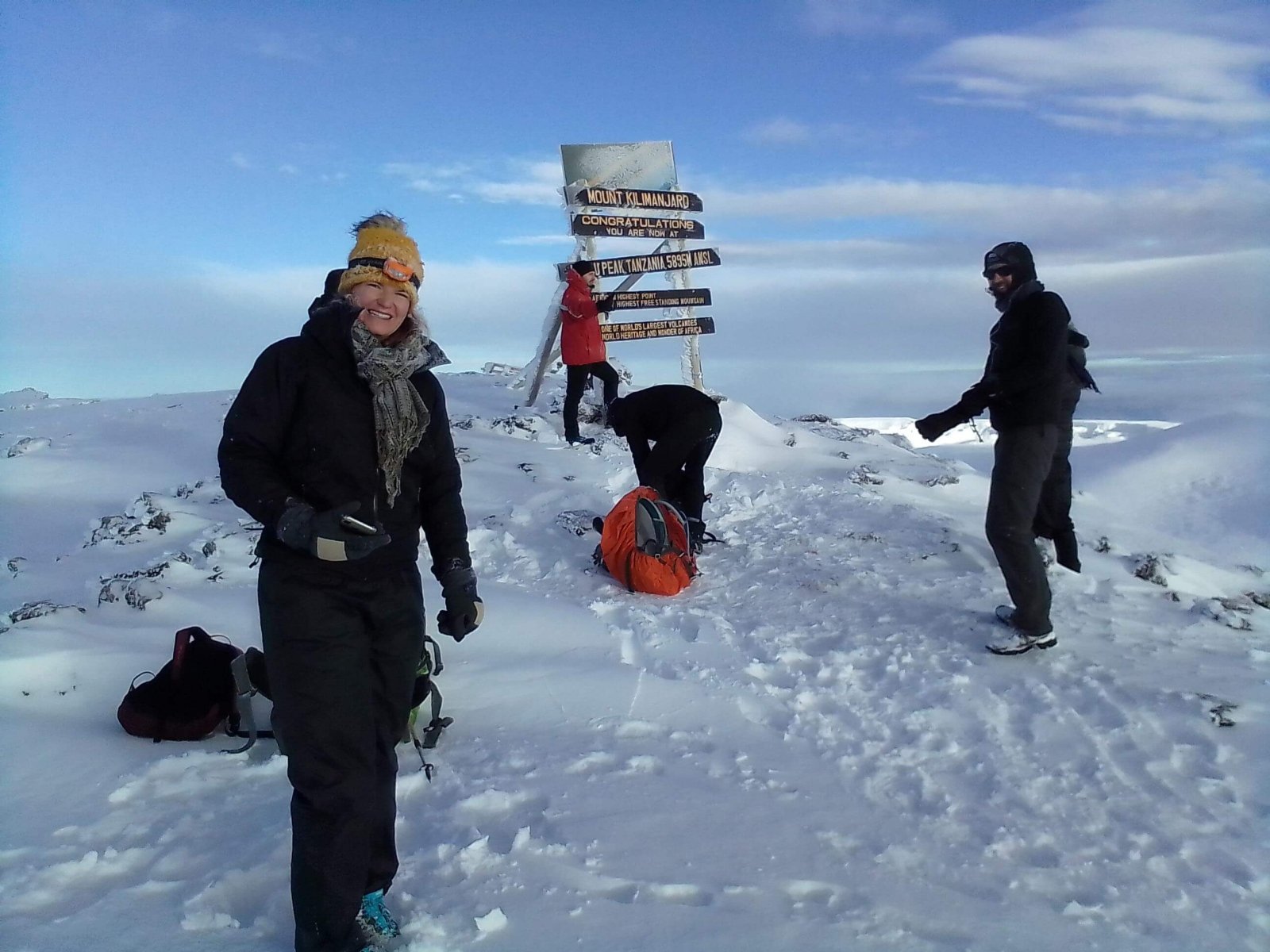
The 7 Days Lemosho Kilimanjaro New Year Trek – 27 December 2026 – 2 January 2027 is a specialized high-altitude expedition designed to place climbers on Uhuru Peak (5,895 meters / 19,341 feet) at sunrise on 1 January 2027. Ascending from the western wilderness via Londorossi Gate, the itinerary traverses the expansive Shira Plateau, tackles the critical acclimatization landmarks of Lava Tower and the Barranco Wall, and makes its final summit push from Barafu Camp overnight. Complete packages operated by Top Guide Adventures include park fees, mountain rescue insurance, emergency medical oxygen, pulse oximeter monitoring, mountain tents, all meals, and professional mountain guides, with typical 2026-2027 mid-range to premium pricing ranging between $2,250 and $2,850 per climber depending on group size and pre-climb hotel configurations in Moshi or Arusha.
Expedition Architecture: 27 December 2026 to 2 January 2027
Stepping onto Mount Kilimanjaro during the transition between years carries deep symbolic resonance, yet executing it requires strict adherence to seasonal timing and mountain physiology. The specific departure window running from 27 December 2026 to 2 January 2027 is engineered around a singular logistical objective: reaching the summit rim at Stella Point before dawn on 1 January 2027, then standing on Uhuru Peak as the first light of the new year breaks over East Africa.
Unlike standard mid-season climbs, a holiday season expedition operates within peak mountain traffic. Kilimanjaro experiences a marked influx of global trekkers between Christmas and the first week of January. To navigate this crowding while maintaining high safety standards, selecting the western approach via the Lemosho trail offers a distinct operational advantage. While routes like Machame experience heavy bottlenecking right from the lower rainforest gates, Lemosho starts further west at Londorossi Gate, offering two days of untamed wilderness across the pristine Shira Ridge before merging with the southern circuit.
Holiday Expedition Snapshot: 2026-2027
- Expedition Dates: 27 December 2026 – 2 January 2027
- Summit Morning: 1 January 2027 (Sunrise at Uhuru Peak, 5,895 m)
- Trailhead: Londorossi Gate / Lemosho Glades (2,100 m)
- Finishing Point: Mweka Gate (1,640 m)
- Acclimatization Profile: Excellent; incorporates walk-high sleep-low at Lava Tower (4,630 m)
- Holiday Season Cost Range: $2,250 – $2,850 per person (group joining vs. private departures)
Many operators attempt to compress this journey or push climbers up faster routes to capture the holiday market. At Top Guide Adventures, mountain crews operate under strict acclimatization guidelines. The western approach allows our licensed guides to monitor blood oxygen saturation levels and resting heart rates using digital pulse oximeters twice daily starting from Forest Camp, identifying early symptoms of Acute Mountain Sickness (AMS) before entering higher alpine zones.
For climbers weighing their calendar options, an alternative is the 8 Days Lemosho Kilimanjaro New Year Summit Climb – 26 December – 2 January, which introduces an extra night at Shira 1 Camp. However, for physically conditioned trekkers with limited holiday leave from work, the 7-day variation strikes the precise balance between vacation constraints and safe elevation gain profiles.
Why 7 Days Lemosho Works for New Year Summit Day
The core challenge of climbing Kilimanjaro in seven days lies in managing altitude sickness without relying on artificial pacing. Kilimanjaro does not require technical mountaineering skills such as ropes, crampons, or ice axes on the trekking routes, but its vertical ascent rate exceeds almost every other major peak in the world. You move from roughly 2,100 meters at the Lemosho Glades to 5,895 meters at the summit in under five full days of climbing.
The 7-day Lemosho itinerary overcomes this constraint through geographic design. The trail approaches from the far west, granting climbers access to the vast caldera remnants of Shira Volcano—Kilimanjaro’s oldest eruptive center. By crossing the Shira Plateau over days two and three, climbers sleep at elevations between 3,610 meters and 3,850 meters while maintaining gentle gradients.
| Date | Route Section | Start / End Elevation | Key Physiological Objective |
|---|---|---|---|
| 27 Dec 2026 | Londorossi Gate to Big Tree Camp | 2,100 m to 2,650 m | Rainforest pacing; hydration initiation (3-4L daily) |
| 28 Dec 2026 | Big Tree to Shira 2 Camp | 2,650 m to 3,850 m | Crossing Shira Ridge; entering lower heather moorland |
| 29 Dec 2026 | Shira 2 to Barranco via Lava Tower | 3,850 m to 4,630 m to 3,960 m | Gold standard “Climb High, Sleep Low” trigger |
| 30 Dec 2026 | Barranco to Karanga Camp | 3,960 m to 3,995 m | Scrambling the Barranco Wall; short recovery trek |
| 31 Dec 2026 | Karanga to Barafu Base Camp | 3,995 m to 4,673 m | Alpine desert rest; preparation for midnight summit push |
| 1 Jan 2027 | Barafu to Uhuru Peak down to Mweka | 4,673 m to 5,895 m to 3,100 m | New Year Sunrise Summit; rapid descent to high oxygen |
| 2 Jan 2027 | Mweka Camp to Mweka Gate | 3,100 m to 1,640 m | Final descent through forest; summit certificates |
The critical acclimatization trigger occurs on 29 December 2026. On this day, our groups ascend past the moorland zone directly into the volcanic desert up to the base of the massive shark-tooth volcanic plug known as Lava Tower (4,630 meters). Here, we pause for an hour-long hot lunch. Experiencing this level of thin air triggers red blood cell synthesis before dropping back down nearly 700 vertical meters to sleep at Barranco Camp (3,960 meters). This dramatic altitude drop is precisely why climbers on the Lemosho path demonstrate vastly superior summit success rates compared to short routes like Marangu or 6-day itineraries.
Trekkers who prefer earlier departures in the festive season often evaluate the 7 Days Lemosho Kilimanjaro Christmas Climb – 20–26 December 2026-2027 or our standard open departures like the 7 Days Lemosho Route Kilimanjaro Group Trek – 6–12 December 2026-2027. However, for those determined to celebrate midnight on the mountainside and greet dawn at the rooftop of Africa, the 27 December schedule provides an uncompromised structural timeline.
Detailed Trail Progression: Days 1 Through 4
Understanding the micro-climates, trail surfaces, and physical demands of each day allows you to pace yourself appropriately and prevent premature exhaustion.
Day 1: Sunday, 27 December 2026 – Moshi to Londorossi Gate to Big Tree (Mti Mkubwa) Camp
The expedition starts with an early morning hotel briefing in Moshi or Arusha. Guides perform final gear verifications, ensuring every hiker carries adequate thermal layering, waterproof membranes, and insulated water flasks. Following the briefing, we depart via private 4×4 transport, skirting the agricultural slopes of west Kilimanjaro toward Londorossi Gate (2,100 m), an approximate 3-hour journey.
Registration formalities with the Tanzania National Parks Authority (TANAPA) occur here, during which mountain porters assemble and weigh duffel bags to verify adherence to the mandatory 15 kg maximum weight limit per porter. From Londorossi, an additional rough track leads to the Lemosho Glades trailhead.
Day 1 Trail Metrics
- Hiking Distance: 6 kilometers / 3.7 miles
- Hiking Duration: 3 to 4 hours
- Starting Elevation: 2,100 meters / 6,890 feet
- Camp Elevation: 2,650 meters / 8,694 feet
- Habitat: Montane Rainforest
The path winds through ancient Podocarpus and camphorwood trees draped in moss and old man’s beard lichen. Blue monkeys and black-and-white colobus monkeys are frequently sighted in the upper canopy. The ground underfoot can be slick with damp clay, making trekking poles valuable from your very first steps. We arrive at Big Tree Camp (also known locally as Mti Mkubwa) by late afternoon. Tents are pitched before arrival, hot wash water is delivered to each tent, and the camp cook prepares an energizing multi-course dinner based on complex carbohydrates.
Day 2: Monday, 28 December 2026 – Big Tree Camp to Shira 2 Camp
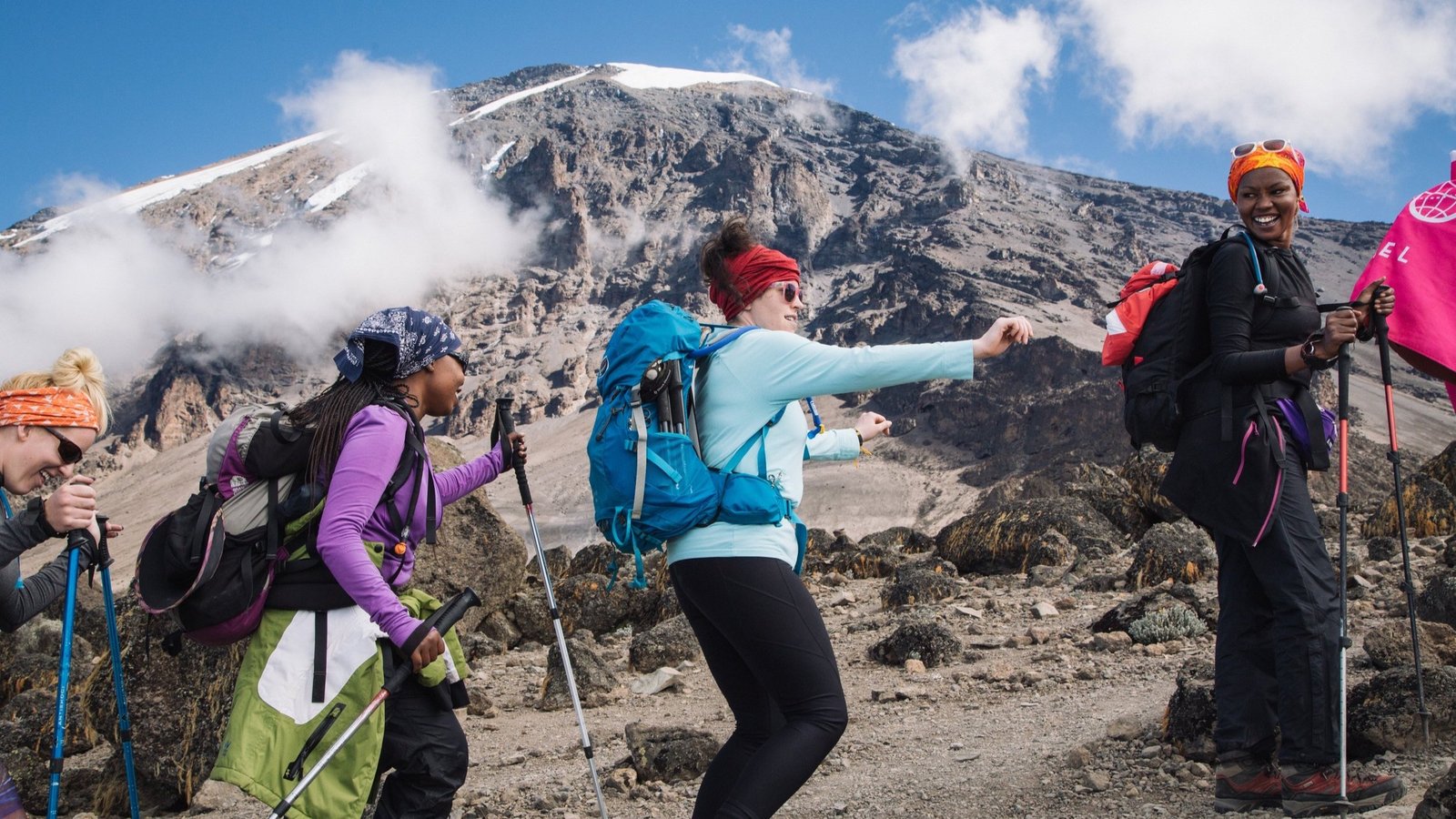
Leaving the sheltered canopy of the rainforest, the gradient stiffens noticeably as the trail climbs out of the tree line and enters the heather and moorland ecological zone. Giant heather shrubs give way to an open plateau marked by volcanic scree and sprawling tussock grasses.
In standard 8-day itineraries, climbers halt at Shira 1 Camp on the western lip of the plateau. In this 7-day format, we continue trekking steadily across the expansive caldera basin to reach Shira 2 Camp at 3,850 meters. This makes Day 2 a challenging, rewarding push covering roughly 16 kilometers.
Because the elevation jumps by 1,200 vertical meters, the guide team enforces an exceptionally measured pace, traditionally termed pole pole in Kiswahili. Rushing on this day is the leading cause of early altitude headaches. As you trek across the plateau, unobstructed views of Kibo’s western breach and dramatic volcanic glaciers dominate the eastern horizon.
Day 2 Trail Metrics
- Hiking Distance: 16 kilometers / 10 miles
- Hiking Duration: 7 to 8 hours
- Starting Elevation: 2,650 meters / 8,694 feet
- Camp Elevation: 3,850 meters / 12,631 feet
- Habitat: Moorland and Heath
Upon reaching Shira 2, the team performs afternoon medical checks using our pulse oximeters, logging each trekker’s resting heart rate and blood oxygen percentage. Evening temperatures on the exposed plateau frequently plunge below freezing (0°C to -5°C / 32°F to 23°F), necessitating heavy thermal base layers before dinner is served inside the mess tent.
Day 3: Tuesday, 29 December 2026 – Shira 2 Camp to Lava Tower to Barranco Camp
Day 3 represents the central pillar of your high-altitude acclimatization strategy. The path moves east away from the Shira caldera, climbing through a desolate, windswept landscape of black basalt boulders and loose gravel known as the alpine desert. Vegetation rapidly thins until only hardy lichens cling to the volcanic rocks.
The ascent toward the iconic Lava Tower (4,630 meters) feels physically taxing as air density drops to approximately 60% of sea-level oxygen. Climbers may notice mild shortness of breath or slight pressure behind the temples, which is an expected physiological response to thin air. We stop in our sheltered dining tent near the base of the tower for a warm lunch, giving your body critical time to assimilate this elevated exposure.
From Lava Tower, the trail turns sharply south and descends into the dramatic Barranco Valley. This descent drops you through surreal forests of giant groundsels (Dendrosenecio kilimanjari) and giant lobelias, fed by moisture trapped against the southern slopes. Arriving at Barranco Camp (3,960 meters), you sleep only 110 meters higher than you did at Shira 2, yet you have spent time well above 4,600 meters. This dynamic stimulates the natural production of erythropoietin (EPO), helping you tolerate high base camps later in the week.
Day 3 Trail Metrics
- Hiking Distance: 10 kilometers / 6.2 miles
- Hiking Duration: 6 to 7 hours
- Starting Elevation: 3,850 meters / 12,631 feet
- Maximum Point: 4,630 meters / 15,190 feet (Lava Tower)
- Camp Elevation: 3,960 meters / 12,992 feet
- Habitat: Semi-Desert to Alpine Desert, descending into Giant Senecio Moorland
Check Availability for 7 Days Lemosho Kilimanjaro New Year Trek – 27 December – 2 January 2026-2027
Ready to compare dates, prices, and the best option for your group? Send the package name and travel month so the team can reply with a clear quote, availability, and what is included.

8 Days Lemosho Kilimanjaro New Year Summit Climb – 26 December – 2 January
8 Days Lemosho Kilimanjaro New Year Summit Climb – 26 December 2026 – 2 January 2027 is explained with current 2026-2027 planning, price, itinerary and.
View package details
7 Days Machame Kilimanjaro New Year Climb – 27 December – 2 January 2026-2027
7 Days Machame Kilimanjaro New Year Climb – 27 December 2026 – 2 January 2027 is explained with current 2026-2027 planning, price, itinerary and booking.
View package details
8 Days Lemosho Kilimanjaro Full Moon Group Trek – 18–25 December 2026-2027
An 8-day group trek on Kilimanjaro's scenic Lemosho Route timed for the December 2026 full moon period, with summit day on Christmas morning.
View package details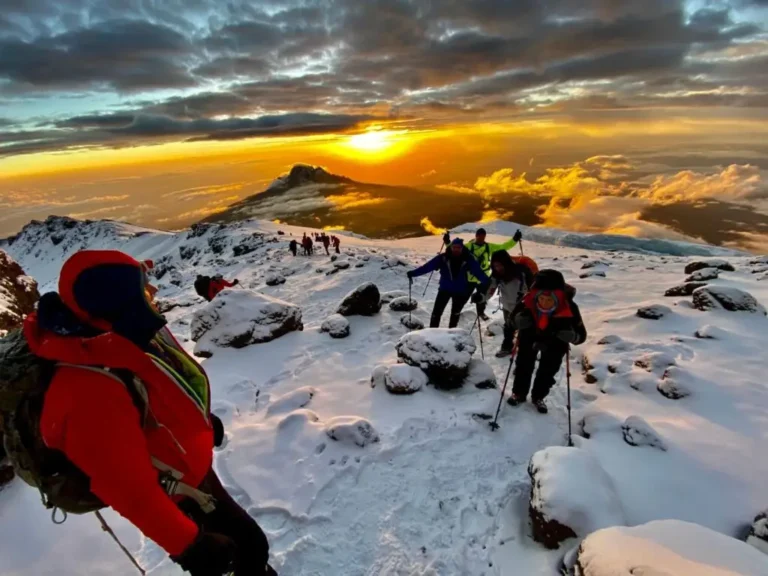
8 Days Lemosho Kilimanjaro Christmas Trek – 24–31 December 2026-2027
8 Days Lemosho Kilimanjaro Christmas Trek – 24–31 December 2026 is explained with current 2026-2027 planning, price, itinerary and booking information.
View package details
8 Days Lemosho Kilimanjaro Trekking Package – 4–11 December 2026-2027
8 Days Lemosho Kilimanjaro Trekking Package – 4–11 December 2026 is explained with current 2026-2027 planning, price, itinerary and booking information.
View package details
7 Days Lemosho Route Kilimanjaro Group Trek – 6–12 December 2026-2027
7 Days Lemosho Route Kilimanjaro Group Trek – 6–12 December 2026 is explained with current 2026-2027 planning, price, itinerary and booking information.
View package details
6 Days Machame Kilimanjaro New Year Trek – 28 December – 2 January 2026-2027
6 Days Machame Kilimanjaro New Year Trek – 28 December 2026 – 2 January 2027 is explained with current 2026-2027 planning, price, itinerary and booking.
View package details
5 Days Marangu Kilimanjaro New Year Trek – 29 December – 2 January 2026-2027
5 Days Marangu Kilimanjaro New Year Trek – 29 December 2026 – 2 January 2027 is explained with current 2026-2027 planning, price, itinerary and booking.
View package details8 Days Lemosho Route Kilimanjaro Group Departure – 12–19 December 2026-2027
A detailed guide to the 8-day Lemosho Route Kilimanjaro group climb departing 12–19 December 2026, covering route details, daily itinerary, acclimatization strategy, and what to expect.
View package details
7 Days Lemosho Route Kilimanjaro Group Climb – 3–9 December 2026-2027
7 Days Lemosho Route Kilimanjaro Group Climb – 3–9 December 2026 is explained with current 2026-2027 planning, price, itinerary and booking information.
View package details
8 Days Lemosho Kilimanjaro Group Hiking – 7–14 December 2026-2027
8 Days Lemosho Kilimanjaro Group Hiking – 7–14 December 2026 is explained with current 2026-2027 planning, price, itinerary and booking information.
View package details
7 Days Machame Kilimanjaro Christmas Holiday Trek – 25–31 December 2026-2027
7 Days Machame Kilimanjaro Christmas Holiday Trek – 25–31 December 2026 is explained with current 2026-2027 planning, price, itinerary and booking.
View package detailsNo closely related package is available yet for this topic.

Our Guest Reviews, Currently Feedback from Clients in 2026
Reviews from different sources, including Google Business, Tripadvisor, other platforms, and social media.