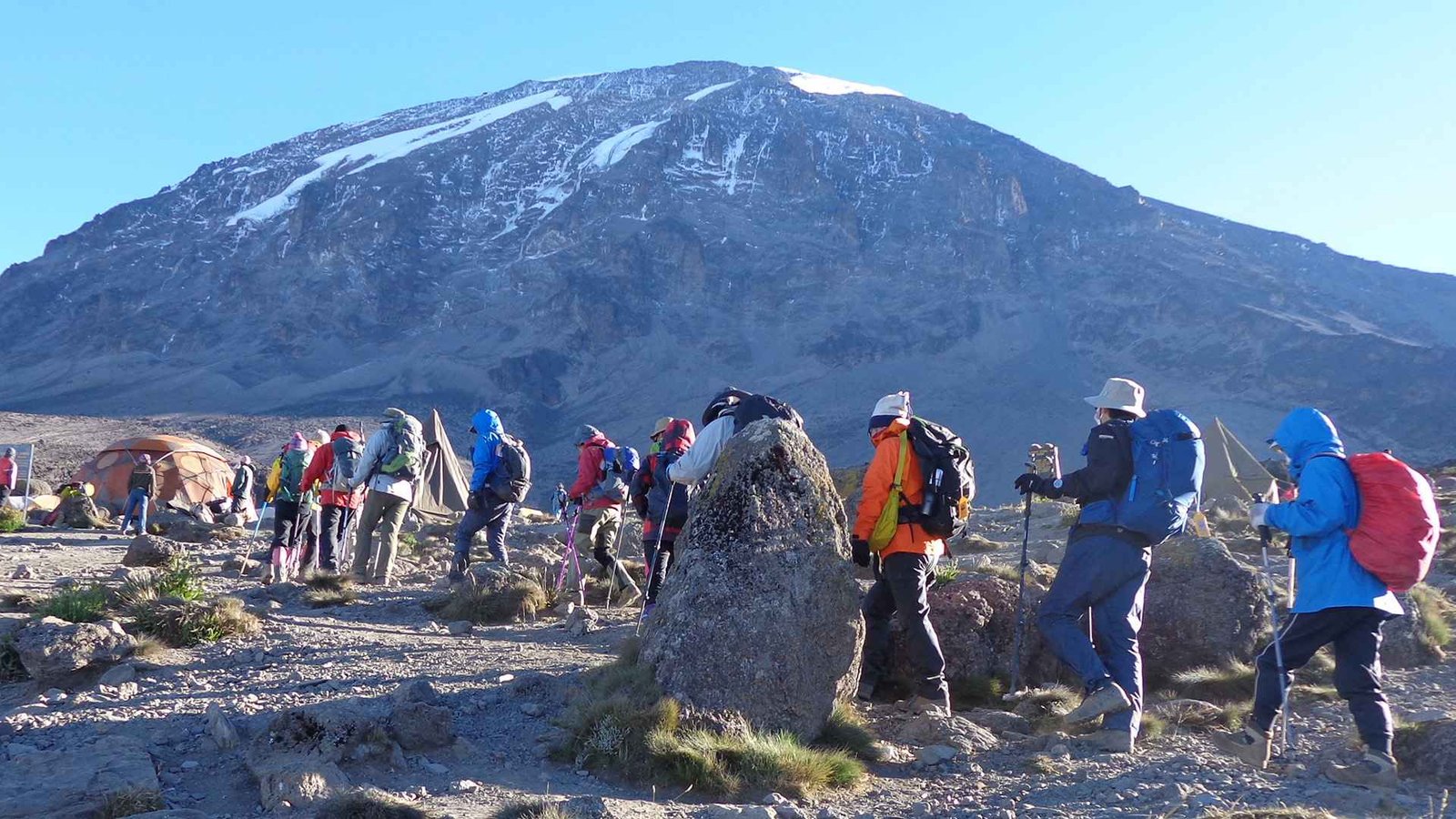
The 6 Days Machame Kilimanjaro New Year Trek – 28 December 2026 – 2 January 2027 is a time-compressed high-altitude climb starting at Machame Gate (1,800 m) on 28 December 2026 and culminating at Uhuru Peak (5,895 m) at sunrise on 1 January 2027 before concluding at Mweka Gate on 2 January 2027. Designed for physically prepared mountaineers seeking to celebrate New Year’s Day at the summit of Africa, this 6-day itinerary compresses the standard Machame profile by skipping Karanga Camp and marching directly from Barranco Camp to Barafu Base Camp via the Barranco Wall. Operators price this dedicated New Year departure between $1,850 and $2,450 per person depending on group volume, camp logistics, and transfer inclusions, requiring climbers to make conscious trade-offs between condensed summit turnaround times and strict physical conditioning.
The 2026–2027 Holiday Window: Why This Specific Departure Matters
Trekking Mount Kilimanjaro over the transition of the calendar year is one of the most operationally intense periods in the Tanzanian alpine circuit. The 6 Days Machame Kilimanjaro New Year Trek – 28 December 2026 – 2 January 2027 is engineered with mathematical precision to place you on the crater rim of Kibo precisely as the first sunrise of 2027 illuminates the East African plains. Unlike generic seasonal departures, this window requires travelers to navigate exact arrival calendars, peak aviation pricing into Kilimanjaro International Airport (JRO), and dense camp usage within the boundaries of Tanzania National Parks (TANAPA).
The calendar architecture of this trek begins with arrival logistics in Moshi or Arusha on or before 27 December 2026. Because international arrivals during late December encounter peak international airfare corridors, securing inward ticketing 8 to 11 months in advance is essential. The mountain timeline runs as follows:
- 27 December 2026: Mandatory pre-climb briefing, equipment cross-check, rental gear fitting, and medical baseline checks in Moshi.
- 28 December 2026 (Day 1): Transit to Machame Gate (1,800 m) for registration; trek through the montane cloud forest to Machame Camp (3,010 m).
- 29 December 2026 (Day 2): Ascend out of the forest canopy across heath and moorland zones to Shira Camp (3,840 m).
- 30 December 2026 (Day 3): Crucial acclimatization push upward to Lava Tower (4,630 m) before descending to sleep low at Barranco Camp (3,960 m).
- 31 December 2026 (Day 4): Direct assault up the Great Barranco Wall, crossing the Karanga Valley without an overnight stay, pushing directly through alpine desert to Barafu Camp (4,640 m) to rest before the midnight ascent.
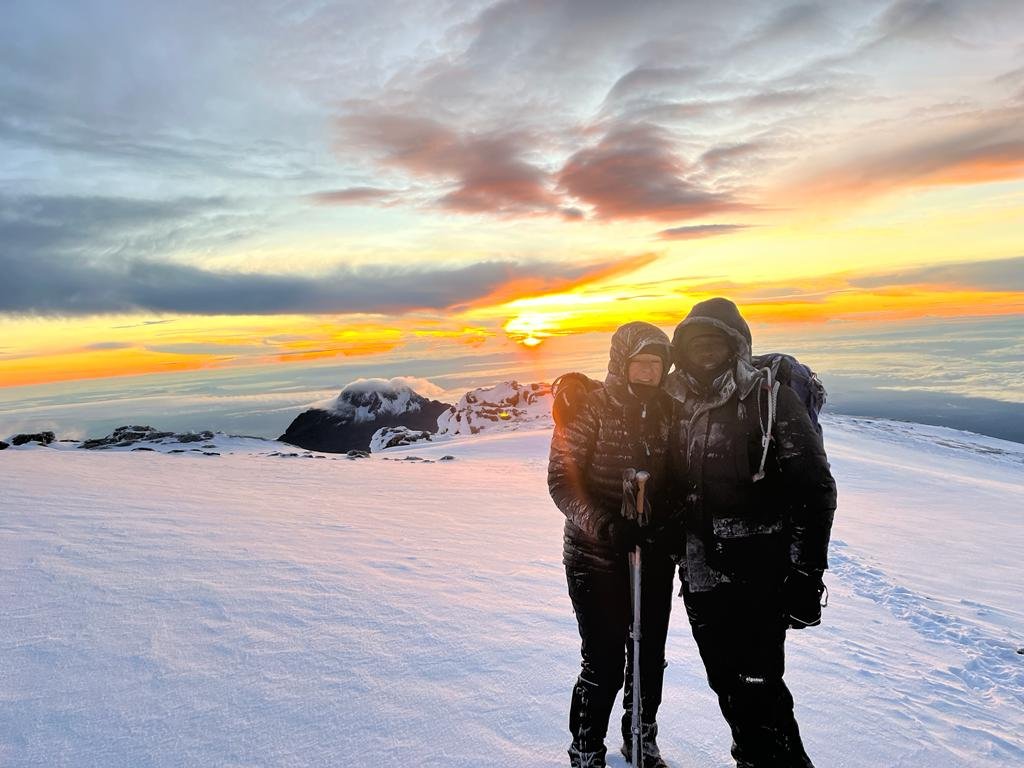
- 1 January 2027 (Day 5 – New Year’s Day): Nighttime push across scree slopes via Stella Point (5,756 m) to Uhuru Peak (5,895 m) at dawn, descending to Mweka High Camp or Millennium Camp (3,100 m).
- 2 January 2027 (Day 6): Final descent through the lush rain forest to Mweka Gate (1,630 m), certificate awards, tipping ceremonies, and transfer to Moshi for onward journeys or safaris.
For climbers assessing their seasonal calendar options, alternate timing variants exist such as the 7 Days Machame Kilimanjaro Christmas Holiday Trek – 25–31 December 2026-2027 or the hut-based 6 Days Marangu Kilimanjaro New Year Climb – 28 December – 2 January 2026-2027. However, the Machame route remains the most scenic and dynamic camping itinerary available on this specific six-day calendar footprint.
Cost Realities: Budget Breakdown, Inclusions, and Hidden Variables
Securing a spot on the 6 Days Machame Kilimanjaro New Year Trek – 28 December 2026 – 2 January 2027 requires clarity on commercial pricing versus structural statutory costs. Commercial quotes for this peak period typically range from $1,850 to $2,450 per person on a mid-range, safety-compliant group joining or private basis. Operators offering prices substantially under this threshold are almost universally cutting expenditures on porter welfare, guide ratios, medical equipment, or nutritious mountain provisions.
Estimated Price Structure: 6-Day Machame New Year Departure (2026–2027)
Below is the transparent breakdown of cost structures reflecting standard national park tariff schedules, mountain support crews, and logistics:
| Service / Category | Estimated Cost (USD) | Operational Detail |
|---|---|---|
| TANAPA Park Fees (Statutory) | $830 – $920 | Includes daily conservation fees, camping fees, rescue fees, and 18% Value Added Tax (VAT). |
| Mountain Support Crew & Ratios | $450 – $650 | Lead guide, assistant guides (1:2 ratio on summit night), dedicated camp chef, and porters (3–4 per climber). |
| Safety, Logistics & Oxygen Systems | $180 – $260 | Pulse oximeters, hyperbaric oxygen cylinders, medical first-aid kits, and satellite/cellular communication arrays. |
| Camp Infrastructure & Catering | $240 – $360 | Four-season mountain tents, private mess tents, all-weather dining furniture, and three hot, calorie-dense cooked meals daily. |
| Ground Transfers (Moshi/Arusha) | $80 – $140 | Private vehicle transport from accommodation in Moshi to Machame Gate, and return transfer from Mweka Gate. |
| Total Projected Cost Per Climber | $1,780 – $2,330 | Based on standard group joining or semi-private departures during the peak 2026–2027 holiday window. |
When budgeting for the expedition, travelers must distinguish between what is directly covered by the operator agreement and what forms part of downstream personal budgeting:
Included in the Standard Operating Package
- All statutory TANAPA national park conservation, camping, and crew permits for 6 continuous days.
- Two mandatory pre- and post-trek hotel nights in Moshi with breakfast included.
- Comprehensive health diagnostics: twice-daily pulse oximetry monitoring, resting heart rate evaluations, and systemic Lake Louise Acute Mountain Sickness (AMS) scoring.
- Bottled oxygen cylinders reserved strictly for emergency high-altitude decompression and descent protocols.
- Strict porter weight compliance adhering to the 15 kg client duffel bag limit, inspected at Machame Gate.
- All mountain catering, clean boiled and micro-filtered drinking water, and specialized high-carbohydrate nutrition plans.
Excluded Variables Requiring Separate Allocation
- Tipping pool for mountain crew (standard industry benchmark: $200 to $300 per climber distributed across guides, cooks, and porters).
- Mandatory high-altitude emergency medical insurance covering technical evacuations up to 6,000 meters above sea level.
- Tanzania entry visa costs ($50 for most nationalities, $100 for United States citizens).
- Optional private chemical portable toilet tents (typically $150 to $200 per group for the entire duration).
- Personal trekking garments, four-season -15°C sleeping bag, trekking poles, and personal medications (Diamox, Ibuprofen).
For those cross-evaluating different starting dates around the holiday perimeter, operators run continuous schedules like the Machame Route Kilimanjaro Group Departures Dates or the longer western approach via the 7 Days Lemosho Kilimanjaro New Year Trek – 27 December – 2 January 2026-2027.
The 6-Day Machame Trade-Off: Acclimatization Reality vs. Calendar Constraints
The Machame Route can be executed across either 6 days or 7 days. Choosing the 6 Days Machame Kilimanjaro New Year Trek – 28 December 2026 – 2 January 2027 represents an explicit compromise: you trade an extra overnight altitude rest stage for an exact alignment with the New Year’s Day summit moment within a tight work-leave calendar.
Understanding this trade-off is critical for an objective assessment of your climb’s success probability. In the standard 7-day variation, Day 4 terminates at Karanga Camp (3,995 m) after a short 4-kilometer trek over the Barranco Wall. This allows climbers to take lunch, hydrate, rest, and sleep at intermediate altitude before ascending to Barafu Camp the following morning.
In this 6-day profile, Day 4 combines the Barranco-to-Karanga traverse with the Karanga-to-Barafu ascent. You climb the Barranco Wall in the morning, descend into the Karanga Valley, halt for a hot lunch at Karanga Camp, and then immediately push upward another 650 vertical meters across exposed alpine scree to reach Barafu Base Camp (4,640 m) by late afternoon. This single day demands 8 to 10 hours of active trekking across extreme vertical shifts, leaving climbers only 4 to 5 hours to rest inside their tents before initiating the midnight summit push.
Statistically, the 7-day Machame profile logs summit success rates around 85% to 90%, whereas the compressed 6-day profile averages approximately 65% to 75%. The reduction is caused entirely by the heavy cumulative fatigue of Day 4 rolling directly into the midnight summit march. Climbers committing to the 6-day timeline must arrive with a higher baseline of cardiovascular endurance, disciplined hydration habits, and mental preparedness to endure an unbroken 24-hour sequence between waking up at Barranco on 31 December and descending to Mweka Camp on the afternoon of 1 January 2027.
Day-by-Day Route Anatomy: Stages 1 Through 3
The first three days of the Machame Route form the vital physiological foundation of the entire expedition. Errors made during these opening stages—such as walking too fast, drinking inadequate volumes of fluid, or wearing inappropriate layers—compound rapidly when high altitude is reached on Day 4.
Day 1: Machame Gate (1,800 m) to Machame Camp (3,010 m)
Following morning pickups from your hotel in Moshi, the team navigates the coffee and banana plantations of Machame Village to reach the national park gate. Here, while guides register the trek with TANAPA rangers and porters have their loads weighed to enforce safety regulations, you receive your packed lunch.
The path enters the deep, montane rain forest zone immediately upon passing the gate perimeter. The trail is characterized by ancient podocarpus and camphorwood trees cloaked in Spanish moss, tree ferns, and deep root networks. Because this section receives the mountain’s highest annual rainfall, the path can become deeply rutted and muddy.
- Distance: 11 kilometers (6.8 miles)
- Trekking Time: 5 to 7 hours
- Altitude Gain: 1,210 meters
- Zone: Montane Rain Forest
- Terrain: Muddy forest pathways, exposed root staircases, and gradual dirt switchbacks.
The pace set by your lead guide will feel counter-intuitively slow; this deliberate pole pole (slowly, slowly) cadence protects your leg muscles from early lactic acid buildup. You arrive at Machame Camp in the late afternoon. Your camp crew will already have erected the sleeping tents and mess tent, boiling water for personal washing and evening tea before serving a three-course dinner.
Day 2: Machame Camp (3,010 m) to Shira Camp (3,840 m)
Leaving Machame Camp, the path steepens noticeably as the lush canopy rapidly thins and yields to the heath and moorland ecological zone. Giant heather shrubs, wild proteas, and tussock grasses replace the trees, exposing hikers to direct equatorial sun and gusting winds.
The trail ascends a rocky ridge leading toward the Shira Plateau—a vast, collapsed volcanic caldera that constitutes the oldest of Kilimanjaro’s three eruptive volcanic cones. You negotiate several short, easy scrambling sections across basalt rocks where hands may be needed for balance.
- Distance: 5 kilometers (3.1 miles)
- Trekking Time: 4 to 6 hours
- Altitude Gain: 830 meters
- Zone: Moorland / Heather
- Terrain: Rocky ridges, exposed volcanic steps, and gravel pathways across open moorland.
Arriving at Shira Camp (located on the open plateau at 3,840 m), the western breach of Kibo and the dramatic jagged pinnacle of Mount Meru to the west become visible. Nighttime temperatures drop significantly here, frequently dipping below freezing (0°C to -3°C). Warm evening layering is required immediately as the sun sinks below the plateau rim.
Day 3: Shira Camp (3,840 m) to Lava Tower (4,630 m) and Down to Barranco Camp (3,960 m)
Day 3 is the operational cornerstone of your acclimatization cycle on Kilimanjaro, applying the golden mountaineering rule: climb high, sleep low. The path ascends gently eastward across the arid alpine desert landscape, traversing boulder-strewn volcanic plains toward the base of Kibo.
By mid-day, the trail intersects the junction leading to Lava Tower—a 90-meter-tall volcanic plug thrusting out of the ridge at 4,630 meters. Hikers stop here to eat lunch and rest for approximately one hour. This calculated exposure to the 4,600-meter altitude threshold triggers your kidneys to produce erythropoietin (EPO), stimulating additional red blood cell production to compensate for the lower partial pressure of atmospheric oxygen.
- Distance: 10 kilometers (6.2 miles)
- Trekking Time: 6 to 8 hours
- Altitude Change: Peak elevation reached at 4,630 m; sleep at 3,960 m (net gain of 120 m).
- Zone: Alpine Desert transition to Semi-Alpine Moorland.
- Terrain: Loose scree, dry volcanic dust, and rocky trail systems descending through giant groundsels.
Check Availability for 6 Days Machame Kilimanjaro New Year Trek – 28 December – 2 January 2026-2027
Ready to compare dates, prices, and the best option for your group? Send the package name and travel month so the team can reply with a clear quote, availability, and what is included.
5 Days Marangu Kilimanjaro New Year Trek – 29 December – 2 January 2026-2027
5 Days Marangu Kilimanjaro New Year Trek – 29 December 2026 – 2 January 2027 is explained with current 2026-2027 planning, price, itinerary and booking.
View package details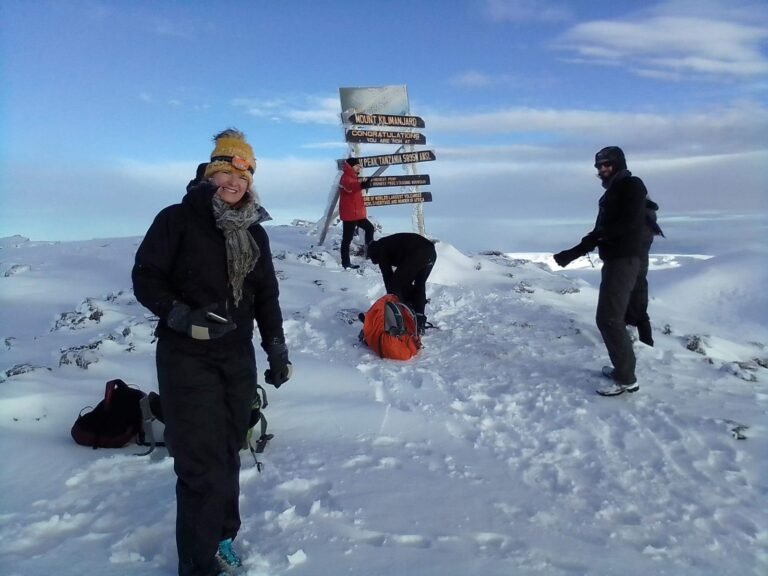
6 Days Machame Route Kilimanjaro Group Trek – 3–8 December 2026-2027
A detailed guide to the 6-day Machame Route Kilimanjaro group trek departing 3–8 December 2026, covering route details, daily itinerary, preparation, and booking.
View package details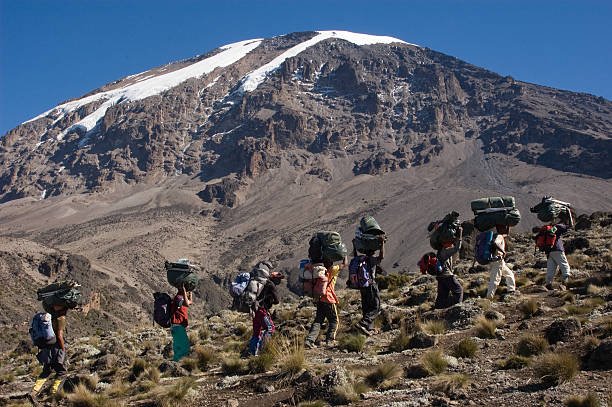
6 Days Marangu Kilimanjaro New Year Climb – 28 December – 2 January 2026-2027
6 Days Marangu Kilimanjaro New Year Climb – 28 December 2026 – 2 January 2027 is explained with current 2026-2027 planning, price, itinerary and booking.
View package details
7 Days Machame Kilimanjaro New Year Climb – 27 December – 2 January 2026-2027
7 Days Machame Kilimanjaro New Year Climb – 27 December 2026 – 2 January 2027 is explained with current 2026-2027 planning, price, itinerary and booking.
View package details7 Days Lemosho Kilimanjaro New Year Trek – 27 December – 2 January 2026-2027
7 Days Lemosho Kilimanjaro New Year Trek – 27 December 2026 – 2 January 2027 is explained with current 2026-2027 planning, price, itinerary and booking.
View package details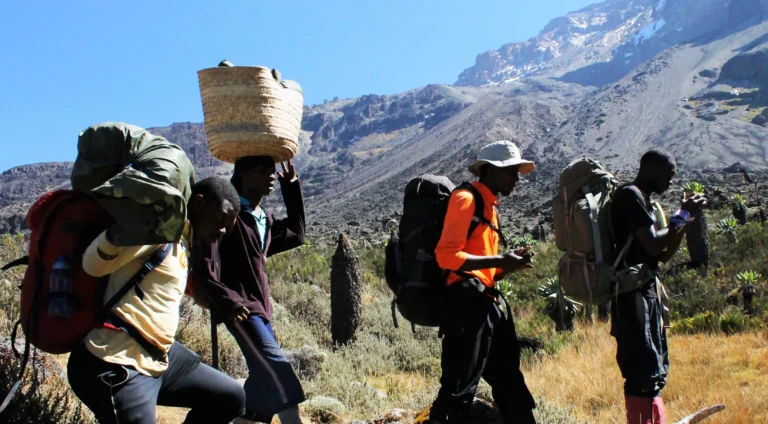
5 Days Marangu Kilimanjaro Christmas Trek – 22–26 December 2026-2027
5 Days Marangu Kilimanjaro Christmas Trek – 22–26 December 2026 is explained with current 2026-2027 planning, price, itinerary and booking information.
View package details
5 Days Marangu Kilimanjaro Full Moon Trek – 21–25 December 2026-2027
5 Days Marangu Kilimanjaro Full Moon Trek – 21–25 December 2026 is explained with current 2026-2027 planning, price, itinerary and booking information.
View package details
5 Days Marangu Kilimanjaro December Trek – 19–23 2026-2027
5 Days Marangu Kilimanjaro December Trek – 19–23 December 2026 is explained with current 2026-2027 planning, price, itinerary and booking information.
View package details
6 Days Marangu Kilimanjaro Hut Trekking – 6–11 December 2026-2027
6 Days Marangu Kilimanjaro Hut Trekking – 6–11 December 2026 is explained with current 2026-2027 planning, price, itinerary and booking information.
View package details
5 Days Marangu Route Kilimanjaro Trek – 2–6 December 2026-2027
5 Days Marangu Route Kilimanjaro Trek – 2–6 December 2026 is explained with current 2026-2027 planning, price, itinerary and booking information.
View package details6 Days Machame Kilimanjaro Full Moon Climb – 20–25 December 2026-2027
6 Days Machame Kilimanjaro Full Moon Climb – 20–25 December 2026 is explained with current 2026-2027 planning, price, itinerary and booking information.
View package details
7 Days Machame Kilimanjaro Christmas Holiday Trek – 25–31 December 2026-2027
7 Days Machame Kilimanjaro Christmas Holiday Trek – 25–31 December 2026 is explained with current 2026-2027 planning, price, itinerary and booking.
View package detailsNo closely related package is available yet for this topic.

Our Guest Reviews, Currently Feedback from Clients in 2026
Reviews from different sources, including Google Business, Tripadvisor, other platforms, and social media.