The 7 Days Lemosho Route Kilimanjaro Group Climb – 3–9 December 2026 is a scheduled small-group trek approaching Mount Kilimanjaro from the western slopes through Londorossi Gate and the Shira Plateau before ascending Uhuru Peak (5,895 m / 19,341 ft) via Stella Point. Operating at typical group rates between $2,150 and $2,650 per person, this 7-day variation condenses the classic Lemosho profile by merging Shira 2 with Barranco via Lava Tower, providing high-yield acclimatization under the golden-hour transitions of early December just as the short rains taper into the primary dry trekking season.
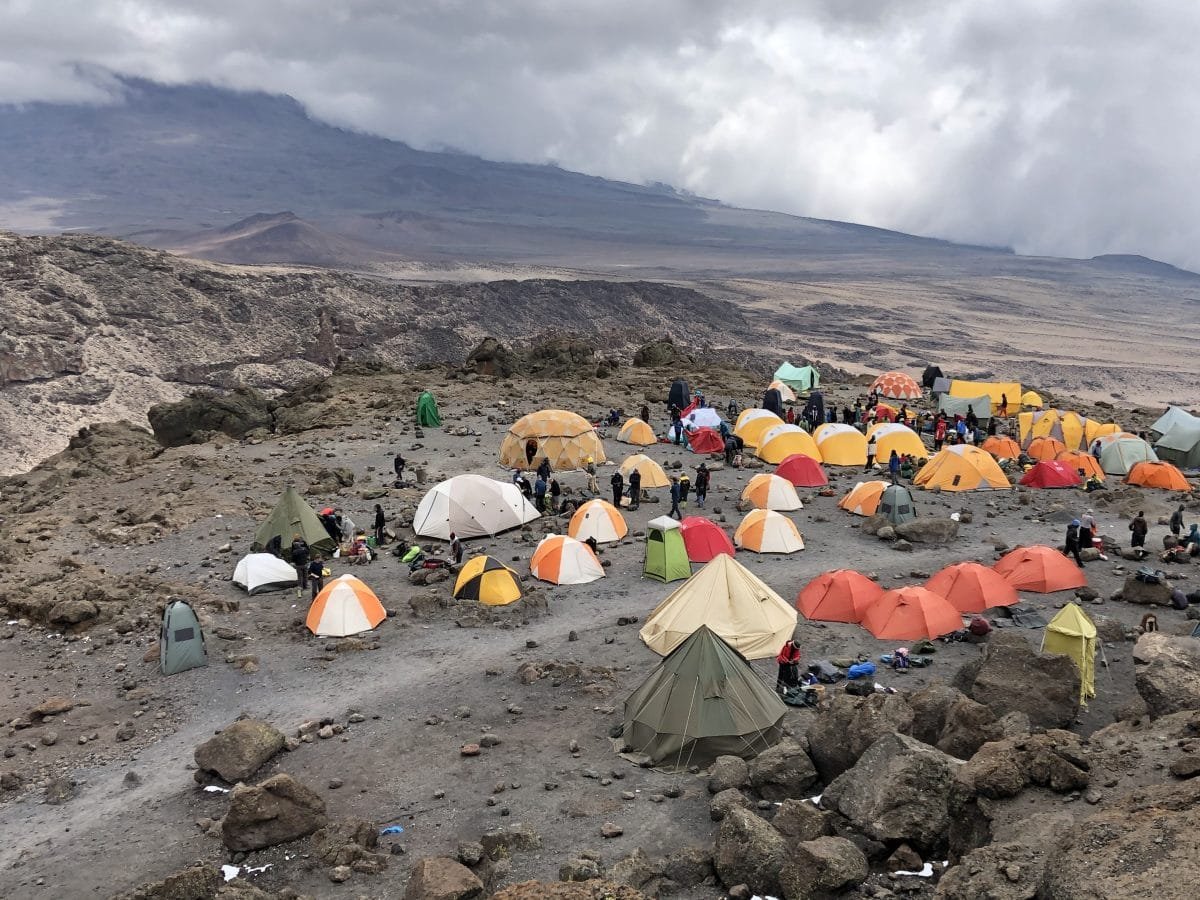
Choosing an early December departure on Mount Kilimanjaro balances two distinct operational variables: mountain trail density and weather transition. The dates running from 3 to 9 December 2026 sit directly in the calm window immediately before the peak holiday surges of Christmas and New Year. Climbers taking part in this scheduled group climb experience quieter wilderness trails across the Shira Plateau and reduced congestion on the iconic Barranco Wall. This guide examines the logistical mechanics, physical demands, daily altitude milestones, cost structure, and trail choices necessary to prepare for this exact seven-day western approach.
Early December Climbing Dynamics: Weather, Trail Traffic, and Terrain
Trekking on Kilimanjaro in early December places you at the tail end of East Africa’s short rainy season (traditionally known as the Vuli). By the first week of December, the moisture patterns shift toward drier, more stable atmospheric conditions driven by changing trade winds. For trekkers scheduled from 3 to 9 December 2026, this delivers distinct environmental characteristics that contrast sharply with the bone-dry, dust-heavy conditions seen in August or late January.
During early December, the lower montane rainforest between Londorossi Gate (2,100 m) and Big Tree Camp (2,780 m) remains rich, damp, and vibrant. Trail footpaths can be slick with clay, requiring trekking poles with rubber mud baskets and breathable, seam-sealed waterproof boots. As you emerge above the cloud line onto the Shira Plateau on Day 2, precipitation drops substantially. The mid-mountain microclimates—the heath and moorland belts—frequently offer clear, glass-like mornings with towering views of Kibo peak flanked by deep blue skies, while localized thermal clouds gather during mid-afternoon hours.
Precipitation Pattern for Early December: Rain, when it occurs, typically manifests as brief convective showers in the late afternoon rather than sustained all-day downpours. By the time evening sets in at Barranco or Karanga, cloud banks usually drop below the campsites, leaving crisp, star-filled, sub-zero nights ideal for radiant heat loss and rest.
Another primary benefit of joining the 3–9 December 2026 departure is trail serenity. The massive wave of international holiday climbers rarely arrives before 18–20 December. If you compare this departure with later schedules like the 7 Days Lemosho Kilimanjaro Christmas Climb – 20–26 December 2026-2027 or the 8 Days Lemosho Kilimanjaro New Year Summit Climb – 26 December – 2 January, you will encounter significantly fewer teams at high-altitude bottlenecks such as the narrow scrambles of the Barranco Wall and the final switchbacks up to Stella Point.
Temperatures during early December range from daytime highs of 15°C to 20°C in the lower forest to nighttime lows hovering between -5°C and -12°C at Barafu Base Camp (4,640 m) and the summit crater rim. Snowfall is always possible around Kibo crater during this seasonal transition, which often coats the loose scree paths in a stable layer of packed snow, easing the footing compared to the loose gravel conditions typical of dry September afternoons.
The 7-Day Lemosho Profile: Strategic Compression vs. 8-Day Profiles
The Lemosho Route is widely recognized by mountain guides as one of the finest approaches up Kilimanjaro because of its gradual western elevation gain, sweeping landscape views, and high acclimatization index. However, prospective climbers frequently ask how a 7-day Lemosho itinerary differs from an 8-day profile, such as the 8 Days Lemosho Route Kilimanjaro Group Climb – 15–22 December 2026-2027 or the 8 Days Lemosho Kilimanjaro Group Hiking – 7–14 December 2026-2027.
In an 8-day itinerary, the trek across the vast caldera remnants of the Shira Plateau is broken into two distinct camps: Shira 1 (3,500 m) and Shira 2 (3,840 m). This gives climbers an extra 24 hours of gentle pacing before taking on the major altitude test at Lava Tower. In our 7 Days Lemosho Route Kilimanjaro Group Climb – 3–9 December 2026, the pacing is tightened during the first 72 hours:
- Day 1: Drive from Moshi to Londorossi Gate for registration, transfer by rough road to Lemosho Glades trail point, and complete a 3- to 4-hour trek to Big Tree Camp (Mti Mkubwa).
- Day 2: Trek out of the rainforest, bypass the detour toward Shira 1, and press directly up over the Shira Ridge to establish camp at Shira 2 Camp (3,840 m). This involves a sustained 6- to 8-hour day covering substantial vertical gain (over 1,000 meters).
- Days 3 through 7: Rejoin the identical acclimatization track of standard 8-day ascents, tackling the vital “climb high, sleep low” profile via Lava Tower (4,630 m) down into Barranco Camp (3,960 m).
The compression on Day 2 requires adequate baseline cardiovascular conditioning and solid mental resolve. While the 7-day itinerary remains markedly safer and more effective for altitude adjustment than rapid routes like the 5 Days Marangu Route Kilimanjaro Trek – 2–6 December 2026 or the 6 Days Machame Route Kilimanjaro Group Trek – 3–8 December 2026-2027, hikers should recognize that Day 2 is demanding. If your schedule allows for later or alternate dates, comparisons can also be made with departures like the 7 Days Lemosho Route Kilimanjaro Group Trek – 6–12 December 2026-2027 or the 7 Days Lemosho Kilimanjaro Group Joining – 12–18 December 2026-2027.
2026-2027 Cost Framework, Inclusions, and Crew Structure
Transparency regarding pricing, park fees, and logistical inclusions prevents unexpected expenses and ensures that operations align with rigorous safety standards and fair porter treatment. For our 2026-2027 seasons, the standard published group tier for the 7-day Lemosho climb ranges between $2,150 and $2,650 per trekker, depending on group size (typically capped between 6 and 10 climbers per party to maintain strict mountain safety standards).
Understanding what goes into this pricing structure clarifies why cut-rate operators charging under $1,700 frequently cut corners on critical elements such as porter food rations, guide certifications, medical gear, and evacuation readiness.
Financial Architecture: 7-Day Group Climb (2026-2027)
Every booking includes compulsory statutory government and national park fees collected directly by the Tanzania National Parks Authority (TANAPA). On the Lemosho Route, these statutory components account for a substantial portion of your overall cost:
- TANAPA Conservation Fees: ~$70 per day per climber ($490 total)
- TANAPA Camping Fees: ~$50 to $60 per night ($300 to $360 total)
- Rescue Fees: Mandatory park evacuation insurance ($20 per climber)
- Crew Entry and Camping Fees: Daily statutory fees for all guides, cooks, and porters
- 18% Value Added Tax (VAT): Applied across all combined park and tourism services by the Tanzanian government
The remaining portion of your payment funds mountain logistics, team welfare, and high-altitude safety resources managed by TOP GUIDE ADVENTURES from our regional base in Moshi/Arusha:
| Logistical Area | Direct Service Inclusions | Excluded Items / Trekkers’ Budget |
|---|---|---|
| Transportation | Kilimanjaro Airport (JRO) transfers; overland 4×4 transport from hotel to Londorossi Gate; return pickup at Mweka Gate. | International or domestic flight tickets; visa entry fees ($50-$100 cash/online); transit hotels outside the trip window. |
| Mountain Accommodations | Four-season mountain tents (mountain-grade geometric design); thick closed-cell sleeping pads; private chemical toilet tents. | Sleeping bags rated to -15°C (available for local rental); personal trekking duffel bags and daypacks. |
| Safety Infrastructure | Medical-grade emergency oxygen cylinders; daily twice-checked pulse oximeters; comprehensive trauma kit; litter evacuation coordination. | Comprehensive high-altitude travel/medical insurance with helicopter evacuation coverage up to 6,000 meters. |
| Nutrition & Water | Three fresh hot meals daily prepared by an expedition mountain cook; unlimited boiled and micro-filtered drinking water. | Specialty electrolyte tablets, personal trail snacks, protein bars, alcohol, and soft drinks at the hotel. |
| Mountain Staffing | Wilderness First Responder (WFR) certified lead guides; assistant guides (1:2 or 1:3 ratio); camp manager; luggage porters. | Crew gratuities/tips (industry benchmark: $250 to $350 per climber distributed among the entire mountain support team). |
Day-by-Day Route Progression: Londorossi to Barafu and Mweka
The beauty of the 7-day western approach lies in its distinct terrain transitions: transitioning from deep equatorial rainforest, over spongy heath and barren moorland, past monolithic volcanic plugs, into high-altitude alpine desert, and finally up the frozen scree of Kibo. Below is the tactical breakdown for the 3–9 December 2026 schedule.
Day 1 (3 December 2026): Moshi to Londorossi Gate (2,100 m) to Big Tree Camp (2,780 m)
Your team departs Moshi early in the morning for a scenic 3- to 4-hour drive skirting the western base of Kilimanjaro toward Londorossi Gate. Here, national park officials register all trekkers while the mountain logistics crew organizes and weighs duffel bags (strictly limited to 15 kg per porter under national park regulations). Following registration, another 45-minute drive on a dirt forest track brings you to the Lemosho Glades trailhead.
Setting off on foot through lush podocarpus and camphorwood forest, the trail weaves among moss-covered branches. Colobus monkeys are frequently heard and spotted overhead. The trek to Big Tree Camp (also called Mti Mkubwa) is deliberately kept at a gentle pole pole (slow, steady) pace to avoid early muscle strain. You cover roughly 6 km over 3 to 4 hours with an elevation gain of 680 meters. Upon arrival, your mountain crew will have already erected the sleeping tents. A hot dinner is served inside the mess tent, followed by the first evening medical evaluation.
Day 2 (4 December 2026): Big Tree Camp (2,780 m) across Shira Ridge to Shira 2 Camp (3,840 m)
Day 2 is the most demanding elevation day of the early route. The team starts before 07:30 to maximize clear weather. The trail climbs sharply out of the canopy, leaving the jungle behind to enter the giant heather zone, where sprawling proteas, lobelias, and tussock grasses dominate.
You will ascend past the Shira Ridge (approaching 3,600 m), where the trail crests onto the expansive Shira Plateau—a massive collapsed caldera covering dozens of square kilometers. While the 8-day trek branches toward Shira 1, our 7-day itinerary continues directly east across the plateau moorland toward Shira 2 Camp. Total distance covered is approximately 14 km over 7 to 8 hours. By late afternoon, you settle into Shira 2 at 3,840 m. The thin, crisp air makes the western face of Kibo appear remarkably close. Because of the rapid 1,060-meter elevation gain, staying hydrated—drinking at least 3.5 to 4 liters of filtered water throughout the day—is critical to ward off early symptoms of acute mountain sickness (AMS).
Day 3 (5 December 2026): Shira 2 Camp (3,840 m) to Lava Tower (4,630 m) down to Barranco Camp (3,960 m)
This stage represents the functional cornerstone of your climb’s acclimatization schedule. Day 3 exemplifies the foundational mountaineering doctrine: walk high, sleep low. Leaving Shira 2, the trail trends east-southeast up rocky, windswept volcanic landscapes where vegetation steadily fades into desert. You spend roughly 4 hours climbing steadily toward the base of Lava Tower, a volcanic neck rising steeply out of the terrain at 4,630 meters.
Lunch is served near the foot of the tower. Resting at this altitude forces your cardiovascular system to trigger increased production of red blood cells to compensate for lower oxygen pressure. After lunch, the path descends into the sheltered Barranco Valley, dropping nearly 670 meters over 2 hours. This elevation drop relieves early headaches and allows the body to recover comfortably. Barranco Camp (3,960 m) is widely considered the most scenic spot on the mountain, located beneath the dramatic south-facing breach wall and surrounded by endemic giant groundsel plants (Dendrosenecio kilimanjari).
Day 4 (6 December 2026): Barranco Camp (3,960 m) to Karanga Camp (3,995 m) via Barranco Wall
The morning starts with an immediate test: conquering the famous Barranco Wall. Despite its imposing appearance from camp, the wall is not a technical rock climb. It is an exhilarating, non-technical scramble using your hands and feet across stable volcanic ledges with plenty of secure grip points. Guides walk alongside every climber through key sections, including the well-known “Kissing Rock” corner.
Check Availability for 7 Days Lemosho Route Kilimanjaro Group Climb – 3–9 December 2026-2027
Ready to compare dates, prices, and the best option for your group? Send the package name and travel month so the team can reply with a clear quote, availability, and what is included.
8 Days Lemosho Route Kilimanjaro Group Climb – 15–22 December 2026-2027
8 Days Lemosho Route Kilimanjaro Group Climb – 15–22 December 2026 is explained with current 2026-2027 planning, price, itinerary and booking information.
View package details
8 Days Lemosho Route Kilimanjaro Group Departure – 12–19 December 2026-2027
A detailed guide to the 8-day Lemosho Route Kilimanjaro group climb departing 12–19 December 2026, covering route details, daily itinerary, acclimatization strategy, and what to expect.
View package details
7 Days Lemosho Route Kilimanjaro Group Trek – 6–12 December 2026-2027
7 Days Lemosho Route Kilimanjaro Group Trek – 6–12 December 2026 is explained with current 2026-2027 planning, price, itinerary and booking information.
View package details
8 Days Lemosho Kilimanjaro Full Moon Group Trek – 18–25 December 2026-2027
An 8-day group trek on Kilimanjaro's scenic Lemosho Route timed for the December 2026 full moon period, with summit day on Christmas morning.
View package details
8 Days Lemosho Kilimanjaro Group Hiking – 7–14 December 2026-2027
8 Days Lemosho Kilimanjaro Group Hiking – 7–14 December 2026 is explained with current 2026-2027 planning, price, itinerary and booking information.
View package details
7 Days Machame Kilimanjaro Group Climb – 9–15 December 2026-2027
A detailed guide to the 7-day Machame Route Kilimanjaro group climb in December 2026, covering itinerary, preparation, and what to expect.
View package details5 Days Marangu Route Kilimanjaro Group Climb – 8–12 December 2026-2027
5 Days Marangu Route Kilimanjaro Group Climb – 8–12 December 2026 is explained with current 2026-2027 planning, price, itinerary and booking information.
View package details
6 Days Machame Route Kilimanjaro Group Trek – 3–8 December 2026-2027
A detailed guide to the 6-day Machame Route Kilimanjaro group trek departing 3–8 December 2026, covering route details, daily itinerary, preparation, and booking.
View package details
8 Days Lemosho Kilimanjaro New Year Summit Climb – 26 December – 2 January
8 Days Lemosho Kilimanjaro New Year Summit Climb – 26 December 2026 – 2 January 2027 is explained with current 2026-2027 planning, price, itinerary and.
View package details
7 Days Lemosho Kilimanjaro Christmas Climb – 20–26 December 2026-2027
7 Days Lemosho Kilimanjaro Christmas Climb – 20–26 December 2026 is explained with current 2026-2027 planning, price, itinerary and booking information.
View package details
9 Days Lemosho Kilimanjaro Full Moon Climb – 17–25 December 2026-2027
9 Days Lemosho Kilimanjaro Full Moon Climb – 17–25 December 2026 is explained with current 2026-2027 planning, price, itinerary and booking information.
View package details6 Days Marangu Kilimanjaro Group Hiking – 9–14 December 2026-2027
6 Days Marangu Kilimanjaro Group Hiking – 9–14 December 2026 is explained with current 2026-2027 planning, price, itinerary and booking information.
View package detailsNo closely related package is available yet for this topic.

Our Guest Reviews, Currently Feedback from Clients in 2026
Reviews from different sources, including Google Business, Tripadvisor, other platforms, and social media.