
A 3-day Serengeti and Ngorongoro safari costs between $650 and $900 per person for a budget camping group-joining tour, $1,100 to $1,650 per person for a private or small-group mid-range lodge package, and $1,950 to $3,400+ per person for an upscale tented lodge or luxury safari in 2026-2027. The final price depends primarily on group size, vehicle private-hire costs, accommodation standard inside versus outside the park boundaries, and mandatory statutory fees—specifically the Tanzanian government conservation fees, Ngorongoro Crater descent fees, and 18% Value Added Tax (VAT).

2026-2027 Cost Snapshot: What You Pay Across Different Safari Tiers
Understanding the price tag of a 3-day expedition into Tanzania’s Northern Safari Circuit requires separating actual operator overhead from statutory baseline fees. Because Serengeti National Park and the Ngorongoro Conservation Area sit adjacent to one another roughly 250 to 320 kilometers west of Arusha, a 3-day trip demands significant ground transit, specialized off-road equipment, and entry into two distinct government-managed conservation bodies.
For planning your travel during the 2026-2027 season, safari operators categorize standard 3-day road departures into three primary service tiers: basic budget camping, comfort mid-range tented lodges, and all-inclusive luxury lodges. While special deals exist during the short rains of November and the green season between April and mid-May, peak season pricing (July through October and mid-December through February) commands standard international rates.
Realistic 3-Day Serengeti & Ngorongoro Safari Price Estimates (Per Person, Sharing)
Prices below reflect typical twin-sharing calculations starting and ending in Arusha or Moshi. If you travel solo on a private itinerary, total vehicle and crater access expenses are borne by one traveler, significantly raising the individual quote.
| Safari Travel Style | Estimated Rate (Low / Green Season) | Estimated Rate (High / Peak Season) | Typical Accommodation Used | Transport Setup |
|---|---|---|---|---|
| Budget Group-Joining Camping | $650 – $750 per person | $750 – $920 per person | Public campsites (e.g., Seronera, Simba A) with ground tents and mattress | Shared 6-to-7-seat custom 4×4 Land Cruiser with pop-up roof |
| Mid-Range Private Safari (2 Travelers) | $1,100 – $1,350 per person | $1,380 – $1,650 per person | Mid-tier tented camps (e.g., Baobab, Osinon, Mara Under Canvas, Eileen's Trees) | Private 4×4 Land Cruiser with dedicated driver-guide and unlimited fuel |
| Mid-Range Small Group (4–6 Travelers) | $890 – $1,050 per person | $1,050 – $1,280 per person | Standard permanent tented lodges with en-suite flush toilets and hot showers | Private 4×4 Land Cruiser shared among family or friends |
| Luxury Safari (Private 2 Travelers) | $1,950 – $2,500 per person | $2,600 – $3,800+ per person | High-end luxury lodges (e.g., Kubu Kubu, Four Seasons, Melia, &Beyond Crater Lodge) | Private extended 4×4 Cruiser with on-board Wi-Fi, mini-fridge, and top-tier guide |
Travelers assessing quotes should note that a 3-day itinerary is intensely compressed. You are crossing vast physical expanses where fuel consumption is substantial and vehicle wear-and-tear is aggressive due to washboard murram roads and volcanic dust. To understand how these numbers are calculated, travelers often cross-reference broader Northern Circuit pricing via our comprehensive guide on how much a Tanzania safari costs per person in 2026-2027, where duration and park selection directly scale the total financial commitment.
The Non-Negotiable Math: Tanzanian Park Fees, Crater Fees, and Taxes
The single most confusing aspect for international visitors booking a northern safari is why short safaris carry such a high base rate. The explanation rests squarely on the statutory conservation fees established by the Tanzania National Parks Authority (TANAPA) and the Ngorongoro Conservation Area Authority (NCAA). These fees are legally fixed, non-discountable, and must be paid in foreign currency or equivalent local electronic funds before any commercial vehicle passes the registration gates.
Unlike independent road trips in Southern Africa or North America, Tanzania operates a fee structure designed to control vehicle density, support extensive antipoaching operations, fund ecological maintenance, and manage local community conservation. For any 3-day itinerary that enters the Serengeti via Ngorongoro, operators must settle three separate categories of charges:
- Serengeti National Park Conservation Fees: Set at $70 per non-resident adult per 24 hours during peak season ($60 in low season), plus statutory 18% VAT, bringing the daily cost to roughly $82.60 per person per 24-hour cycle.
- Ngorongoro Transit and Conservation Entry Fees: Crossing the Ngorongoro Conservation Area to reach Serengeti requires paying the NCAA entry fee of $70 per adult per 24 hours plus 18% VAT ($82.60 per person). If your return path on Day 3 also utilizes Ngorongoro, permits must be precisely coordinated to avoid overlapping 24-hour penalties.
- Ngorongoro Crater Descent Fee: Driving down onto the crater floor for a 5-to-6-hour game drive requires a separate single-entry vehicle permit of $295 per vehicle, inclusive of 18% VAT. This flat fee applies regardless of whether the vehicle carries one passenger or six.
- Concession / Special Campsite Fees: If you stay inside national park borders or conservation boundaries, the government levies an overnight concession fee payable on top of the lodge’s internal room rate. In Serengeti, adult concession fees are $59 per night (peak) or $35.40 (low season), while staying inside Ngorongoro costs $70.80 per adult per night inclusive of tax. Public camping fees are slightly lower (around $35.40 per adult per night).
When you tally two nights of accommodation, two days of park entry, cross-transit fees, the crater descent permit, and statutory VAT, mandatory government charges alone equal $400 to $580 per adult on a 3-day circuit. This financial reality means that any quote offering a 3-day private Serengeti and Ngorongoro safari for under $600 per person is mathematically impossible without cutting corners on guide wages, passenger safety, vehicle registration, or legitimate tax compliance.
Vehicle Logistics and Fuel: Why Private 4×4 Land Cruisers Anchor the Base Price
Outside of park tariffs, the primary structural cost center of your safari is the dedicated expedition vehicle. In Tanzania, reputable operators deploy custom-built, heavy-duty Toyota Land Cruiser 4x4s fitted with long-range dual fuel tanks, upgraded off-road suspension, heavy off-terrain tires, two full-sized spare wheels, high-frequency two-way radios, power inverters for charging equipment, pop-up roofs for 360-degree photography, and an on-board refrigeration unit for cold drinking water.
Maintaining these vehicles for service along the corrugated gravel roads connecting Makuyuni, Karatu, the Ngorongoro Crater rim, and the central Seronera Valley is an expensive operational undertaking. An operational Land Cruiser costs between $180 and $250 per calendar day to charter, covering:
- The daily rental value of the licensed commercial tourism vehicle.
- The professional wages, food allowances, and overnight accommodation of an authorized, English-speaking driver-guide certified by local tourism authorities.
- Unlimited game drive fuel across hundreds of kilometers of rough terrain where vehicles consume heavy diesel in full-time 4WD mode.
- Daily vehicle transit and parking fees inside government-protected gates.
This flat daily cost provides a clear mathematical explanation of why safari costs drop significantly per person when sharing. If a private couple hires the vehicle for 3 days, they absorb $600 to $750 in vehicle costs between two people ($300 to $375 each). If four friends or family members share that exact same vehicle, the individual transport cost drops to roughly $150 to $188 each. For solo travelers seeking to avoid bearing the entire vehicle charge alone, booking a seat on a scheduled Tanzania group joining safari to Serengeti and Ngorongoro is the most cost-effective path to experience the circuit without private vehicle overhead.
The Realistic 3-Day Itinerary Blueprint: Hours, Distances, and Game Drives
When prospective travelers look at a map, Serengeti and Ngorongoro appear neatly positioned along a single road. However, driving conditions and gate regulations strictly dictate what can physically be accomplished in 72 hours. A standard 3-day safari is fast-paced, high-reward, and logistically rigorous. Understanding the time spent in transit allows you to gauge whether a 3-day itinerary delivers the value you want or whether extending your tour by one or two days is worth the investment.
Day 1: Arusha or Moshi to Central Serengeti (Seronera) via Ngorongoro Highlands
Route: Arusha – Mto wa Mbu – Karatu – Loduare Gate (NCAA) – Naabi Hill Gate – Seronera Valley
Distance: Roughly 335 kilometers (approximately 7 to 8 hours including gate paperwork, transit, and en-route wildlife spotting)
Meals: Packed picnic lunch on the road; full dinner at your camp or lodge.
Your morning begins before dawn, generally departing Arusha around 06:00 to 06:30 AM (or 05:00 AM from Moshi). You travel along tarmac roads across the Maasai Steppe, past Lake Manyara and the agricultural town of Karatu, before reaching the entrance of the Ngorongoro Conservation Area at the Loduare Gate.
After park clearance, your Land Cruiser ascends the misty, rainforest-clad crater rim road before descending westward along the rocky outer slopes of the Malanja Depression. You cross into the legendary short-grass plains via the Naabi Hill entry gate, the official southern portal into Serengeti National Park. Following a picnic lunch and registration processing at Naabi, the afternoon unfolds into an introductory game drive through the Seronera Valley—home to resident leopard populations along the Seronera River, prides of lions perched on granite kopjes, and sprawling herds of impala, topis, and gazelles. You arrive at your lodge or camp before dark for dinner.
Day 2: Central Serengeti Game Drives to Ngorongoro Crater Rim
Route: Seronera Valley – Moru Kopjes / Retima Hippo Pool – Naabi Hill Gate – Karatu or Crater Rim
Game Drive Time: 5 to 6 hours active wildlife tracking followed by 3 hours return transit across the conservation area
Meals: Early morning breakfast, bush picnic lunch, hot dinner at your overnight lodge.
Wildlife is most active during the crisp first hours of daylight. You head out at 06:00 AM across the central savannah plains where predators like cheetahs and hyenas conclude their dawn hunts. Depending on season and animal movement, your guide targets specific river circuits, kopje outcroppings, or the marshlands around Retima to spot hippos packed into deep water pools.
Around midday, after a picnic lunch under an acacia shade tree or at an authorized picnic site, your Land Cruiser works its way south back toward Naabi Hill. You clear out of Serengeti within your 24-hour entry window and traverse the high-altitude Ngorongoro conservation plateau. For mid-range travelers, overnight stays typically take place either in comfortable permanent lodges in nearby Karatu (lowering cost and providing warmer nighttime temperatures) or directly on the forested Crater Rim for immediate early morning gate access.
Day 3: Ngorongoro Crater Floor Tour and Return Transit to Arusha
Route: Crater Rim / Karatu – Seneto Descent Road – Crater Floor – Lerai Forest – Arusha / Moshi
Game Drive Time: Maximum 5 to 6 hours authorized descent on the crater floor
Meals: Breakfast at accommodation, picnic lunch by the hippo pool, return transfer.
Day 3 centers on descending 600 meters down the sheer caldera walls into the world’s largest intact volcanic amphitheater. Spanning over 260 square kilometers, the floor of the Ngorongoro Crater contains a remarkably concentrated ecosystem hosting roughly 25,000 to 30,000 large mammals.
This final day offers your highest statistical probability of encountering the critically endangered black rhino on the open plains of the crater floor, along with magnificent tusker elephants around Lerai Forest, dense lion prides near Lake Magadi, and flocks of flamingos feeding on alkaline algae. After a picnic lunch near the Ngoitokitok spring site, your 4×4 climbs out via the steep ascent road and begins the smooth 3.5 to 4-hour paved journey back to Arusha, arriving late in the afternoon in time for evening dinner or onward transfers to Kilimanjaro International Airport (JRO).
For travelers interested in this specific fast-paced route departing directly from the foot of Mount Kilimanjaro, our detailed route briefing on the best 3-day Serengeti and Ngorongoro safari from Moshi outlines the precise departure times and pickup logistics required to maximize wildlife viewing across limited calendar days.
Accommodation Tiers Compared: Public Campsites vs Tented Lodges vs Rim Properties
Accommodation represents the largest floating variable in your final booking total. Because tourism infrastructure across the Serengeti ecosystem ranges from unfenced pitch-your-own-tent clearings to five-star properties with private plunge pools, matching your comfort threshold to your budget is essential before confirming reservations.
1. The Budget Camping Tier ($650 – $900 per person)
Budget safaris use public campsites managed by national park authorities, such as Seronera Public Campsite in central Serengeti and Simba Campsite on the Ngorongoro Crater rim. These sites provide basic shared concrete ablution blocks with cold (and occasionally solar-warm) showers and flush toilets.
Check Availability for How Much Does A 3 Day Serengeti And Ngorongoro Safari Cost? 2026-2027
Ready to compare dates, prices, and the best option for your group? Send the package name and travel month so the team can reply with a clear quote, availability, and what is included.
Tanzania Safari Packages For Elderly Travelers With Comfortable Lodges ()
A comprehensive practical planning guide for senior and elderly travelers seeking comfortable, slow-paced Tanzania wildlife safaris paired with step-free, high-comfort lodges across...
View package details
How Much Does A 2 Day Tanzania Safari Cost From Arusha? 2026-2027
How Much Does a 2 Day Tanzania Safari Cost from Arusha? is explained with current 2026-2027 planning, price, itinerary and booking information.
View package details
How Much Does A Tanzania Safari Cost Per Person In ? 2026-2027
How Much Does a Tanzania Safari Cost Per Person in 2027? is explained with current 2026-2027 planning, price, itinerary and booking information.
View package details
What Is The Average Cost Of A 4 Day Tanzania Safari? 2026-2027
What Is the Average Cost of a 4 Day Tanzania Safari? is explained with current 2026-2027 planning, price, itinerary and booking information.
View package details
Can I Book A Tanzania Safari With An English-Speaking Private Guide? 2026-2027
Can I Book a Tanzania Safari with an English-Speaking Private Guide? is explained with current 2026-2027 planning, price, itinerary and booking information.
View package details
Can I Book A Private Tanzania Safari For Just Two People? 2026-2027
Can I Book a Private Tanzania Safari for Just Two People? is explained with current 2026-2027 planning, price, itinerary and booking information.
View package details
Tanzania Safari Tours With No Minimum Number Of Participants 2026-2027
Tanzania Safari Tours with No Minimum Number of Participants is explained with current 2026-2027 planning, price, itinerary and booking information.
View package details
Can I Book A Safari From Zanzibar Without Staying Overnight On The Mainland?
Can I Book a Safari from Zanzibar Without Staying Overnight on the Mainland? is explained with current 2026-2027 planning, price, itinerary and booking.
View package details
Tanzania Safari Packages For Solo Travelers Without Expensive Single
A comprehensive practical guide to booking Tanzania safari packages for solo travelers without paying punitive single supplements, covering group departures, room-share models, private...
View package detailsCan I Join A Safari Group Without Sharing A Hotel Room? 2026-2027
Can I Join a Safari Group Without Sharing a Hotel Room? is explained with current 2026-2027 planning, price, itinerary and booking information.
View package details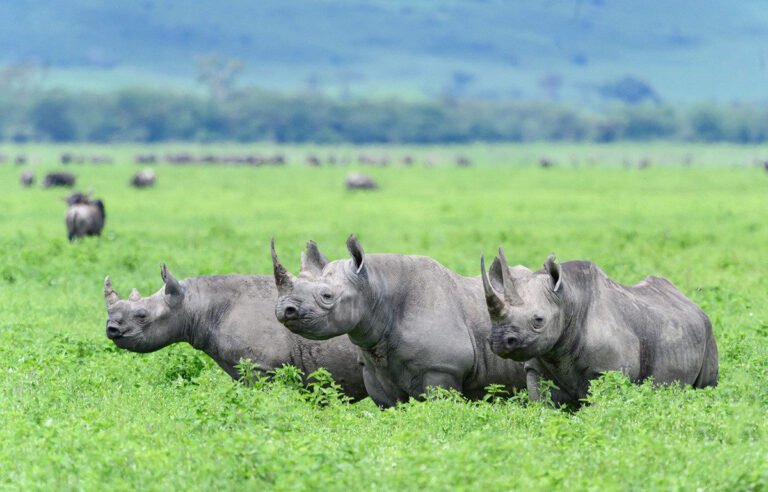
Tanzania Safari Tours For Couples With Different Budgets: Complete Planning
A detailed 2026-2027 comparative guide to planning couples safaris in Tanzania across entry-level budget camping, comfort mid-range tented lodges, and exclusive luxury circuits.
View package detailsNo closely related package is available yet for this topic.

Our Guest Reviews, Currently Feedback from Clients in 2026
Reviews from different sources, including Google Business, Tripadvisor, other platforms, and social media.



