
Tanzania safari prices are typically 15% to 35% cheaper when booking directly with licensed local operators based in Arusha or Moshi rather than international travel agencies. A local operator owns the customized 4×4 safari Land Cruisers, directly employs licensed professional safari driver-guides, and pays wholesale ground rates for national park permits and lodge bookings, eliminating the retail markups and sub-contracting fees added by overseas middlemen. For 2026-2027 safaris, booking direct cuts typical mid-range costs from $450–$650 per person per day down to $320–$450 per person per day, while delivering faster operational support, flexible itinerary adjustments, and authentic ethical compensation for Tanzanian crew members.
The Supply Chain Reality: How International Agencies Mark Up Tanzania Safaris
To understand whether booking with a local Tanzanian operator genuinely saves money, you have to look at how the global African safari supply chain is constructed. Most prospective travelers begin their search on high-gloss booking portals, boutique travel agencies in the United States, the United Kingdom, Germany, or Australia, or large multinational aggregators. These retail companies rarely maintain their own safari vehicles, guide rosters, mechanical workshops, or physical operations hubs in Arusha or Moshi.
Instead, overseas agencies act as retail brokers. When you approve an itinerary through an international agency, they package your dates, lodge preferences, and transfer requests, and forward them to a Destination Management Company (DMC) or an indigenous ground handler in Tanzania. The local operator handles the physical safari: supplying the modified Toyota Land Cruiser, fuel, national park gate clearances, private driver-guide, bottled water, cooler boxes, and lodge vouchers.
Because the overseas agency maintains storefront offices, massive marketing budgets, pay-per-click advertising, international liability policies, and domestic administrative staff, they add an overhead margin ranging from 15% to 40% on top of the ground invoice provided by the Tanzanian operator. In many cases, money changes hands twice or three times before a single dollar reaches the crew meeting you at Kilimanjaro International Airport (JIA).
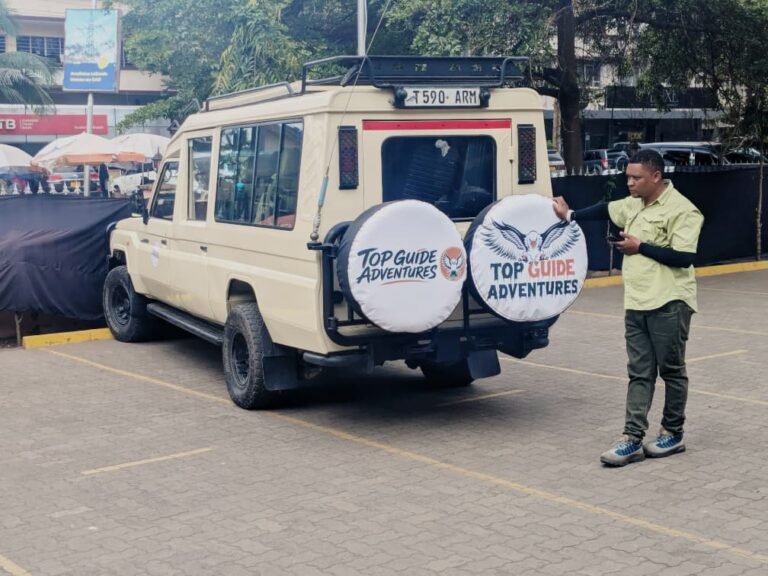
By contrast, communicating directly with an established local Tanzanian operator like Top Guide Adventures bypasses retail intermediaries. You liaise with the exact team coordinating fleet maintenance, booking concession permits through the Tanzania National Parks Authority (TANAPA), and dispatching your driver-guide. Cutting out the middle tiers of booking margin yields genuine price reductions without stripping away lodge quality, vehicle dependability, or safety protocols.
Cost Comparison Table: Local Operators vs. International Middlemen (2026-2027)
Safari rates vary across tiers—from basic camping to high-end luxury canvas. However, comparing identical travel dates, identical Serengeti and Ngorongoro lodges, and equivalent private 4×4 vehicles highlights the exact spread between booking direct locally and purchasing through an international re-seller for 2026-2027 travel seasons.
| Safari Tier & Style | Direct Local Operator Daily Rate (Per Person) | International Agency Daily Rate (Per Person) | Where the Price Difference Originates |
|---|---|---|---|
| Budget Camping (Group Sharing) Public campsites, camp cook, pop-up roof 4×4 |
$190 – $260 | $280 – $380 | Overseas marketing costs, payment processing markups, sub-contracting broker margin. |
| Standard Mid-Range (Private, 2 People) Comfort tented camps, en-suite bathrooms, full board |
$350 – $480 | $490 – $690 | International retail markups of 25–35%, added admin surcharges, third-party commission tiers. |
| Semi-Luxury / Upper Mid-Range (Private) Permanent lodges & luxury seasonal mobile camps |
$520 – $750 | $750 – $1,100 | Boutique agency branding premiums, outsourced local concierge charges. |
| Fly-In Safari (Northern Circuit to Zanzibar) Coastal Aviation/Auric Air bush flights included |
$650 – $950 | $950 – $1,450 | Flight ticket brokerage fee additions and duplicated domestic handling charges. |
When looking at an average 6-day private mid-range northern circuit safari for two adults, booking directly through an indigenous Arusha operator commonly trims $1,600 to $2,800 from the total invoice. This difference does not stem from downgrading your experience; the beds you sleep in at the central Serengeti camp, the vehicle you ride in across Ngorongoro Crater, and the food prepared along the route remain identical. For deeper clarity on specific daily expenditures across national parks, see our comprehensive analysis on how much a Tanzania safari costs per person.
The Non-Negotiable Ground Floor: Park Fees, Concessions, and Taxes
While local operators are noticeably cheaper than foreign agencies, prospective travelers frequently wonder why Tanzania remains an expensive destination overall. Why cannot a local operator offer a week-long Serengeti trip for $500 total? The answer lies in statutory, non-negotiable costs imposed directly by Tanzanian government conservation authorities.
Every reputable safari quote is anchored by mandatory fees established by TANAPA, the Ngorongoro Conservation Area Authority (NCAA), and the Tanzania Revenue Authority (TRA). These fees apply equally whether you book through a multi-million-dollar London agency or directly with an Arusha garage operator:
- Conservation Entry Fees: Serengeti National Park charges $82.60 per adult per 24 hours (inclusive of 18% VAT) during peak season, while Tarangire and Lake Manyara charge $59 per adult.
- Ngorongoro Crater Service Fee: Descending into the Ngorongoro Crater floor incurs a statutory vehicle permit fee of $295 per vehicle per descent, regardless of whether there is one passenger or six inside.
- Special Campsite and Concession Fees: Sleeping inside national park boundaries attracts a nightly concession fee ($70.80 per adult per night in the Serengeti; $59 in Ngorongoro), which is added onto the base accommodation rate.
- Value Added Tax: Tourism services in Tanzania attract a mandatory 18% statutory VAT under national tax legislation.
Because these statutory overheads form an uncompromising foundation—often consuming $160 to $220 per traveler per day before accounting for wheels, fuel, guide wages, food, or lodging—any operator quoting prices below statutory thresholds is either omitting government permits, evading park gate declarations, or engaging in deceptive practices. Review our guide explaining what is included in an all-inclusive Tanzania safari package to accurately verify that every permit fee is fully integrated before paying an initial deposit.
Vehicle Logistics and Guide Salaries: What Actually Determines Operational Pricing
Beyond mandatory government tariffs, the two largest daily operational expenses are the custom safari vehicle and the professional driver-guide. Understanding the daily economics of these resources shows why local outfits deliver unmatched value.
Vehicle Maintenance Realities
A customized 4×4 safari Land Cruiser fitted with heavy-duty suspension, dual spare tires, high-wattage inverters, extended pop-up game-viewing roofs, and long-range VHF radios represents a massive asset investment. Operating these vehicles over the punishing volcanic corrugations between Karatu, the Ngorongoro highlands, and Central Serengeti demands continuous fleet maintenance. A local operator with its own workshop in Moshi or Arusha manages mechanics directly, absorbs maintenance costs at internal labor rates, and ensures that critical replacement components are installed proactively.
Foreign travel agents rarely factor in the practical logistics of mechanical upkeep. They simply book whatever vehicle is assigned by their contract partner. An indigenous operator directly assesses vehicle readiness, selects fuel strategies, and avoids markups on daily vehicle charter rates (which routinely hover around $200 to $280 per day for vehicle hire, unlimited game drive fuel, and driver logistics).
Guide compensation represents another critical component. Highly skilled, certified professional guides—members of the Tanzania Association of Tour Operators (TATO) or the Interpretive Guides Society (IGS)—bring years of animal behavior tracking, bush mechanic skills, and multilingual fluency. Direct booking ensures that fair daily working wages reach the guide without intermediary commissions eroding field allowances. When comparing safari options, pairing with an authorized operator that retains its guides on fair permanent structures guarantees superior dedication on long game drives.
Group-Joining vs. Private Safari: How Local Direct Booking Changes the Math
When evaluating costs with local safari companies, your party format dramatically dictates final pricing. Because the fixed daily costs of the vehicle, fuel, driver-guide, and crater descent fees are shared equally among all passengers in the Land Cruiser, traveler headcount transforms the per-person quote.
For solo travelers or couples travelling on defined budgets, booking through an indigenous Arusha operator opens access to guaranteed daily departure group-joining circuits. International agencies almost universally mark down group-joining travel as logistically cumbersome, preferring to sell high-margin private tours. However, local operators manage scheduled group departures directly from Arusha every morning.
- Group-Joining Departures: A single traveler or couple shares a 6-seat window-guaranteed vehicle with fellow travelers. Fixed operating costs (vehicle hire, fuel, crater descent permits) are divided among 4 to 6 people. This drops northern circuit budgets to between $200 and $320 per person per day. Check current schedules on our Tanzania safari group departures table.
- Custom Private Departures: A dedicated vehicle and private guide give you complete control over wake-up hours, route selection, and photographic pacing. For two travelers, costs hover around $380 to $550 per person per day for mid-range lodging. However, if four friends travel together in a private vehicle, the per-person price drops immediately by roughly 25% to 30% because vehicle charter costs split across four seats.
For an in-depth breakdown of how vehicle dynamics change final quotes across groups, read our comparative evaluation of private vs. group joining Tanzania safari costs.
When Cheap Becomes Dangerous: Separating Reputable Local Operators from Unlicensed Brokers
While booking with an authentic local operator yields clear financial savings, hunting blindly for the absolute lowest dollar figure on internet message boards or street corners in Arusha carries substantial hazards. There is a distinct difference between an established, licensed local company running its own fleet and an unregistered individual broker—often called a “briefcase operator” or “street tout.”
Unlicensed street middlemen do not own vehicles, offices, or insurance policies. When an unsuspecting traveler pays a deposit to an unverified broker, that individual simply shops the reservation around to different budget operators, skimming off a cash cut and handing the traveler off to whichever company has an empty seat. If a mechanical breakdown occurs, game drives are cut short to conserve fuel, or lodging bookings are missed, the broker vanishes, leaving the traveler with zero recourse.
Vetting Checklist: How to Verify a Genuine Local Operator for 2026-2027
- TALA License: Ensure the operator holds a valid Tourism Agency Licensing Action (TALA) permit issued by the Tanzania Ministry of Natural Resources and Tourism. Without a TALA license, a business cannot legally operate safaris.
- Physical Operational Presence: Verify that the company maintains an active, brick-and-mortar office in Arusha or Moshi with permanent administrative staff and vehicle parking facilities.
- Direct Banking Credentials: Legitimate Tanzanian safari outfits process client funds through registered corporate bank accounts in Tanzania under the corporate company name, or via secure international payment gateways. Never wire deposits to personal Western Union names or unverified mobile numbers.
- Clear Cancellation Terms: Review clear, published terms regarding national park permit refunds and date transfers. Transparent conditions are standard practice among established operators (such as our published terms and conditions).
- Published Traveler Track Record: Consult verifiable, dated reviews on independent review portals. You can read transparent field reports on our TripAdvisor page to confirm how past guests experienced our ground operations.
Working directly with an established local business protects your money while preserving the genuine 20% to 35% savings that make direct booking the smart choice for travelers heading to East Africa in 2026 and 2027.
Check Availability for Are Tanzania Safari Prices Cheaper When Booking With Local Operators? Price
Ready to compare dates, prices, and the best option for your group? Send the package name and travel month so the team can reply with a clear quote, availability, and what is included.
Affordable Tanzania Safari Packages With Local Tour Operators 2026-2027
Affordable Tanzania Safari Packages with Local Tour Operators is explained with current 2026-2027 planning, price, itinerary and booking information.
View package details
Book Tanzania Safari Tours Directly With Local Tour Companies 2026-2027
Book Tanzania Safari Tours Directly with Local Tour Companies is explained with current 2026-2027 planning, price, itinerary and booking information.
View package details
Book A Private Tanzania Safari With Experienced Local Guides 2026-2027
Book a Private Tanzania Safari with Experienced Local Guides is explained with current 2026-2027 planning, price, itinerary and booking information.
View package details
Book Tanzania Safari Packages With Local Experts 2026-2027
Book Tanzania Safari Packages with Local Safari Experts is explained with current 2026-2027 planning, price, itinerary and booking information.
View package details
Tanzania Safari Tours And Holiday Packages With Prices 2026-2027
Tanzania Safari Tours and Holiday Packages with Prices is explained with current 2026-2027 planning, price, itinerary and booking information.
View package detailsTanzania Safari Packages With Transparent Prices For 2026-2027
Tanzania Safari Packages with Transparent Prices for 2027 is explained with current 2026-2027 planning, price, itinerary and booking information.
View package details
Are Tanzania Safari Prices Per Person Or Vehicle? Pricing Explained ()
Discover whether Tanzania safari prices are charged per person or per vehicle. Understand how tour operators structure quotes, calculate vehicle day rates, and divide fixed costs for...
View package details
Tanzania Wildlife Safari Holidays With Professional English Speaking Guides
Tanzania Wildlife Safari Holidays with Professional English Speaking Guides is explained with current 2026-2027 planning, price, itinerary and booking.
View package details
Tanzania Safari Packages For First Time African Travelers ( Planning Guide)
A comprehensive, realistic planning guide for first-time African safari travelers choosing Tanzania safari packages for 2026 and 2027, covering costs, park routes, and critical planning...
View package details
Tanzania Safari Packages With Guaranteed Private Vehicle Options 2026-2027
Tanzania Safari Packages with Guaranteed Private Vehicle Options is explained with current 2026-2027 planning, price, itinerary and booking information.
View package details
Tanzania Safari Holiday Deals For Couples And Solo Travelers 2026-2027
Tanzania Safari Holiday Deals for Couples and Solo Travelers is explained with current 2026-2027 planning, price, itinerary and booking information.
View package detailsExplore Tanzania National Parks With Guided Safari Tour Packages 2026-2027
Explore Tanzania National Parks with Guided Safari Tour Packages is explained with current 2026-2027 planning, price, itinerary and booking information.
View package detailsNo closely related package is available yet for this topic.

Our Guest Reviews, Currently Feedback from Clients in 2026
Reviews from different sources, including Google Business, Tripadvisor, other platforms, and social media.



