
Tanzania wildlife safari holidays with professional English speaking guides pair custom-outfitted 4×4 Land Cruisers and dedicated wildlife itineraries with certified Tanzanian naturalist driver-guides who possess fluent English language skills, extensive bushcraft knowledge, and formal wildlife interpretation training. Across the Northern Circuit—spanning Serengeti National Park, Ngorongoro Crater, Tarangire, and Lake Manyara—these guided holidays cost between $350 and $850 per person per day for mid-range lodge and luxury tented camp tiers, or $200 to $280 per person per day for basic camping options in 2026 and 2027. Your critical planning decision is choosing between a private vehicle booking tailored entirely to your pace and interests, or joining a small-group departure with fixed transit schedules.


Why Guide Quality Defines Your Tanzania Safari Experience
A safari in East Africa is fundamentally an interpretive journey rather than a simple sightseeing drive. While the Serengeti ecosystem hosts more than two million herbivores during the Great Migration alongside the continent’s densest predator populations, the vastness of these national parks means that wildlife does not simply appear beside the tracks on a set schedule. The difference between an uneventful long transit across open scrub and observing a pride of lions stalking zebra through golden whistling-thorn acacia comes down almost entirely to the competence, instincts, and communication clarity of your safari driver-guide.
When you book a private Tanzania safari with experienced local guides, your guide is your vehicle mechanic, animal tracker, behavioral interpreter, logistics manager, and cultural bridge. If communication is hindered by a language barrier, much of the context of animal behavior is lost. A professional English-speaking guide does not merely point toward an acacia tree and say “leopard”; they explain why that specific feline chose an umbrella tree branch out of direct midday sun, how the twitch of a Thomson’s gazelle tail fifty meters away signals immediate vigilance, and how changing wind directions influence an afternoon hunt.
Beyond natural history facts, your driver-guide monitors subtle behavioral cues across the landscape. They read tire tracks left in powdery caliche soil, recognize alarm calls made by superb starlings or helmeted guineafowl, and gauge cloud build-ups over the Great Rift Valley escarpment to prevent getting stuck in impassable black-cotton clay after an unseasonal downpour. Choosing an operator that employs career professionals who speak articulate, descriptive English changes your safari from passive vehicle sitting into an ongoing field seminar.
Planning Reality Check: Many discount operators advertise “English-speaking drivers” who hold basic commercial driver permits but possess limited conversational vocabulary and no formal training in natural sciences. To guarantee true interpretive value on 2026-2027 safari itineraries, ensure your tour operator commits specifically to certified, professional safari driver-guides vetted by respected regional guide associations.
Field Standards, Tanapa Licensing, and Communication Skills
In Tanzania, operating a commercial passenger vehicle inside national parks requires specific regulatory compliance overseen by the Tanzania National Parks Authority (TANAPA) and the Ngorongoro Conservation Area Authority (NCAA). However, statutory licensing sets only the legal minimum. Top-tier safari guides undertake rigorous specialized schooling to elevate their interpretive and safety standards.
The premier training institutions in the country include the College of African Wildlife Management at Mweka (established in 1963 on the slopes of Mount Kilimanjaro) and the Vocational Educational and Training Authority (VETA) wildlife tourism programs. Guides graduating from these institutions undergo intense coursework in mammalian anatomy, ornithology, botanical taxonomy, geology, park conservation ethics, defensive off-road driving, and emergency wilderness first aid.
What Distinguishes an Elite Naturalist Guide?
- Linguistic Nuance and Storytelling: Flawless functional English allows a guide to explain complex ecological dynamics—such as nutrient transfer during the wildebeest calving season—in clear, engaging terms accessible to adults and younger family members alike.
- Advanced Birding Competence: Tanzania hosts over 1,100 avian species. While amateur drivers recognize ostriches and lilac-breasted rollers, an accomplished guide rapidly identifies raptors in flight, shy cisticolas in dense grass, and seasonal Eurasian migrants through binoculars.
- Photographic Spatial Awareness: Professional guides understand lighting angles, lens focal lengths, and vehicle orientation. They know how to position the custom pop-up roof hatch in relation to early morning golden light so photographers do not find themselves shooting directly into blinding back-light.
- Strict Conservation Adherence: Elite guides respect park rules. They maintain mandatory distances from sensitive denning sites, refuse off-road driving in restricted preservation zones, turn off engines at wildlife sightings to eliminate low-frequency diesel vibrations, and never crowd vulnerable animals during a river crossing.
For international guests arranging a safari for 2026 or 2027, confirming these qualifications before paying a deposit guarantees you are traveling with an educator who takes immense pride in their craft rather than someone simply putting in driving hours between lodges.
Cost Structures, Vehicle Overhead, and 2026-2027 Price Guidance
Understanding how a safari is priced requires looking at the concrete operational costs of running a remote expedition in East Africa. When evaluating how much a Tanzania safari costs per person in 2026-2027, you must balance park entrance fees, vehicle depreciation, fuel logistics, lodge tariffs, and professional staff compensation.
A specialized, heavy-duty 4×4 safari Land Cruiser costs an operator upwards of $60,000 to purchase and outfit with heavy-suspension packages, reinforced roof hatches, dual spare tires, high-output inverters for camera battery charging, and sub-zero fridge units. Maintaining these vehicles after thousands of kilometers on heavily corrugated washboard tracks across the Karatu highlands and central Seronera valleys demands constant mechanical work. Additionally, TANAPA park concession fees, conservation fees, and 18% Value Added Tax (VAT) represent substantial fixed statutory costs that no legitimate company can bypass.
Guide compensation is another critical element. Reputable safari companies pay their professional guides competitive daily base wages alongside medical cover and field allowances, ensuring top talent remains dedicated to your group throughout your stay.
Estimated Daily Costs for Guided Safaris (2026-2027 Projections)
The following table outlines representative per-person, per-day pricing based on travel style, vehicle allocation, and lodging quality across Northern Tanzania. All categories assume a fully licensed professional English-speaking driver-guide.
| Safari Travel Tier | Accommodation Style | Vehicle Arrangement | Estimated Price (Per Person / Day) | Best Suited For |
|---|---|---|---|---|
| Budget Camping | Public TANAPA campsites, dome tents with ground mats | Small group joining or shared vehicle (4–6 guests) | $200 – $280 | Backpackers, students, solo adventure travelers |
| Mid-Range Comfort | Solid permanent lodges or classic mobile tented camps with en-suite bathrooms | Private vehicle or small group (2–4 guests) | $350 – $520 | Couples, families, balanced-budget wildlife enthusiasts |
| Upper Mid-Range | Boutique eco-lodges, premium wilderness tented camps | Private custom 4×4 Land Cruiser | $550 – $750 | Serious wildlife photographers, multi-generational families |
| Luxury / Exclusive | High-end branded lodges (e.g., Four Seasons, Singita, &Beyond style) | Private vehicle or camp-dedicated open safari cruiser | $900 – $1,800+ | Honeymooners, travelers prioritizing extreme luxury and private concessions |
When reviewing these figures, consider whether Tanzania safari prices are quoted per person or per vehicle. While daily park fees and lodge rooms are billed on an individual basis, vehicle running costs—including the guide’s fee, vehicle park entrance fee ($20 to $40 per day depending on tare weight), fuel, and transit taxes—are fixed expenses. Consequently, two people booking a private vehicle will pay more per person per day than four adults sharing the exact same vehicle, because the static vehicle overhead is split among more travelers.
Northern Circuit Ecosystems: How Guides Navigate Key Parks
Every park in the Northern Circuit presents distinct microclimates, vegetation structures, and seasonal animal distributions. An experienced guide tailors daily movements to maximize wildlife sightings while actively avoiding congested traffic bottlenecks.
Serengeti National Park: Endless Plains and Predator Dynamics
Covering nearly 15,000 square kilometers, the Serengeti cannot be explored haphazardly. In Central Serengeti (Seronera), river valleys populated by yellow fever trees and rocky granite outcrops (kopjes) provide excellent year-round habitat for leopards and resident lion prides. However, navigating Seronera demands restraint; lesser-trained drivers often cluster twenty vehicles deep around a sleeping lion, creating stress for the animal and frustration for travelers.
A professional guide instead monitors secondary game trails around the Masai Kopjes, Makoma Plains, and the fringes of the Retima Hippo Pool. Depending on the month of your 2026-2027 safari, your guide will position you near the Great Migration corridors:
- January to March: Southern Serengeti and Ndutu plains for the synchronized wildebeest calving season.
- May to June: The Western Corridor near the Grumeti River, tracking huge moving columns through dense riverine forest.
- July to October: Northern Serengeti (Kogatende and Lamai wedge) where dramatic Mara River crossings take place across crocodile-filled waters.
Understanding these migratory shifts prevents travelers from making the common mistake of booking camps hundreds of kilometers away from the primary herds, an insight we discuss further in our guide to the best Serengeti, Ngorongoro, and Big Five safari strategies.
Ngorongoro Crater: The World’s Largest Intact Volcanic Caldera
Dropping 600 meters down steep, mist-draped walls into the 260-square-kilometer caldera floor delivers one of the densest concentrations of large mammals in Africa. Within this collapsed volcanic bowl, approximately 25,000 large animals reside, including critically endangered black rhinoceroses, massive tusker elephants, black-maned lions, spotted hyenas, and seasonal flocks of lesser flamingos feeding on Lake Magadi’s alkaline waters.
Descent permits are restricted to six-hour windows to control environmental impact. A strategic English-speaking guide enters the crater descent gate right at early dawn (around 06:00 AM) while most tour groups are still eating breakfast at rim lodges. This early arrival ensures clear light, cool temperatures when predators remain active, and quiet viewing along the Lerai Forest boundary before daytime heat forces wildlife into thick brush.
Tarangire National Park: Baobabs and Elephant Herds
Located roughly two hours southwest of Arusha, Tarangire is defined by prehistoric baobab trees, red soil hills, and the life-giving Tarangire River. During dry season months (July through late October), this river becomes the solitary reliable water source for miles, drawing herds of hundreds of elephants alongside migratory wildebeest, zebra, eland, and buffalo.
Guides with deep regional tenure know how to interpret elephant social structures across the Silale Swamps, pointing out matriarchal communication, infant calf protection behavior, and bachelor herd rivalries. Tarangire also serves as a premier dry-season haven for dry-country ungulates rarely encountered in the central Serengeti, such as the long-necked gerenuk and fringe-eared oryx.
Lake Manyara National Park: Groundwater Forests and Avian Diversity
Tucked underneath the sheer escarpment of the Great Rift Valley, Manyara offers a stunning change in landscape. Water flowing from porous volcanic rock creates lush evergreen groundwater forests filled with blue monkeys, olive baboons, and hornbills, before opening onto shallow soda lake shores. An expert guide uses Manyara to introduce travelers to subtle botanical and avian wonders, setting a rich ecological baseline before reaching the wide-open plains of the Serengeti.
Private Guide & Vehicle vs. Small Group Joining Dynamics
Choosing your party configuration is one of the most significant decisions you will make when booking a Tanzania safari. Both formats have merits depending on your priorities, social preferences, and overall budget.
Comparing Travel Formats for 2026-2027 Departures
To help determine the optimal configuration for your wildlife safari, compare the functional advantages of private vehicles against group joining options:
Option A: Dedicated Private Safari Guide and Vehicle
- Customized Daily Schedules: You decide what time to leave camp. If you want a 10-hour day with packed bush breakfasts to wait out a cheetah hunt, your guide accommodates you without compromise.
- Window Seat Guarantee: Private parties rarely fill all six to seven passenger seats, providing ample space to rotate between rows, store camera bags, and shoot photos from both sides of the vehicle.
- Tailored Pace for Specific Interests: Essential for birdwatchers, serious photographers, elderly travelers, and families with young children who require regular comfort stops.
- Cost Reality: Higher investment per person when booking for solo travelers or couples; exceptional value when split across 4 to 6 family members or friends.
Southern and Western Circuit Dynamics: Where Guide Bushcraft Truly Dominates
While the Northern Circuit relies on well-mapped track networks and regular radio exchanges between drivers, Tanzania’s Southern and Western wildernesses demand an entirely different caliber of field mastery. In reserves like Nyerere National Park (formerly Selous), Ruaha National Park, Katavi, and Mahale Mountains, tourist densities plummet by over eighty percent compared to Seronera or Ngorongoro. There are no clusters of twenty vehicles encircling a sleeping lion pride. In these expansive frontiers, your guide cannot rely on vehicle convoys or radio chatter to locate wildlife; they must track animals through raw observation, interpreting broken twigs, trampled ground, and territorial scrape marks.
Planning Tanzania wildlife safari holidays with professional English speaking guides across the south exposes travelers to multifaceted guiding disciplines that go far beyond standard closed-circuit game drives. In Ruaha, for instance, dry riverbeds become natural thoroughfares where large prides of lions specialize in ambushing buffalo. An experienced English-speaking naturalist explains the complex seasonal hydrology of the Great Ruaha River, detailing how receding water tables concentrate predator-prey encounters within narrow sand rivers, and why baobab damage caused by thirsty elephant bulls tells a story of systemic drought resistance.
Furthermore, southern itineraries incorporate varied excursion formats that require specialized qualifications:
- Water-Based Boat Safaris (Nyerere National Park): Navigating the Rufiji River channels requires an intimate knowledge of hippopotamus pod territories, submerged sandbars, and crocodile basking behavior. Guides interpret riparian bird colonies—such as African skimmers and carmine bee-eaters—while explaining riverine ecology in clear, accessible English.
- Multi-Day Fly-Camping Expeditions: Setting up temporary mobile bivouacs in untracked sectors of Ruaha requires guides who excel at wilderness survival, off-grid safety logistics, and nocturnal sound interpretation around the campfire.
- Primate Tracking and Habituation Protocols (Mahale and Gombe): Trekking through steep tropical rainforest to find wild chimpanzee communities demands stamina, botanical knowledge, and strict enforcement of behavioral health boundaries to protect primates from human pathogens.
Because these remote parks require light aircraft charter flights to access, operations are more complex. Selecting high-end fly-in itineraries often connects to broader research on how much does a luxury Tanzania safari cost per night, as remote lodge logistics drive higher daily tariffs while rewarding travelers with virtually undisturbed wildlife interactions led by top-tier local resident guides.
The Anatomy of a Safari Day: Field Logistics and Tracking Methodology
Understanding how a professional guide structures a standard 24-hour safari cycle helps clarify why trip pacing directly governs sighting success. Far from aimless driving, a productive game drive follows a strategic framework governed by thermal shifts, predator metabolisms, and lighting angles.
Pre-Dawn Strategy and the Dawn Drive
The most active period for East African apex predators occurs in the narrow window between 05:45 and 08:30. Professional guides insist on waking guests before dawn, departing camp as the first ambient light filters across the horizon. At this hour, lions and leopards are concluding nocturnal hunts or feeding before scavengers arrive. Nocturnal species such as bat-eared foxes, aardwolves, and servals are still active before soil temperatures climb.
During these early hours, a knowledgeable guide reads the road like a newspaper. Fresh lion tracks (spoor) overlaid on vehicle tracks from the previous evening indicate an animal passed by within the last few hours. The guide analyzes the crispness of the track’s edges: if morning dew has formed inside the pugmark, the lion passed during the middle of the night; if the dust grains inside the imprint remain dry and loose, the predator walked through only minutes before.
Midday Positioning and Extended Bush Lunches
Between 11:30 and 15:00, high radiant heat forces big cats into deep shade under salvage trees, thick bush thickets, or kopjes. Inexperienced operators often exhaust travelers by driving relentlessly through midday heat, yielding few sightings. Elite guides adjust their pacing. They transition guests toward permanent water points—such as the Mara River or Lake Magadi—where herbivores congregate to drink, or arrange a relaxed bush lunch under a designated acacia canopy.
During these slower hours, your English-speaking guide shares broader context on the landscape. They can explain regional tribal histories, traditional Maasai ethnobotany, or how colonial borders altered wildlife migratory corridors. This downtime transforms the trip into an educational seminar, ensuring that even resting hours remain engaging.
Late Afternoon Golden Hour and Sunset Returns
From 16:00 until the mandatory park gate closure at 18:30 or 19:00, ambient light softens, and daytime temperatures drop. Grazers resume feeding after resting in shaded cover, and predators awaken from torpor, grooming and stretching before initiating evening hunts. A guide who understands wildlife photography angles will position the 4×4 with the falling sun behind the vehicle, illuminating animal coats in warm, golden light without creating blinding lens flares.
Walking Safaris: Micro-Ecology, Safety Protocols, and Armed Ranger Mechanics
Experiencing the African bush on foot offers a perspective that cannot be replicated from the seat of a 4×4. Stepping out of a vehicle shifts your relationship with the environment: you are no longer an insulated observer inside a steel frame, but an active participant within an ecosystem containing wild animals. Walking safaris require the highest tier of guide discipline and strict operational compliance with TANAPA wilderness regulations.
By law, any walking safari conducted inside a Tanzanian National Park must be accompanied by an armed TANAPA park ranger carrying a high-caliber rifle (typically a .458 or .375 bolt-action or semi-automatic carbine). However, the dynamic between the armed state ranger and your private naturalist guide is collaborative:
- The Armed Park Ranger: Operates primarily as the ballistic safety officer. Their eyes remain focused on long-distance bush perimeters, scanning thickets for defensive breeding herds of Cape buffalo or concealed bull elephants. They regulate formation discipline and wind awareness.
- Your English-Speaking Naturalist Guide: Serves as the primary behavioral interpreter. Walking alongside you, the naturalist decodes small-scale ecological phenomena that drivers miss at thirty kilometers per hour: the symbiosis between whistling thorn acacias and cocktail ants, the navigation mechanics of dung beetles, and the therapeutic applications of wild feverberry leaves.
Before stepping onto any bush trail, a professional guide delivers a comprehensive, non-negotiable safety briefing in fluent English. Guests learn the cardinal rule of pedestrian bush travel: never run. Running triggers the predatory chase response in every large African carnivore. The guide explains single-file walking dynamics, silence protocols, hand-signal communications, and retreat maneuvers in the event of an unplanned brush with dangerous game.
By slowing down to foot pace, travelers gain an understanding of how local communities have lived alongside these ecosystems for generations. Incorporating wilderness walks into broader multi-park journeys forms a pillar of high-value itineraries, often detailed when travelers arrange best Tanzania safari packages for wildlife and cultural experiences that look past conventional driving circuits.
The Guide’s Role in Photographic Safaris: Angles, Vehicle Physics, and Patience
Wildlife photography requires far more than owning an expensive camera body and a telephoto lens. Without a driver-guide who understands the physics of action photography, vehicle stability, and animal movement patterns, capturing clean, publishable images becomes exceedingly difficult. When travelers book specialized Tanzania wildlife safari packages with Big Five game drives, the guide’s photographic intuition often dictates whether an image is tack-sharp or ruined by heat haze and awkward angles.
Professional guides trained in wildlife photography tailor their driving to support visual composition:
- Engine Vibration Management: High shutter speeds can freeze animal motion, but low-frequency diesel engine vibrations travel straight up through the vehicle chassis into resting beanbags and monopod supports. A seasoned guide cuts the ignition immediately upon arrival at a settled sighting without waiting to be asked.
- Predictive Vehicle Orientation: Rather than pulling directly up to where an animal is currently sitting, a skilled guide reads the animal’s shoulder orientation and line of sight. They park thirty meters ahead along the projected path of travel, allowing the subject to walk toward the camera lens rather than capturing retreating views of its tail.
- Eye-Level Perspective Considerations: Standard safari pop-up roofs elevate the photographer roughly two and a half meters off the ground, producing a downward-sloping angle that flattens compositions. Guides who understand portrait depth will seek natural depressions in the terrain, safely position vehicles on downward road edges, or open lower side windows to let photographers shoot at true eye level with big cats.
- Managing the Dust Problem: The fine alkaline dust of the Serengeti and Ngorongoro can damage camera sensors and focus rings. Professional guides place clean camera towels on vehicle surfaces, remind guests when to seal protective dry bags before crossing powdery track sections, and regularly clean internal vehicle surfaces during evening maintenance.
Serious photographers should always confirm a private vehicle booking. In a shared vehicle, one traveler’s desire to spend two patient hours waiting for a leopard to descend from a sausage tree will inevitably clash with another passenger’s wish to search for rhinos. Factoring in how much extra does a private safari vehicle cost in Tanzania becomes an essential investment for travelers prioritizing high-quality photography.
Navigating Cultural Encounters: Ethical Guiding and Indigenous Respect
Cultural interactions are an integral part of many Tanzanian itineraries, but they risk descending into commercialized, staged routines without thoughtful professional guidance. The Northern Circuit encompasses lands inhabited by diverse indigenous groups, including the pastoralist Maasai in the Ngorongoro Conservation Area, the Datoga blacksmiths around Lake Eyasi, and the Hadzabe—one of the last genuine hunter-gatherer societies on earth.
A conscientious, English-speaking Tanzanian guide serves as a respectful cultural mediator rather than a tour promoter. They explain the complex socioeconomic realities facing indigenous peoples caught between traditional nomadic herding and modern statutory conservation policies. When visiting a traditional Maasai boma or tracking tubers and wild honey with the Hadzabe, the guide facilitates genuine communication, translating questions accurately between English, Swahili, and indigenous languages such as Maa or the click-based language of the Hadza.
Seasonal Wildlife Tracking Strategies Across Migration Phases
The Great Migration is neither a single event nor a continuous high-speed loop. It is an unceasing, circular nutritional search dictated by rainfall, soil phosphorus concentrations, and grass shoot maturity across thirty thousand square kilometers. For travelers booking Tanzania wildlife safari holidays with professional English speaking guides, understanding how guide tactics shift between wet and dry seasons prevents unrealistic expectations and sharpens daily tracking strategies.
An inexperienced driver rushes between generalized waypoints hoping for accidental animal concentrations. In contrast, an accomplished professional naturalist reads soil dampness, monitors regional storm cells lingering on horizons, and adjusts departure times to intercept herd movements before dust or heat haze distorts long-range visibility.
Ndutu Calving Season (January to March): Managing Predator Tactics on Open Hardpans
Between January and March, approximately 1.5 million blue wildebeest assemble on the volcanic short-grass plains straddling the southern Serengeti and northern Ngorongoro Conservation Area, centered around Ndutu. The shallow calcified soil layer (caliche hardpan) prevents large trees from taking root, leaving endless vistas blanketed in nutrient-dense grasses rich in calcium and phosphorus—essential minerals for lactating cows.
During these weeks, roughly 8,000 calves are born every single day. This biological explosion draws apex predators in staggering densities. Professional guides operating in Ndutu must exercise exceptional technical vehicle handling and spatial patience:
- Off-Road Driving Regulations in the NCAA: While Serengeti National Park strictly prohibits all off-track driving to protect root systems, the Ndutu section falls within the Ngorongoro Conservation Area, where regulated off-road driving is permitted in specific zones under strict ecological guidelines. A responsible English-speaking guide navigates these clay-rich soils without spinning tires into deep ruts, tracking cheetah hunts while maintaining a non-intrusive 25-meter perimeter from juvenile litters.
- Anticipating Hunting Sequences: Cheetahs hunt by day, using solitary termite mounds or vehicle shade to assess weak calves. An expert guide avoids driving directly toward a cheetah; instead, they study the herd perimeter, anticipate the predator’s flight corridor, and place the 4×4 parallel to the anticipated chase angle.
- Marsh and Mud Hazards: Unseasonal afternoon downpours turn alkaline lake edges around Lake Ndutu and Lake Masek into bottomless mud traps. Experienced drivers know how to engage differential lockers, adjust tire pressure down to 22 PSI for broader traction footprints, and avoid low-lying saline pans where heavy modified Land Cruisers sink to their axles.
Grumeti and Western Corridor Crossings (May to July): Riverine Ambush and Vehicle Maneuvers
As the southern plains dry out in late April, herds consolidate into long, dense columns marching northwest across the Western Corridor toward the Grumeti River. This phase offers dramatic wildlife dynamics that contrast sharply with the open plains of Ndutu.
Tracking in the Western Corridor tests a guide’s botanical and topographical knowledge. Dense gallery forests along the Grumeti and Mbalageti rivers restrict lines of sight to a few dozen meters. Nile crocodiles—some measuring up to five meters—position themselves in deep pools near natural fording points. Meanwhile, pride coalitions of lions use riverine thickets to launch ambush attacks.
Your driver-guide must evaluate river entry banks. Wildebeest will pace along high river walls for hours, hesitating until a single animal plunges into the murky water. A skilled guide parks back from the riverbank with the engine silenced, resisting the urge to creep forward prematurely. Inexperienced vehicles that drive right up to the water edge routinely spook the lead animals, aborting crossing attempts and frustrating everyone on the scene.
Northern Mara River Chaos (July to October): Choke Points, Crossings, and Guide Radio Ethics
From mid-July through October, the herds arrive in the northern Serengeti around Kogatende and Lamai. Here, crossing the wide, boulder-strewn Mara River becomes a daily life-and-death struggle. With over a dozen recognized crossing points (numbered points 1 through 14 along the Tanzanian bank), success depends on the strategic discipline of your guide.
Elite guides follow strict ethical protocol around the riverbanks:
- The Buffer Staging Area: Guides gather in designated staging zones behind low ridge lines, keeping vehicles hidden so wildebeest herds can gather courage at the water’s edge. Only when the crossing is fully committed (with hundreds of animals already streaming into the water) do guides carefully roll forward to allocated viewing positions.
- Combating Dust and Gridlock: During peak crossing hours, dozens of vehicles may converge. A fluent English-speaking driver communicates constantly with you regarding sighting angles while maintaining defensive positioning to avoid being blocked in by inconsiderate drivers.
- Predicting River Hazards: Fast currents, submerged granite boulders, and steep exit embankments dictate where casualties will happen. Knowledgeable guides watch where scavengers—such as lappet-faced vultures and marabou storks—are assembling downstream to locate crossing aftermaths away from the primary vehicle clusters.
| Migration Season & Region | Primary Wildlife spectacle | Terrain & Driving Challenge | Core Guide Competence Required |
|---|---|---|---|
| Jan – Mar: Southern Serengeti / Ndutu | Mass calving (500k+ births); high cheetah and hyena predation | Alkaline dust pans, hidden caliche holes, sudden wet clay bogs | Off-road tracking etiquette, reading hunting body language, soft-ground tire management |
| Apr – Jun: Central & Western Corridor | Stretching migration columns, rutting season, Grumeti River crossings | Deep black-cotton mud, dense riverine forests, restricted line-of-sight tracks | Heavy mud extraction, botanical bird-call identification, navigation without GPS trails |
| Jul – Oct: Northern Serengeti (Kogatende) | Dramatic Mara River crossings, giant Nile crocodiles, dense lion prides | Rocky escarpments, river boulder navigation, heavy seasonal vehicle dust | Crossing-point patience, radio diplomacy, staging buffer control, ethical riverbank positioning |
| Nov – Dec: Eastern Serengeti & Lobo | Southward herd movement across Lobo kopjes, klipspringer, leopards | Granite kopje mazes, short rains runoff, slippery boulder descents | Kopje habitat scanning, leopard territory tracking, reading cloud patterns for flash floods |
Family Safaris with English-Speaking Guides: Safety, Engagement, and Pacing
Traveling with multiple generations introduces unique operational realities into an African wildlife journey. Planning a safari for children between the ages of 6 and 16 differs fundamentally from an adult-only photography expedition. When families evaluate how much a Tanzania safari costs for a family of four, the human element—specifically the guide’s ability to communicate with and mentor young minds—often determines whether the trip is a stressful marathon or an inspiring family milestone.
Child Psychology in the Bush: Transforming Drives into Field Classrooms
Sitting inside an enclosed vehicle for eight hours scanning distant horizons for stationary predators rapidly exhausts a child’s attention span. A standard commercial driver might simply press onward in silence, leaving parents to manage fidgety, bored children. A professional English-speaking guide trained in family dynamics uses interactive interpretation techniques:
- Spur-of-the-Moment Animal Spoor Quizzes: Rather than just naming animals, the guide stops the Land Cruiser to examine fresh tracks pressed into the morning road dust. They show children how to distinguish the symmetrical claw marks of a spotted hyena from the clawless paw print of a lion, or how to identify fresh elephant dung by its temperature and fiber composition.
- Binocular Technique Instruction: Elite guides spend the first afternoon teaching younger travelers how to hold binoculars properly, calibrate individual diopters, and use horizon landmarks (such as dead acacia limbs or termite mounds) to acquire targets without frustration.
- Scavenger Hunt Scorecards: Professional guides often introduce gamified mammal and bird check-lists, prompting children to watch for subtle creatures like dung beetles rolling brood balls, red-billed oxpeckers grooming buffalo necks, or dwarf mongooses guarding mound entrances.
Medical Preparedness, Tsetse Zones, and Restroom Logistics for Younger Travelers
Safety is the primary parental concern across wilderness ecosystems. A verified professional guide manages risks before they develop into emergencies:
Tsetse Fly Mitigation: In woodland sections of Tarangire and the Western Serengeti, tsetse flies (Glossina species) can be an aggressive nuisance. Their bites are painful and easily alarm young children. Experienced guides brief families in clear English beforehand: wear neutral khakis, greens, and tans, while strictly avoiding dark navy blue and black (colors that mimic large game silhouettes and attract flies). When traversing heavy tsetse zones, guides close vehicle side-canvas or pop-up hatches, increase speed across woodland corridors, and deploy natural smoke or repellent traps.
Technical Anatomy of a Custom 4×4: Equipment and Field Mechanics Managed by Your Guide
The vehicle carrying you through East Africa is not a standard passenger sport-utility vehicle; it is a heavily modified mobile field station engineered to survive extreme terrain. An exceptional safari holiday relies as much on your driver-guide’s mechanical vigilance as it does on their animal-spotting skills. The corrugated washboard gravel between Makuyuni and Karatu, the axle-deep volcanic silt of the central Serengeti, and the sharp granite outcrops around Moru Kopjes subject vehicles to brutal physical stress every single day. A master naturalist treats their customized Toyota Land Cruiser 70-series as an organic extension of their senses, listening constantly for subtle changes in axle whines, suspension creaks, and tire pressure variations.
Understanding what your guide controls inside that vehicle helps set realistic expectations for daily operations, power availability, and safety precautions throughout remote bush sectors.
Extended Land Cruiser Chassis, Suspension, and Electrical Inverters
Most travelers opting for Tanzania safari packages with private guides and vehicles travel in custom stretched Land Cruisers. Converting these legendary workhorses for wildlife exploration requires extending the vehicle chassis by roughly 500 millimeters to accommodate three rows of high-backed passenger seats behind the driver. This custom body alteration shifts weight distribution, requiring reinforced heavy-duty suspension systems—typically upgraded Old Man Emu or Ironman leaf springs, heavy-duty gas shocks, and polyurethane bushings capable of absorbing thousands of kilometers of washboard gravel.
A professional driver-guide actively manages onboard vehicle systems that directly affect your comfort and gear longevity:
- Pure Sine Wave Inverters: Modern wildlife tracking demands immense electrical supply for multi-battery camera chargers, laptops, and specialized lens warmers. Elite safari vehicles feature dual-battery electrical systems paired with 110V/220V inverters. Your guide regulates these systems, ensuring high-draw electronics charge only while the alternator spins at driving RPMs, avoiding auxiliary battery depletion in deep backcountry.
- Tire Pressure Calibration: Driving at 45 PSI across paved sections between Arusha and national park gates is necessary for fuel economy and tire integrity. However, once entering loose black-cotton clay or powdery caliche dust, an attentive guide immediately drops pressures down to 25–28 PSI to widen the tire footprint, soften the bone-jarring impact on passengers, and prevent sidewall tears on buried basalt rocks.
- Pop-Up Hatch Aerodynamics and Dust Filtration: The traditional safari canvas-sided or fiberglass pop-up roof provides 360-degree standing visibility. When traveling at transit speeds over dusty trails, your guide will lower and secure the canopy, manipulating front-facing dashboard vents to create positive cabin air pressure. This simple mechanical trick forces air out through chassis gaps rather than sucking in blinding plumes of powdered road dust.
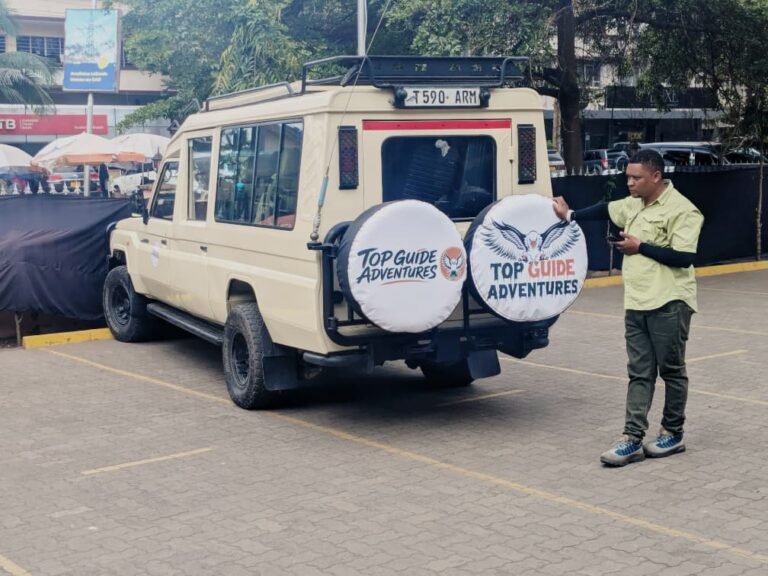
- Dual Spare Tire Rigging and Hi-Lift Mounting: Punctures are inevitable when crossing acacia thorn thickets. Top-tier operators fit vehicles with dual rear-mounted spare wheels, heavy-duty steel high-lift jacks, and recovery boards mounted on external brackets so interior luggage space remains clean and dry.
VHF Radio Protocols, Park Dispatch, and Information Verification
Every commercial safari vehicle in Tanzania is fitted with a multi-channel Very High Frequency (VHF) two-way radio linked to long-range whip antennas. When cruising open savannahs, travelers often hear rapid, animated Swahili exchanges over the speaker. Discount drivers rely completely on radio chatter, chasing distant sightings and arriving forty minutes late to a crowded scrum of forty idling vehicles. In contrast, an expert English-speaking guide utilizes radio traffic strategically while prioritizing independent tracking.
Professional guides divide radio usage into three distinct operational categories:
- Safety and Park Dispatch Alerts: Monitoring official ranger frequencies for bridge washouts, river crossing flash floods, controlled burns, or emergency medical evacuations.
- Cross-Verification of Cryptic Sightings: Naturalist guides who belong to trusted professional networks exchange coded, courteous updates. Instead of broadcasting high-profile coordinates across open public channels, veteran guides often communicate precise details with colleagues to confirm whether a reported leopard sighting remains active or has retreated into impenetrable riverine brush.
- Radio Silence for Behavioral Observation: When positioning near a hunting cheetah or an agitated elephant breeding herd, a disciplined guide lowers the VHF volume entirely. Artificial squelch bursts and static hiss alarm sensitive wildlife, causing skittish prey species to bolt prematurely or disrupting the fragile stalk of an apex predator.
Tipping Guidelines, Fair Wages, and Ethical Compensation in the Bush
Tipping culture in East Africa can provoke uncertainty for travelers planning international trips. Because guiding is an intensive profession demanding months away from family in remote backcountry outposts, gratuities form an integral component of field compensation. However, gratuities must never serve as a substitute for a lawful, living wage paid directly by the tour operator. When assessing whether booking with local operators in Tanzania represents authentic value, it is essential to distinguish between ethical businesses that pay healthy daily base salaries and budget outfits that underpay drivers, leaving them completely reliant on guest tips to survive.
Understanding standard tipping protocols guarantees that your field team receives fair, transparent appreciation commensurate with their dedication, vehicle care, and interpretive expertise.
Daily Gratuity Benchmarks for 2026–2027 Expeditions
Tipping is customarily presented at the very end of your itinerary, on the final day when parting ways with your guide at an airstrip or hotel. Gratuities are calculated on a per-day, per-vehicle basis rather than per person, meaning a family of four or a couple pays the same aggregate daily tip to their private guide. On shared camping trips where a dedicated camp chef prepares hot meals in public bush kitchens, a separate daily tip is calculated for culinary personnel.
Fly-in Safaris vs. Overland Bush Circuits: How Guide Continuity Operates
One of the most consequential structural decisions when arranging Tanzania wildlife safari holidays with professional English speaking guides is deciding between an overland circuit originating in Arusha or Kilimanjaro, and a fly-in bush safari utilizing scheduled light aircraft. Both models rely heavily on professional interpretive guiding, yet they structure your relationship with your guide—and your daily transit mechanics—in fundamentally different ways.
On an overland safari, a dedicated driver-guide meets you at Kilimanjaro International Airport (JRO) or your Arusha lodge and stays with you throughout your entire itinerary across Tarangire, Lake Manyara, Ngorongoro, and the Serengeti. In contrast, fly-in safaris use regional bush carriers such as Coastal Aviation or Auric Air to hop over rough intermediate roads directly into bush airstrips like Seronera, Kogatende, or Ndutu. Depending on whether you reserve Tanzania safari packages with private guides and vehicles or rely on camp-hosted shared vehicles, fly-in travelers either rendezvous with an assigned resident guide at the dirt airstrip or meet their Arusha-based guide who drove ahead to preposition the vehicle.
The Overland Model: Circuit Continuity and Relationship Building
Overland driving remains the traditional core of Northern Circuit exploration. Taking an overland route gives you complete continuity: the same English-speaking professional assesses your tracking priorities on day one and fine-tunes every subsequent morning based on what you have already observed. If you spent four hours tracking solitary leopards in Tarangire without finding a clear photographic view, your guide factors that deficit into the daily plan once you reach Central Serengeti, bypassing common plains species to prioritize riverine territory along the Seronera Valley.
Overland journeys also allow for organic, unscripted observations along secondary rural routes between parks. As you pass through the Mto wa Mbu agricultural basin or cross the Karatu highlands, your guide interprets local cash-crop farming, irrigation systems, Great Rift Valley geology, and village market rhythms that fly-in guests overlook from three thousand feet. However, overland transits require physical endurance. The drive from the Ngorongoro Crater rim down through the Malanja Depression to the Serengeti border involves three to four hours of corrugated, powdery gravel that tests travelers sensitive to motion sickness or lower back strain.
The Fly-in Model: Maximizing Bush Time and Resident Camp Guiding
Fly-in itineraries swap transit hours for immediate immersion. Flying from Arusha Municipal Airport (ARK) to Kogatende in Northern Serengeti takes approximately two hours, completely eliminating an otherwise grueling two-day overland traverse. This makes aviation-linked routes ideal for travelers with seven days or fewer who want to concentrate their time directly on major seasonal events like the Mara River crossings.
In the fly-in structure, guiding generally falls into two distinct operational categories:
- Prepositioned Private Guide and Vehicle: Your operator dispatches your dedicated English-speaking guide and private 4×4 overland from Arusha twenty-four hours in advance. When your Cessna Grand Caravan touches down on the bush strip, your familiar guide is standing on the apron waiting for you. You gain the swift transit of air travel alongside the undivided attention and customized pacing of a dedicated private guide for the duration of that sector.
- Resident Camp Guides (“Fly-in / Camp-Package”): You utilize open-sided 4×4 vehicles owned and operated by high-end bush camps or mobile tented concessions. These resident naturalist guides are permanently stationed in that specific park sector. Resident guides often possess unmatched, hyper-localized insight into individual predator territories within a ten-kilometer radius of camp. However, unless you pay an additional daily vehicle buyout fee (typically $350 to $600 per day above standard camp board), you will share that resident guide with other camp guests whose wildlife interests and photography paces may differ from yours.
Light aircraft transfers enforce strict baggage limits that directly impact what safari gear you can bring into the field. Regional air regulations strictly cap luggage at 15 kilograms (33 pounds) per passenger, including camera gear, carried in entirely soft-sided duffel bags without rigid internal frames or wheels. If you are an enthusiast wildlife photographer carrying two DSLR bodies and heavy telephoto prime lenses, an overland circuit allows you to bring protective hard cases and heavier tripod equipment that bush airlines simply will not allow without chartering a dedicated freight seat.
Specialist Guided Safari Variations: Birding, Nocturnal Drives, and Boat Safaris
While standard game drives across the Serengeti savannah capture the majority of traveler attention, elite professional English-speaking guides also lead specialized natural history disciplines that demand vastly different observational skills, equipment, and park permits.
Specialized Avian Safaris: Interpreting 1,100+ Bird Species
Tanzania is one of the premier ornithological destinations on Earth, boasting a national checklist exceeding 1,100 confirmed avian species, including regional endemics like the Ashy starling, Fischer's lovebird, and the Rufous-tailed weaver. A generalist safari driver can point out charismatic megafauna like ostriches, secretary birds, and lilac-breasted rollers, but dedicated birding safaris require a specialist ornithological guide who tracks by acoustic vocalization rather than visual spotting.
An expert birding guide recognizes the rapid trills of elusive cisticolas hidden deep within marsh grass, pinpoints raptors silhouetted against glaring midday skies by tail-to-wing ratios, and carries professional roof-mounted spotting scopes with multi-coated glass to study distant waders along alkaline shorelines. Because birding requires long periods of silent stationary idling with the engine killed, these expeditions work best when booked as a private vehicle safari, ensuring that non-birding passengers are not made restless by thirty-minute stops dedicated to separating indistinguishable larks and cisticolas.
Regulated Night Game Drives: Tracking Nocturnal Ecology
Within standard national park regulations, all game drives must cease at sunset, with vehicles returning to lodges or public camps by 6:30 PM. However, select locations—including Lake Manyara National Park, designated peripheral buffer zones in Tarangire, and private wildlife conservancies adjoining the Serengeti—allow specially permitted night game drives led by licensed guides and armed rangers.
Night drives reveal an entire nocturnal ecosystem invisible during hot daylight hours. Guided by handheld spotlights fitted with red filters to avoid blinding wildlife, your English-speaking guide scans eyeshine reflections across the canopy and ground level to reveal species seldom encountered by day:
- Arboreal Mammals: Lesser and greater bushbabies (galagos) leaping through fever trees, African civets foraging along dry riverbeds, and small-spotted genets hunting roosting birds.
- Active Predators: Leopards hunting with the cover of darkness, spotted hyena clans assembling for coordinated territorial patrols, and bat-eared foxes foraging for harvester termites.
- Specialist Insectivores: White-tailed mongooses, springhares bouncing across hardpans, and occasionally the elusive aardvark or pangolin.
Your guide interprets behavioral dynamics that standard day visitors miss entirely, explaining how predators utilize auditory cues over vision once ambient light disappears, and illustrating the vital trophic role played by nocturnal invertebrates and nocturnal raptors like Verreaux's eagle-owls.
Boat Safaris: Low-Angle Riverine Tracking
Available primarily in the Southern Circuit—specifically along the Rufiji River network inside Nyerere National Park—guided boat safaris provide an entirely different observational perspective that cannot be replicated from the high seat of a 4×4 Land Cruiser. Navigating shallow-draft aluminum boats powered by outboard motors, professional river guides read sandbar shifts, river currents, and localized hippo territories.
Approaching wildlife from the water allows for low-angle views of African fish eagles plunging for tigerfish, nesting colonies of southern carmine bee-eaters burrowed into sandy riverbanks, and massive Nile crocodiles basking with open jaws along the water's edge. River guides must maintain acute safety standards, recognizing territorial pod displays from bull hippos and understanding safe approach distances to avoid underwater collisions in murky delta channels.
Multi-Day Guided Circuit Options: Route Comparisons and Pacing
Choosing an itinerary route requires balancing road transit hours against meaningful time in the bush. Overambitious itineraries that attempt to cover four different parks in four days leave travelers exhausted, spending the majority of daylight hours racing between entrance gates rather than studying predator dynamics. Below is a realistic operational comparison of established guided circuits designed to help you balance transit times, guide immersion, and wildlife opportunities.
Check Availability for Tanzania Wildlife Safari Holidays With Professional English Speaking Guides
Ready to compare dates, prices, and the best option for your group? Send the package name and travel month so the team can reply with a clear quote, availability, and what is included.
Affordable Tanzania Wildlife Safari Holidays For Small Groups 2026-2027
Affordable Tanzania Wildlife Safari Holidays for Small Groups is explained with current 2026-2027 planning, price, itinerary and booking information.
View package details
Can I Book A Tanzania Safari With An English-Speaking Private Guide? 2026-2027
Can I Book a Tanzania Safari with an English-Speaking Private Guide? is explained with current 2026-2027 planning, price, itinerary and booking information.
View package details
Best Tanzania Safari Packages For Wildlife And Cultural Experiences 2026-2027
Best Tanzania Safari Packages for Wildlife and Cultural Experiences is explained with current 2026-2027 planning, price, itinerary and booking information.
View package details
Book A Private Tanzania Safari With Experienced Local Guides 2026-2027
Book a Private Tanzania Safari with Experienced Local Guides is explained with current 2026-2027 planning, price, itinerary and booking information.
View package detailsBest Value Tanzania Safari Holidays With Full Board Accommodation 2026-2027
Best Value Tanzania Safari Holidays with Full Board Accommodation is explained with current 2026-2027 planning, price, itinerary and booking information.
View package detailsTanzania Wildlife Safari Packages With Big Five Game Drives 2026-2027
Tanzania Wildlife Safari Packages with Big Five Game Drives is explained with current 2026-2027 planning, price, itinerary and booking information.
View package details
Tanzania Safari Packages With Private Guides And Vehicles 2026-2027
Tanzania Safari Packages with Private Guides and Vehicles is explained with current 2026-2027 planning, price, itinerary and booking information.
View package detailsBest Tanzania Safari Tour Packages For International Travelers ( Planning
A comprehensive comparison of the best Tanzania safari tour packages for international travelers heading to East Africa in 2026-2027, covering logistics, package types, realistic budgets...
View package details
Best Tanzania Safari Packages For And 2028 2026-2027
Best Tanzania Safari Packages for 2027 and 2028 is explained with current 2026-2027 planning, price, itinerary and booking information.
View package detailsTanzania Safari Group Joining Departures In February 2026-2027
Tanzania Safari Group Joining Departures in February 2027 is explained with current 2026-2027 planning, price, itinerary and booking information.
View package details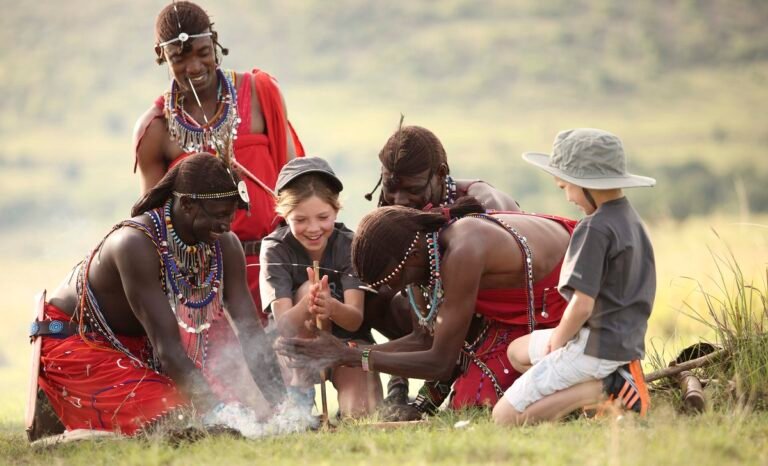
Tanzania Safari Tours For Solo Travelers In December 2026-2027
Tanzania Safari Tours for Solo Travelers in December 2026 is explained with current 2026-2027 planning, price, itinerary and booking information.
View package details
How Do I Join A Tanzania Safari Group From Arusha? 2026-2027
How Do I Join a Tanzania Safari Group from Arusha? is explained with current 2026-2027 planning, price, itinerary and booking information.
View package detailsNo closely related package is available yet for this topic.

Our Guest Reviews, Currently Feedback from Clients in 2026
Reviews from different sources, including Google Business, Tripadvisor, other platforms, and social media.



