
A family-friendly Tanzania safari with short driving distances is a custom Northern Circuit itinerary designed to cap vehicle transit times at under 2 to 3 hours per leg by focusing on high-density wildlife areas close to Arusha—specifically Tarangire National Park, Lake Manyara, and the Ngorongoro Crater floor—or by utilizing scheduled bush flights into the Central Serengeti. In 2026-2027, private family packages typically range from $450 to $850 per adult per day and $250 to $480 per child under twelve for mid-range lodge accommodation, including a private 4×4 Land Cruiser, national park fees, professional guide services, and child-safe interconnected family rooms. By avoiding the punishing 8-to-10-hour overland transits between distant sectors, families protect children from travel fatigue, car sickness, and safari burnout while maximizing active wildlife viewing.
Why Driving Distances Dictate Family Safari Success
Adult travelers frequently overlook the physical toll of African dirt roads. In northern Tanzania, tracks connecting major conservation areas are frequently unpaved, heavily corrugated, and dusty. What appears on a digital map as an 80-kilometer stretch can readily require three to four hours of continuous driving inside a closed or pop-top vehicle. For children under the age of fourteen, consecutive days spent bouncing over rutted volcanic tracks lead to road sickness, irritability, sensory overload, and disengagement from wildlife viewing. Crafting a family-friendly Tanzania safari with short driving distances fundamentally alters this dynamic by prioritizing quality encounters over geographic reach.
When vehicle transit between camps is restricted to under three hours, children maintain curiosity and enthusiasm. Shorter journeys preserve morning and late-afternoon energy levels, enabling families to participate in flexible, rewarding game drives during the precise hours when predators are most active. Between 11:30 AM and 3:00 PM, when tropical temperatures peak and animals seek shade under dense acacia canopies, a low-mileage itinerary allows your family to return to camp. Children can swim, play board games, rest in shaded family suites, or join local camp guides on interpretive nature walks inside fenced or secure lodge grounds.
Moreover, minimizing transit time eliminates midday road transfers through nondescript transit corridors. Standard commercial itineraries often rush families through long highway corridors just to check off every park name on a brochure. In contrast, limiting your geographic footprint keeps your private vehicle focused on rich game viewing inside reserves such as Tarangire National Park, where wildlife encounters begin within minutes of leaving camp.
Real Transit Times: Road Distance Breakdown Across the Northern Circuit
To plan realistically for the 2026-2027 safari seasons, parents must distinguish between highway kilometers on tarmac and transit hours on unpaved bush roads. Official national park entry gates managed by the Tanzania National Parks Authority (TANAPA) enforce speed limits of 50 km/h on main park roads and 25 to 30 km/h on interior wildlife loops. Dense vegetation, seasonal rain ruts, and slow-moving wildlife crossings reduce average speeds further.
Understanding exact transit durations helps families choose whether an overland route makes sense or if scheduled bush flights should be introduced to bypass lengthy driving sections.
| Route Leg | Road Surface Type | Actual Drive Time | Family Suitability Rating | Key Landscape & Wildlife Highlights |
|---|---|---|---|---|
| Arusha to Tarangire National Park Gate | Smooth tarmac (A104) | 1.5 to 2 hours | Excellent (Very easy for all ages) | Maasai plains, termite mounds, giant baobabs |
| Tarangire to Lake Manyara National Park | Paved highway & park gravel | 1.5 to 2 hours | Excellent (Gentle scenic transition) | Rift Valley escarpment, groundwater forest |
| Lake Manyara to Karatu Highlands | Paved mountain road | 30 to 45 minutes | Outstanding (Very short climb) | Coffee plantations, lush hillside farms |
| Karatu to Ngorongoro Crater Rim | Gravel mountain track | 45 minutes to 1 hour | Good (Cooler mountain air, steep climbs) | Afromontane forest, misty crater viewpoints |
| Ngorongoro Rim to Central Serengeti (Seronera) | Corrugated dirt & volcanic dust | 4.5 to 6 hours | Challenging for kids under 10 (Bumpy, dusty) | Olduvai Gorge landscape, vast open plains |
| Arusha to Central Serengeti (Direct Overland) | Tarmac then rough dirt | 8 to 9 hours | Not recommended for young families | Endless transit; causes severe fatigue |
| Arusha to Seronera Airstrip (Bush Flight) | Aviation transit | 50 minutes | Exceptional (Bypasses all road fatigue) | Aerial views of Rift Valley and active volcanic calderas |
As demonstrated in the comparison above, the geographic triangle linking Arusha, Tarangire, Lake Manyara, and the Karatu highlands represents the most manageable overland corridor for young travelers. Total driving between any two major hubs along this route rarely exceeds two hours on smooth or well-maintained roads. In contrast, continuing overland into the central plains of the Serengeti adds a demanding five-to-six-hour stretch of intense washboard road. When young children are traveling, replacing that overland leg with a domestic scheduled flight—or basing the holiday entirely within the shorter Arusha-Tarangire-Ngorongoro corridor—prevents family exhaustion.
The Best Short-Distance Parks: Tarangire, Manyara, and Ngorongoro
Limiting vehicle hours does not mean compromising on the Big Five or dramatic wildlife scenes. The parks closest to Arusha provide some of the highest wildlife densities anywhere in East Africa, making them the premier choices when identifying the best Tanzania safari parks for children visiting Africa for the first time.
Tarangire National Park: Massive Elephant Herds and Giant Baobabs
Situated merely 120 kilometers southwest of Arusha, Tarangire is accessible via an easy two-hour journey along a modern tarmac highway. The park is defined by ancient baobab trees and the perennial Tarangire River, which acts as the sole permanent water source for thousands of animals throughout the dry season from late June through October.
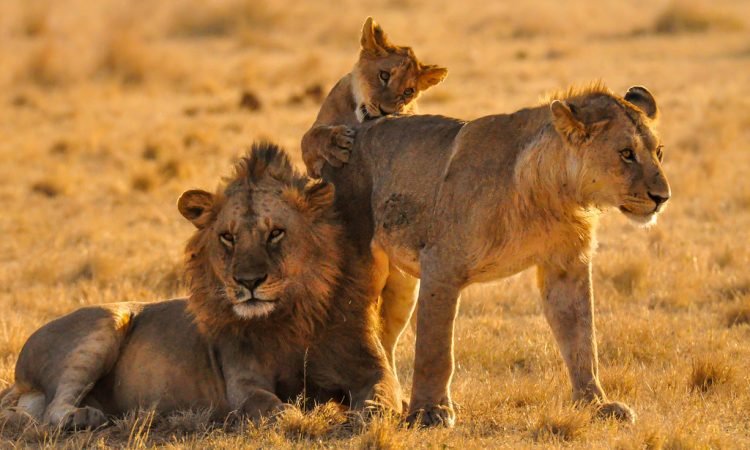
For children, Tarangire provides instant visual reward. Elephant family groups numbering up to fifty individuals gather along the riverbed to dig for subterranean water. Young children quickly identify family interactions among elephant calves, mothers, and protective matriarchs. Lion prides frequently rest in the shade beneath baobab roots, while fringe-eared oryx, giraffes, zebras, and impalas congregate across open sandbanks. Because animal concentration remains exceptionally dense along the primary river circuits, guides do not need to start long, aimless searches. Productive game viewing starts five minutes after passing through the entry gate.
Lake Manyara National Park: Primates, Birdlife, and Diverse Habitats
Located roughly an hour from Tarangire, Lake Manyara sits at the dramatic base of the Great Rift Valley western escarpment. It is one of the most ecologically diverse compact reserves in Tanzania. The park begins in a lush groundwater forest fed by underground springs, contrasting sharply with the dry savannah plains found elsewhere.
Within minutes of entry, children are surrounded by vast troops of olive baboons and blue monkeys foraging along the forest floor. These animated primate groups offer immediate entertainment without tedious searching. Further into the park, the groundwater canopy gives way to open acacia woodland and the soda lake shoreline, home to thousands of lesser flamingos, pelicans, hippos wallowing in dedicated pools, and Manyara’s famed tree-climbing lions. Because the park is compact, game loops are tight and scenic, making it possible to complete a comprehensive game drive in three to four relaxed hours before heading to Karatu for lunch.
Ngorongoro Crater: Big Five Viewing on a Self-Contained Floor
The Ngorongoro Conservation Area, administered by the Ngorongoro Conservation Area Authority (NCAA), centers around the world’s largest intact volcanic caldera. Basing your family in a lodge in the agricultural highland town of Karatu keeps the crater entry gate just 30 to 45 minutes away. Ascending through the highland forest and descending 600 meters to the caldera floor reveals an extraordinary natural amphitheater spanning 260 square kilometers.
On the crater floor, wildlife remains permanently resident year-round due to reliable grazing and water supplies. A single five-to-six-hour morning drive regularly yields sightings of black rhinos, heavy-maned lions, spotted hyenas, golden jackals, thousands of wildebeest, zebras, and massive bull elephants with tusks extending near the ground. Game drives here require very little transit time between major sightings because the entire ecosystem is self-contained. Families can pause at designated picnic sites such as Ngoitokitok Springs, watching hippos submerge while enjoying lunch before ascending back up to Karatu in time for an afternoon swim.
Cost Breakdown: Family Safari Budgets and Pricing Logic for 2026-2027
Understanding how much a Tanzania safari costs for a family of four requires examining how daily operational expenses are billed. Tanzania safari pricing combines fixed vehicle operating costs with per-person government park fees and lodge room rates. Booking as a family unit provides notable economies of scale on vehicle costs, because your private 4×4 Land Cruiser and professional driver-guide are charged at a flat daily rate whether carrying two or five family members.
Estimated Family Safari Pricing Overview (Per Day, 2026-2027)
Daily family budgets vary depending on seasonal timing, accommodation class, and internal flight inclusions. Below are realistic planning figures based on private Northern Circuit itineraries with short driving legs:
- Mid-Range Family Travel (Comfort Lodges with Swimming Pools): $450 to $620 per adult per day; $250 to $380 per child (ages 5–15) per day. Includes private extended Land Cruiser, dedicated guide, family cottage or interconnected rooms, all park fees, and three meals daily.
- Premium / Luxury Family Travel (High-End Tented Lodges & Small Camps): $750 to $1,250 per adult per day; $420 to $680 per child per day. Includes exclusive-use safari suites, private vehicle, tailored kids’ bush programs, and premium meal plans.
- Internal Bush Flights (Optional Short-Drive Shortcut): $240 to $360 per seat one-way (Arusha to Seronera or Lake Manyara airstrips), including airport safety and passenger departure charges.
Tanzania park fees are heavily structured by age. Across TANAPA parks (Tarangire and Lake Manyara), conservation fees for children between the ages of 5 and 15 are roughly $15 to $20 plus VAT per 24 hours, compared to $50 to $70 plus VAT per adult. Children under five years old enter TANAPA parks free of charge. In the Ngorongoro Conservation Area, conservation fees are discounted for children, and the caldera vehicle descent permit is a flat vehicle charge of $295 per vehicle per single entry, meaning larger families spread this fixed cost across more individuals.
When reviewing quotes, families should always verify whether rates represent a private vehicle departure. For parents traveling with young children, avoiding shared group-joining tours is crucial. A private vehicle allows you to adjust driving hours, schedule unscheduled restroom breaks, pause at animal sightings for as long as your children wish, or return to camp early when exhaustion sets in. For comprehensive cost breakdowns across all park sectors, consult our detailed analysis on Tanzania safari cost breakdowns including park fees and accommodation.
Proven 4-to-6 Day Short-Drive Family Safari Itineraries
Determining how many days a family should spend on safari in Tanzania centers on balancing adventure with rest. For most young families, an overland itinerary lasting 4 to 6 days provides an ideal balance. It ensures multiple Big Five sightings while keeping total vehicle transit to a minimum before moving on to a beach stay in Zanzibar.
Option A: The 4-Day Low-Mileage Classic (Under 2 Hours per Drive Leg)
Ideal for: Families with children aged 4 to 10 wanting zero heavy transit and zero internal bush flights.
- Day 1: Arusha to Tarangire National Park. Pick-up from your Arusha hotel at 8:30 AM after a relaxed breakfast. Drive 2 hours on smooth tarmac to Tarangire. Midday check-in at your lodge inside or bordering the park, followed by an afternoon game drive focused on riverside elephant herds. Overnight: Tarangire family lodge with pool.
- Day 2: Tarangire to Lake Manyara / Karatu Highlands. Morning game drive exploring baobab valleys. Depart mid-morning for a gentle 1.5-hour drive across the Rift Valley floor to Lake Manyara. Afternoon game drive viewing baboons, hippos, and flamingo shallows. Climb the escarpment road (30 minutes) to Karatu for overnight.
- Day 3: Ngorongoro Crater Full Morning Descent. Depart Karatu lodge at 7:00 AM; enter the crater floor by 7:45 AM. Spend 5 to 6 hours searching for black rhinos, lions, and hyenas. Enjoy a packed picnic beside the hippo pool. Ascend mid-afternoon back to your Karatu lodge for swimming and downtime.
- Day 4: Karatu to Arusha / Kilimanjaro Airport. Relaxed morning breakfast, optional visit to a local coffee estate or Mto wa Mbu cultural village, followed by a scenic 2.5-hour paved drive back to Arusha for your evening flight connection to Zanzibar or home.
Option B: The 6-Day Fly-In Serengeti & Highland Circuit
Ideal for: Families with older children wanting to witness the Great Migration in the Serengeti without spending 8 hours bouncing over rough overland tracks.
- Day 1: Scheduled Bush Flight from Arusha to Central Serengeti. Board a 50-minute scheduled flight from Arusha Airport directly into Seronera Airstrip, soaring over the Great Rift Valley. Meet your private Top Guide Adventures vehicle at the airstrip and immediately begin a gentle introductory game drive. Overnight: Central Serengeti tented family camp.
- Day 2: in-depth Central Serengeti Wildlife Viewing. Morning and afternoon game loops along the Seronera River, home to resident leopards, cheetahs, and lion prides. Midday break at camp during peak heat. Overnight: Central Serengeti tented family camp.
- Day 3: Central Serengeti to Karatu Highlands via Olduvai Gorge. Gentle morning transit drive out of the southern Serengeti plains toward the Ngorongoro Conservation Area (approx. 3.5 hours with wildlife sightings en route). Stop at Olduvai Gorge for an educational human evolution walk. Continue to Karatu. Overnight: Karatu family lodge.
- Day 4: Ngorongoro Crater Exploration. Comprehensive morning descent onto the crater floor for Big Five encounters. Ascend by early afternoon to enjoy lodge amenities, gardens, and swimming pool. Overnight: Karatu family lodge.
- Day 5: Karatu to Tarangire National Park. Short 1.5-hour drive to Tarangire. Afternoon game drive among vast elephant populations. Overnight: Tarangire safari lodge.
- Day 6: Morning Game Drive and Transfer to Arusha. Final sunrise game drive along the Tarangire River. Return to Arusha on tarmac by early afternoon (2 hours) for departures.
These structured flows avoid repetitive packing and unpacking, allowing families to spend multiple nights at the same property. To examine extended itineraries combining savannah parks with coastal relaxation, explore our dedicated Tanzania safari and Zanzibar family holiday packages.
Selecting Safari Vehicles and Accommodations for Young Travelers
The operational choices you make regarding your daily transport and accommodation directly influence how relaxed and enjoyable your trip will be. Choosing the right vehicle configuration and room layout prevents common stress points before you even arrive in Tanzania.
The Safari Vehicle: Space, Safety, and Creature Comforts
A standard custom 4×4 Toyota Land Cruiser deployed by professional operators features extended chassis configurations equipped with six or eight passenger window seats. For a family of four or five, this ensures that every single child and parent enjoys a dedicated window seat alongside immediate access to the pop-up roof hatch.
When traveling with children, several vehicle features become essential:
Check Availability for Family-Friendly Tanzania Safari With Short Driving Distances 2026-2027
Ready to compare dates, prices, and the best option for your group? Send the package name and travel month so the team can reply with a clear quote, availability, and what is included.
Family-Friendly Tarangire Safari Packages With Short Driving Distances
Family-Friendly Tarangire Safari Packages with Short Driving Distances is explained with current 2026-2027 planning, price, itinerary and booking information.
View package detailsTanzania Safari Packages With Family Rooms And Private Bathrooms 2026-2027
Tanzania Safari Packages with Family Rooms and Private Bathrooms is explained with current 2026-2027 planning, price, itinerary and booking information.
View package detailsTanzania Safari And Zanzibar Family Holiday Packages 2026-2027
Tanzania Safari and Zanzibar Family Holiday Packages is explained with current 2026-2027 planning, price, itinerary and booking information.
View package detailsHow Many Days Should A Family Spend On Safari In Tanzania? 2026-2027
How Many Days Should a Family Spend on Safari in Tanzania? is explained with current 2026-2027 planning, price, itinerary and booking information.
View package detailsBest Tanzania Safari Parks For Children Visiting Africa The First Time
Planning a family safari in Tanzania? Learn which parks are best for children, what to expect, and how to make the most of your first African adventure.
View package details
Best Short Tanzania Safari Packages During A Zanzibar Holiday 2026-2027
Best Short Tanzania Safari Packages During a Zanzibar Holiday is explained with current 2026-2027 planning, price, itinerary and booking information.
View package detailsCan Children Join Group Safari Tours In Tanzania? 2026-2027
Can Children Join Group Safari Tours in Tanzania? is explained with current 2026-2027 planning, price, itinerary and booking information.
View package detailsPrivate Tanzania Safari With Flexible Game Drives For Children 2026-2027
Private Tanzania Safari with Flexible Game Drives for Children is explained with current 2026-2027 planning, price, itinerary and booking information.
View package detailsBest Tanzania Safari Tours For Families With Teenagers 2026-2027
Best Tanzania Safari Tours for Families with Teenagers is explained with current 2026-2027 planning, price, itinerary and booking information.
View package details
Tanzania Fly-In Safari Packages From Zanzibar For Families 2026-2027
Tanzania Fly-In Safari Packages from Zanzibar for Families is explained with current 2026-2027 planning, price, itinerary and booking information.
View package detailsTanzania Wildlife Safari Packages For Three Generations Of Travelers 2026-2027
A practical planning guide for multi-generational Tanzania safaris spanning grandparents, parents, and grandchildren, covering route selection, vehicle logistics, physical pacing, and...
View package detailsAre There Child Discounts On Tanzania Safari Tours? 2026-2027
Are There Child Discounts on Tanzania Safari Tours? is explained with current 2026-2027 planning, price, itinerary and booking information.
View package detailsNo closely related package is available yet for this topic.

Our Guest Reviews, Currently Feedback from Clients in 2026
Reviews from different sources, including Google Business, Tripadvisor, other platforms, and social media.