
Tanzania safari packages with private guides and vehicles provide dedicated use of an extended, customized four-wheel-drive safari vehicle alongside a professional Tanzanian driver-guide, giving your private group absolute authority over your daily schedule, game drive pacing, photographic positioning, and destination routing without sharing cabin space or tour timing with outside travelers. For 2026-2027, these packages generally depart from Arusha, Kilimanjaro International Airport (JRO), or direct airstrips in the Serengeti, running from 3-day short circuits to comprehensive 10-day northern or southern itineraries. Realistic total costs typically range from $380 to $650 per person per day for quality mid-range lodge and luxury tented options based on two travelers sharing, or $800 to $1,800+ per person per day for high-tier luxury circuits, with costs per individual declining noticeably when shared among four to six passengers due to fixed daily vehicle operational expenses, commercial driver rates, and mandatory park transit levies.
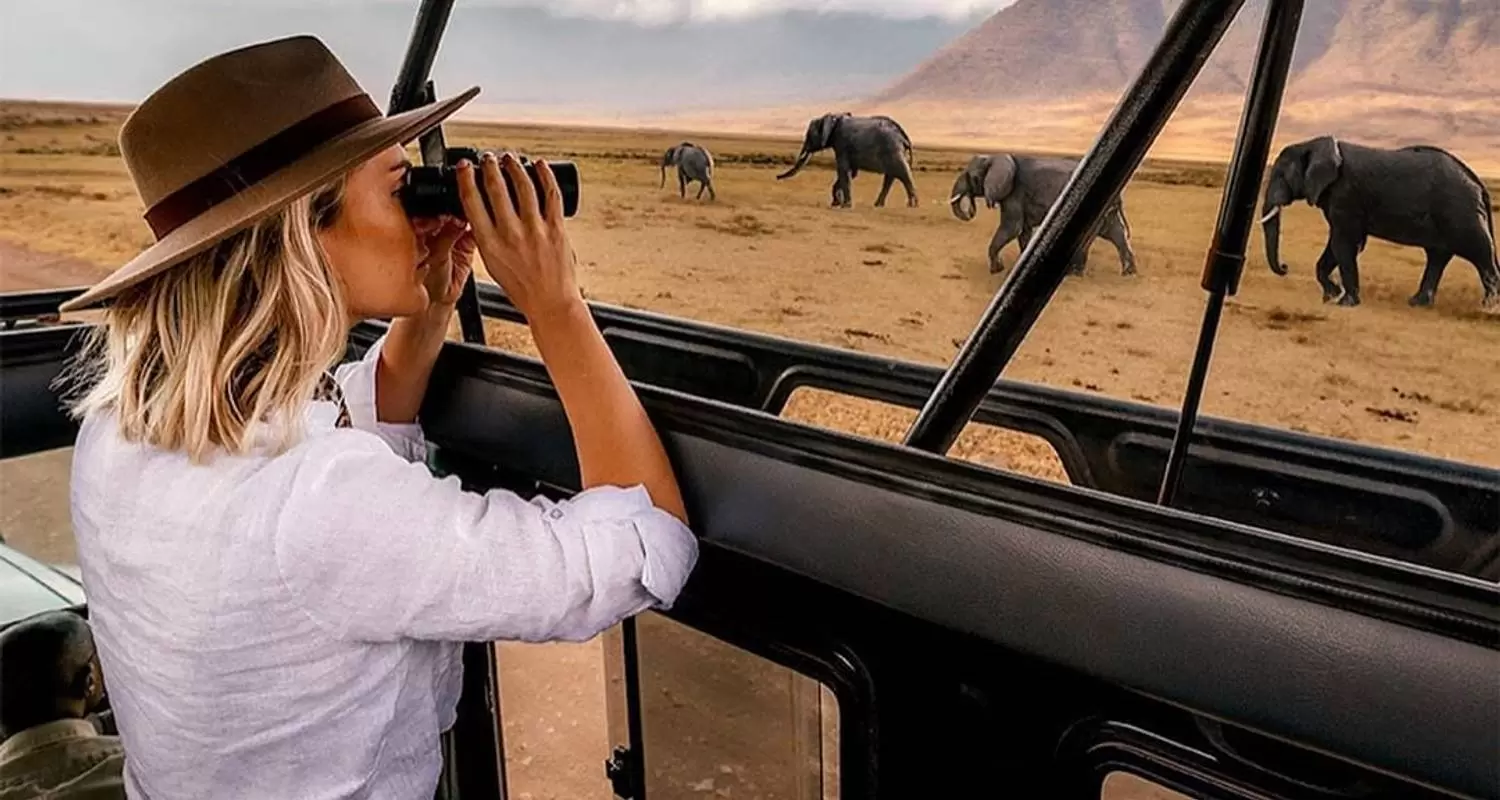
The Operational Reality of Private Safaris in Tanzania
Booking a private safari is often marketed purely as an indulgence in luxury, yet in field conditions across the Serengeti, Ngorongoro Crater, and Tarangire, it is primarily a critical logistical choice. On a shared group tour, vehicle movements, departure times, bathroom stops, and viewing durations at predator sightings are decided either by democratic compromise among strangers or by rigid corporate schedules. When you arrange private Tanzania safari packages, the operational dynamics shift completely: the vehicle functions as your mobile field station, and your driver-guide acts as your private expedition leader.
In practical terms, this structure removes every compromise associated with communal tourist transport. If you encounter a pride of lions stalking zebra at dawn in central Seronera, your vehicle can remain stationary for ninety minutes while you observe behavioural sequences unfold. On a shared itinerary, two vehicle occupants might demand an early breakfast return at 08:00, forcing the entire vehicle to vacate the scene just as the hunting sequence peaks. Conversely, if your party prefers to bypass an overcrowded cluster of twenty safari vehicles viewing a stationary leopard asleep in an acacia tree, your private guide simply turns the ignition and navigates into remote river loops or private kopjes without debate.
For serious wildlife photographers, birders, multi-generational families, or couples traveling during the 2026-2027 seasons, the vehicle provides mechanical and operational self-sufficiency. In remote regions of northern Tanzania—such as the Kogatende river crossing zones or the southern Ndutu plains during calving season—long driving stretches over corrugated washboard tracks demand exceptional vehicle maintenance, reliable twin spare tires, high-capacity winches, and an expert driver who understands off-road weight distribution, tire pressure management, and local park regulations enforced by the Tanzania National Parks Authority (TANAPA).
Direct Comparison: Dedicated Private Safari vs. Scheduled Group Sharing
Travelers frequently weigh private safari logistics against group-joining departures to determine whether the financial differential matches the practical benefits. Group tours operate with fixed departure dates, mandatory hotel pick-up sequences that can consume up to two hours across Arusha each morning, and strict seating rotations. On private itineraries, your party controls the cabin environment, gear placement, daily departure hours, and route detours.
Understanding how daily decisions are managed reveals the sharp contrast between the two models:
- Seating and Window Access: In standard scheduled group tours, vehicles are routinely loaded with 6 to 7 passengers to maximize seat revenue. While modern pop-top Land Cruisers provide window seats for everyone when full, interior lateral room is severely restricted, and personal luggage or heavy camera gear must be kept at your feet or confined to a tiny rear luggage compartment. In a private arrangement, a couple or family of four commands the entire 6-to-8-window passenger cabin, allowing ample space for camera bodies, extra lenses, beanbags, field identification guides, and daypacks.
- Departure and Drive Timing: Group-joining departures operate on rigid timetables set to manage diverse guest expectations and scheduled lodge meal hours. A private package allows for pre-dawn departures at 05:45 with packed breakfast boxes, ensuring your vehicle reaches prime hunting areas precisely when predators are most active, well ahead of the heavy mid-morning safari vehicle traffic leaving mainstream park entry gates.
- Itinerary Flexibility: If heavy rainfall washes out a secondary dirt track in Lake Manyara or Tarangire, a group vehicle is bound by its fixed transit schedule to reach a pre-booked budget campsite. A private guide can consult with you, evaluate park ranger reports via VHF high-frequency radio, and adjust the day’s route to explore drier, game-dense terrain without being restricted by external group commitments.
For an in-depth breakdown of the financial trade-offs between shared and dedicated arrangements, you can review our companion guide on private vs group joining Tanzania safari cost comparisons for 2026-2027.
2026-2027 Pricing Architecture: How Private Vehicle and Guide Packages Are Costed
Tanzania does not price safaris on an arbitrary basis. Behind every quotation is a strict stack of fixed statutory park entrance fees, concession levies, conservation tariffs, vehicle permits, fuel consumption indices, and commercial crew rates. When examining Tanzania safari packages with private guides and vehicles, travelers must understand that the vehicle and driver-guide represent a flat daily overhead regardless of whether there is one passenger or six passengers inside the vehicle.
The table below provides realistic daily costing benchmarks across the primary travel categories for the 2026-2027 safari seasons:
| Safari Tier & Accommodation Style | Estimated Daily Cost (Per Person, 2 Travelers) | Estimated Daily Cost (Per Person, 4 Travelers) | Vehicle, Fuel & Guide Dynamic | Key Inclusions & Operational Baseline |
|---|---|---|---|---|
| Mid-Range Private Safari (Comfortable solid-wall lodges or mid-tier mobile tented camps) |
$420 – $650 / day | $310 – $460 / day | Private 4×4 Land Cruiser, unlimited game drive mileage allowance, certified driver-guide, fuel. | Full board accommodation, TANAPA park conservation entry fees, Ngorongoro Crater service fees, bottled mineral water in vehicle. |
| Luxury Private Safari (High-end semi-permanent tented camps, premium branded safari lodges) |
$750 – $1,350 / day | $580 – $980 / day | Private modified Land Cruiser with high-output charging inverters, mini-fridge, senior specialist naturalist guide. | All statutory park fees, private concession bed-night levies, chef-prepared dietary menus, selected house beverages/wines at camps. |
| Ultra-Luxury / Fly-In Private (Exclusive private reserves, private mobile camps, fly-in charters) |
$1,400 – $2,800+ / day | $1,100 – $2,200+ / day | Private exclusive-use open or closed luxury 4×4, master guide, private internal bush flights. | Complete bespoke operations, high-tier private concessions, unlimited private game activities, laundry, premium international spirits. |
| Private Budget Camping (Public park campsites, dome tents, accompanying safari cook) |
$270 – $380 / day | $190 – $260 / day | Private standard 4×4 Land Cruiser, professional driver-guide, dedicated private camp cook. | Public campsite permits, three cooked meals daily, camping equipment (tents, sleeping mats), vehicle support. |
A primary driver of this cost structure is the daily operational rate of the vehicle. A commercially licensed, comprehensively insured, heavily modified 4×4 Toyota Land Cruiser costs a licensed local operator roughly $200 to $320 per day just to put on the road, factoring in local road wear depreciation, fuel at roughly 6 to 8 kilometers per liter over rugged terrain, commercial vehicle licenses, and driver remuneration. When this vehicle cost is distributed across two travelers, it amounts to roughly $100 to $160 per person per day before any park fees or lodge rooms are calculated. When shared among a family of four or five, that daily vehicle expense drops to $40 to $65 per person per day.
For couples planning their journey, we address this financial allocation thoroughly in our review of booking a private Tanzania safari for just two people, highlighting how choosing mid-range versus luxury tented properties dramatically impacts overall outlay without diminishing vehicle or guide quality.
Engineering the Safari: Anatomy of a Custom Tanzanian 4×4 Land Cruiser
The standard vehicle utilized for serious wilderness driving in Tanzania is the Toyota Land Cruiser 70-series (specifically the HZJ76 or HZJ78 platform), extensively modified in specialist automotive workshops in Arusha. These vehicles are structurally altered to withstand the demanding conditions of remote African parks, where rough tracks, volcanic rocks, and deep black-cotton mud can stress stock automotive components to the point of failure.
Standard Technical and Field Features of a Top-Tier Private Vehicle
- Heavy-Duty Pop-Up Photographic Roof: A counterbalanced, full-length pop-up roof equipped with canvas weather skirts and locking struts that elevate upward to allow standing room with 360-degree clear visibility for unobstructed photography and wildlife viewing.
- Extended Wheelbase Chassis: Standard Land Cruiser frames are extended by approximately 500 to 800 millimeters to create space for an additional row of seats while maintaining comfortable legroom and wide central aisles.
- Electrical Charging Infrastructure: 220V/240V power inverters and multi-plug European/UK/USB charging blocks connected to dual secondary auxiliary deep-cycle battery banks. This enables cameras, drones, camera flashes, and phones to charge steadily during transit without drawing power from the engine’s primary starter batteries.
- Dual Heavy-Duty Spare Tires and Recovery Gear: Twin spare wheels mounted externally on the rear bumper, a high-lift off-road mechanical jack, heavy recovery straps, sand ladders, and reinforced steel towing hooks.
- Onboard Mini-Refrigerator / Electric Cooler: A dedicated 12V automotive compressor cooler positioned in the central cabin to maintain chilled bottled water, soft drinks, and white wines throughout twelve-hour excursions across dusty park plains.
- Two-Way Long-Range VHF Radio: High-gain commercial VHF vehicle radios programmed to authorized park channel frequencies, allowing immediate contact with park ranger stations, search-and-rescue networks, and colleague driver-guides for intelligence on remote river crossings or road washouts.
- Custom Large-Aperture Sliding Glass Windows: Oversized lateral windows engineered with smooth sliding tracks and felt damping to prevent vibrations during video recording and allow quick deployment of stabilizing beanbags.
When reviewing quotes from different safari companies, always clarify the precise vehicle configuration. Budget operators sometimes utilize older, converted minivans (such as Toyota HiAce vans) on public access roads, which feature low ground clearance, lack dual rear axles, have no secondary battery systems, and struggle to clear deep ruts in the central Serengeti or climb the steep, muddy ascents of the Ngorongoro Crater wall.
Driver-Guide Qualifications, Track Record, and Field Competence
While the mechanical condition of the vehicle provides safety and operational range, the driver-guide directly determines the quality of your safari. In Tanzania, the safari guide community is exceptionally professional, with the most capable guides holding credentials from accredited bodies such as the College of African Wildlife Management at Mweka or the Vocational Educational and Training Authority (VETA), alongside specialized membership in professional guides associations.
A genuinely competent driver-guide delivers value that goes far beyond animal identification:
- Ethological Intuition and Animal Behavior: An expert guide does not merely locate a lion resting under a tree; they assess breathing rates, tail flicking, and the movement of surrounding grazing herds to anticipate hunting patterns. This behavioral insight enables the vehicle to get into position safely ahead of the action, rather than arriving late after the chase has already ended.
- Acoustic and Environmental Reading: Top guides navigate through sound and subtle visual cues—the sudden alarm call of an impala, the distress bark of a baboon troop, fresh drag marks in the sand across a dry riverbed, or a single vulture banking sharply toward the ground three miles in the distance.
- Ballistics, Trajectory, and Light Placement for Photography: A skilled guide understands the dynamic between the photographer and the sun. When arriving at a sighting, they will naturally maneuver the Land Cruiser so that the morning light catches the subject cleanly without casting the vehicle’s own shadow into your shot, all while keeping the engine turned off to eliminate subtle high-frequency camera-sensor shake.
- Navigation and Off-Grid Self-Sufficiency: The Serengeti ecosystem covers nearly 15,000 square kilometers without cellular signal towers or digital mapping in remote corners. Master guides carry detailed mental maps of secondary river lines, kopje names, rocky outcroppings, and seasonal drift bridges, ensuring you stay oriented even during sudden tropical deluges.
Before confirming your trip, it is entirely reasonable to ask about your guide’s background and spoken fluency. We address specific traveler queries regarding language mastery and guiding styles in our guide on booking a Tanzania safari with an English-speaking private guide.
Field Pacing and Itinerary Control: What Private Booking Unlocks on the Ground
The structural advantage of reserving Tanzania safari packages with private guides and vehicles becomes most obvious between 06:00 and 10:00, and again from 16:00 to 18:30. These time slots represent the golden hours of East African wildlife observation, when temperatures are manageable, big cats are mobile, and ambient lighting is warm and directional.
Consider a standard morning in the Seronera Valley or the Ndutu conservation borderlands. On a pre-packaged group safari, breakfast is served in the main lodge dining room between 06:30 and 07:30. By the time all guests have gathered their gear, completed hotel checkout, and loaded their bags, the vehicle rolls past the lodge gates around 08:15. By 09:30, the equatorial sun has climbed high, ambient temperatures often rise above 28°C (82°F), and major predators retreat into deep shade beneath thorn bushes or termite mounds, remaining inactive until late afternoon.
Check Availability for Tanzania Safari Packages With Private Guides And Vehicles 2026-2027
Ready to compare dates, prices, and the best option for your group? Send the package name and travel month so the team can reply with a clear quote, availability, and what is included.

Book A Private Tanzania Safari With Experienced Local Guides 2026-2027
Book a Private Tanzania Safari with Experienced Local Guides is explained with current 2026-2027 planning, price, itinerary and booking information.
View package details
Tanzania Safari Packages With Guaranteed Private Vehicle Options 2026-2027
Tanzania Safari Packages with Guaranteed Private Vehicle Options is explained with current 2026-2027 planning, price, itinerary and booking information.
View package details
How Much Extra Does A Private Safari Vehicle Cost In Tanzania? 2026-2027
How Much Extra Does a Private Safari Vehicle Cost in Tanzania? is explained with current 2026-2027 planning, price, itinerary and booking information.
View package detailsPrivate Vs Group Joining Tanzania Safari Cost Comparison 2026-2027
Private vs Group Joining Tanzania Safari Cost Comparison is explained with current 2026-2027 planning, price, itinerary and booking information.
View package details
Can I Book A Tanzania Safari With An English-Speaking Private Guide? 2026-2027
Can I Book a Tanzania Safari with an English-Speaking Private Guide? is explained with current 2026-2027 planning, price, itinerary and booking information.
View package details
Can I Book A Private Tanzania Safari For Just Two People? 2026-2027
Can I Book a Private Tanzania Safari for Just Two People? is explained with current 2026-2027 planning, price, itinerary and booking information.
View package details
Tanzania Safari Holiday Packages With Airport Pickup And Transfers ( Planning
A detailed local guide to booking Tanzania safari holiday packages with airport pickup and private transfers, breaking down arrival logistics at JRO and ARK, transit times, pricing tiers...
View package details
Tanzania Safari Packages For Solo Travelers Without Expensive Single
A comprehensive practical guide to booking Tanzania safari packages for solo travelers without paying punitive single supplements, covering group departures, room-share models, private...
View package details
Tanzania Wildlife Safari Holidays With Professional English Speaking Guides
Tanzania Wildlife Safari Holidays with Professional English Speaking Guides is explained with current 2026-2027 planning, price, itinerary and booking.
View package details
Book Tanzania Safari Tours Directly With Local Tour Companies 2026-2027
Book Tanzania Safari Tours Directly with Local Tour Companies is explained with current 2026-2027 planning, price, itinerary and booking information.
View package details
Tanzania Safari Packages For First Time African Travelers ( Planning Guide)
A comprehensive, realistic planning guide for first-time African safari travelers choosing Tanzania safari packages for 2026 and 2027, covering costs, park routes, and critical planning...
View package details
Tanzania Safari Holiday Deals For Couples And Solo Travelers 2026-2027
Tanzania Safari Holiday Deals for Couples and Solo Travelers is explained with current 2026-2027 planning, price, itinerary and booking information.
View package detailsNo closely related package is available yet for this topic.

Our Guest Reviews, Currently Feedback from Clients in 2026
Reviews from different sources, including Google Business, Tripadvisor, other platforms, and social media.



