
The 5 Days Marangu Route Kilimanjaro Trek – 2–6 December 2026 is an intensive, hut-accommodated mountain expedition that ascends Mount Kilimanjaro from Marangu Gate (1,860m) to Uhuru Peak (5,895m) and back along the classic southeastern trail. This 5-day itinerary covers roughly 64 kilometers of trekking using communal sleeping huts at Mandara, Horombo, and Kibo, making it the only Kilimanjaro route that does not rely on mountain tents. Because the 5-day profile skips an extra acclimatization day at Horombo Hut, it suits fit travelers with previous experience at high altitude or those pre-acclimatized on Mount Meru; trekkers needing higher success margins often choose longer routes or add a sixth day.

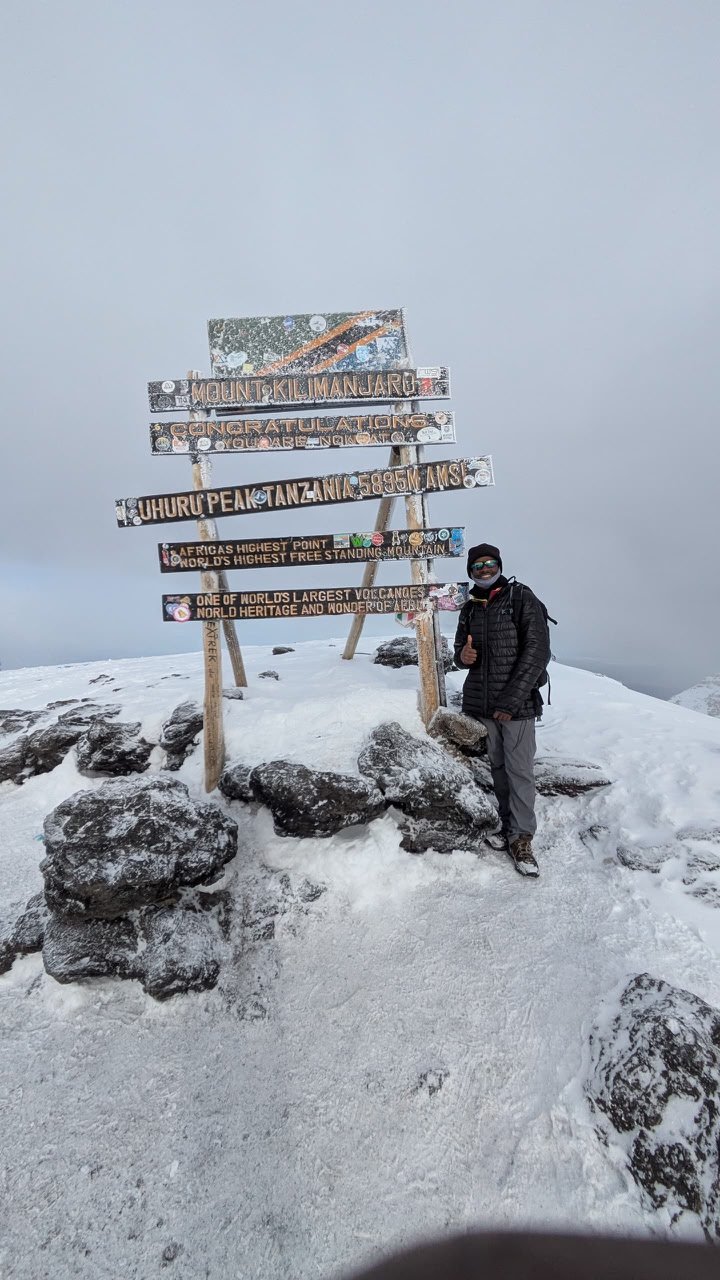
Choosing to hike Mount Kilimanjaro via the Marangu Route between 2 December and 6 December 2026 places you on the mountain during an intriguing seasonal window. Early December sits directly in the transition between the short rainy season (known locally as the Vuli rains) and the dry, sunny conditions of mid-December through early March. Travelers targeting these specific departure dates need a precise operational understanding of the route profile, hut amenities, early December meteorological nuances, and the severe altitude ramp that makes the 5-day variation both time-efficient and physiologically unforgiving.
Route Overview: Defining the Marangu Route in 5 Days
The Marangu Route is the oldest established trekking path on Mount Kilimanjaro. Often historically nicknamed the “Coca-Cola Route” due to the historic sale of bottled soda at resting shelters, that moniker belies the true physical toll of attempting the entire vertical ascent and descent in just five days. Operating along the southeastern slopes of the mountain, Marangu is unique because its ascent and descent follow the exact same path. While other popular tracks such as the Machame or Lemosho routes ascend via western or southwestern ridgelines and descend through Mweka, Marangu hikers retrace their footsteps downhill through Kibo, Horombo, and Mandara back to the entry gate.
On a 5-day schedule spanning 2–6 December 2026, your trail progress will look like this:
| Date | Stage / Trail Section | Starting Elevation | Ending Elevation | Distance & Time | Vegetation Zone |
|---|---|---|---|---|---|
| 2 Dec 2026 | Marangu Gate to Mandara Hut | 1,860 m / 6,102 ft | 2,700 m / 8,858 ft | 8 km | 4–5 hrs | Montane Rainforest |
| 3 Dec 2026 | Mandara Hut to Horombo Hut | 2,700 m / 8,858 ft | 3,720 m / 12,205 ft | 12 km | 6–8 hrs | Heather & Moorland |
| 4 Dec 2026 | Horombo Hut to Kibo Hut | 3,720 m / 12,205 ft | 4,703 m / 15,430 ft | 9.5 km | 6–8 hrs | Alpine Desert |
| 5 Dec 2026 | Kibo to Uhuru Peak, down to Horombo | 4,703 m / 15,430 ft | 5,895 m / 19,341 ft (down to 3,720 m) | 21 km | 12–15 hrs | Arctic Summit to Moorland |
| 6 Dec 2026 | Horombo Hut to Marangu Gate | 3,720 m / 12,205 ft | 1,860 m / 6,102 ft | 20 km | 5–7 hrs | Moorland to Rainforest |
The total round-trip distance is approximately 70.5 kilometers (43.8 miles). The Marangu path features well-graded, maintained trails engineered decades ago for steady progress. You will not encounter technical scrambling or vertical rock walls such as the famous Barranco Wall found on the 7-day Machame Route. However, the apparent technical simplicity of the trail often lulls hikers into a false sense of security. Because the path is wide and clearly defined, hikers sometimes walk too fast, compounding the stress of gaining 4,035 meters in under 80 hours.
Mount Kilimanjaro Climate: What to Expect from 2 to 6 December 2026
Weather on Mount Kilimanjaro is dictated by regional equatorial winds, altitude, and seasonal weather systems rather than typical four-season calendars. The timeframe of 2–6 December 2026 falls at the tail end of East Africa’s short rainy season, which runs from late October through November. By early December, the heavy, persistent afternoon downpours begin tapering off, yielding clearer morning skies and crisp, cold nights.
Early December Weather Reality: You should prepare for dynamic mountain conditions. The lower montane rainforest (Marangu Gate to Mandara Hut) is likely to be damp and humid, with muddy footing and afternoon rain showers. Once you break above the tree line into the moorland at 3,000 meters, precipitation decreases substantially, though clouds often build by early afternoon. Nights at Horombo and Kibo huts drop below freezing, with summit night temperatures typically ranging between -7°C and -15°C (19°F to 5°F), exacerbated by high-altitude winds.
One distinct advantage of trekking during early December 2026 is the lower trail traffic compared to the peak holiday period later in the month. Treks running over Christmas and New Year—such as the 7 Days Machame Christmas Holiday Trek or the 8 Days Lemosho New Year Summit Climb—see high hut and campsite occupancy. Early December offers quieter trails, less crowded dining halls at the huts, and unhurried interactions with local park rangers and mountain crews.
Because Kilimanjaro creates its own microclimate, daily conditions shift rapidly through five distinct ecological bands:
- Cultivation & Rainforest Zone (1,860m to 2,700m): Warm and humid, daytime temps 20°C to 25°C (68°F–77°F). Rain is frequent in early December; trail surfaces can be slick with exposed tree roots and clay mud.
- Heather & Moorland Zone (2,700m to 4,000m): Open terrain featuring giant lobelias and groundsels. Clear mornings give way to rolling cloud banks by 13:00. Day temperatures range from 12°C to 18°C (54°F–64°F), dropping to 2°C to 6°C (35°F–43°F) at night.
- Alpine Desert Zone (4,000m to 5,000m): Arid, windswept terrain crossing the Saddle between Mawenzi and Kibo peaks. Intense solar radiation during the day with temperatures around 5°C to 10°C (41°F–50°F), plunging below 0°C (32°F) as soon as the sun dips below the horizon.
- Arctic Summit Zone (above 5,000m): Scree, loose volcanic dust, and permanent glacier fields. Sub-zero temperatures, intense wind chill, and roughly 49% of the sea-level effective oxygen concentration.
The 5-Day Elevation Paradox: Acclimatization Realities and Trade-offs
Before committing to a 5-day Marangu climb in 2026 or 2027, you must understand the physiology of high-altitude adaptation. On Kilimanjaro, acclimatization is primarily a function of time spent at elevation rather than cardiovascular fitness. In medical terms, your body requires progressive exposure to reduced barometric pressure to stimulate hyperventilation, adjust blood pH through bicarbonate excretion in urine, and stimulate red blood cell production.
Standard mountain medicine guidance recommends ascending no more than 300 to 500 meters per day above an altitude of 3,000 meters, incorporating rest days every three to four days. On a 5-day Marangu itinerary, this rule is deliberately compromised to create a shorter, more affordable schedule. Consider the vertical jump:
- Day 2 to Day 3: You move from Mandara Hut (2,700m) to Horombo Hut (3,720m), gaining 1,020 meters in a single day.
- Day 3 to Day 4: You push from Horombo Hut (3,720m) directly to Kibo Hut (4,703m), gaining another 983 meters without an intervening rest or acclimatization day.
- Day 4 into Day 5: After resting for just 5 to 6 hours at Kibo Hut, you launch a midnight summit bid to Uhuru Peak (5,895m), ascending an additional 1,192 meters of extreme vertical elevation on tired legs.
This rapid ascent profile explains why the 5-day Marangu Route has historically recorded the lowest overall summit success rates of any official path on Kilimanjaro—often estimated between 50% and 60% across all commercial operators. Many hikers who do not reach the summit fall victim to Acute Mountain Sickness (AMS), characterized by throbbing headaches, nausea, loss of appetite, dizziness, and peripheral edema.
By contrast, the 6-day Marangu itinerary includes a mandatory acclimatization day at Horombo Hut, during which climbers hike to Zebra Rocks (4,020m) or towards Mawenzi Ridge before returning to Horombo to sleep. If you are debating route duration and have flexibility, longer alternative routes such as the 7 Days Machame Kilimanjaro Trek or the Best 8 Day Kilimanjaro Lemosho Route Package provide significantly higher safety profiles and summit rates above 85% to 90%.
However, if your schedule strictly limits you to five days, or if you have previously pre-acclimatized—for instance, by completing a 3- or 4-day climb of Mount Meru immediately prior—the 5-day Marangu trek is a direct, logistically elegant route to the roof of Africa.
Detailed Day-by-Day Trek Progression: 2–6 December 2026
To prepare physically and mentally, examine how each day unfolds from an operational and athletic perspective.
Day 1: Wednesday, 2 December 2026 – Marangu Gate (1,860m) to Mandara Hut (2,700m)
The journey begins with morning logistics in Moshi or Arusha. Your lead mountain guide and transport team meet you at your accommodation for a final equipment check before driving approximately 45 minutes to one hour through coffee and banana farmland to the Marangu Gate (1,860m), the headquarters of Kilimanjaro National Park (KINAPA).
At the gate, national park formalities take place: passport registration, checking of guide licenses, scale-weighing of porter bags (strictly regulated to a maximum of 15 kg per porter), and obtaining official climb permits. Once cleared, you step onto the trail around 10:30 or 11:00 AM.
The first day takes you through the montane forest zone. The trail is wide, shaded by towering camphorwood and fig trees draped with moss and old man’s beard lichen. Blue monkeys and black-and-white colobus monkeys are common in the canopy. The gradient is gentle and steady, paved with wooden steps in sections prone to erosion. Because early December can bring misty rain to the forest, carry your waterproof jacket and pack cover in your daypack from the start.
After roughly 8 kilometers and 4 hours of unhurried walking at a deliberate pole pole (slowly, slowly) pace, you reach Mandara Hut (2,700m). Mandara consists of a cluster of wooden A-frame huts situated in a forest clearing. After signing the camp register, you are assigned your bunk. If you arrive early and feel energetic, your guide may lead an optional 45-minute round-trip hike to Maundi Crater, an extinct parasitic volcanic cone offering views through the forest canopy toward the Kenyan plains.
Day 2: Thursday, 3 December 2026 – Mandara Hut (2,700m) to Horombo Hut (3,720m)
Day 2 demands an early breakfast around 07:00 AM. Within twenty minutes of leaving Mandara, you clear the upper edge of the rainforest. The canopy gives way to the open heath and moorland zone, instantly expanding your visual horizons. On clear December mornings, the jagged peaks of Mawenzi (5,149m) and the snow-dusted dome of Kibo (5,895m) appear ahead against the skyline.
The trail continues upward over rolling moorland ridges, crossing small rocky streams. Vegetation shifts to tussock grasses, giant heathers, and the distinctive Senecio kilimanjari (giant groundsels), which can grow up to five meters tall. The sun in this exposed zone is intense, requiring broad-spectrum sunscreen and UV-blocking sunglasses, while the air temperature drops markedly whenever cloud cover rolls in from the valley.
Check Availability for 5 Days Marangu Route Kilimanjaro Trek – 2–6 December 2026-2027
Ready to compare dates, prices, and the best option for your group? Send the package name and travel month so the team can reply with a clear quote, availability, and what is included.
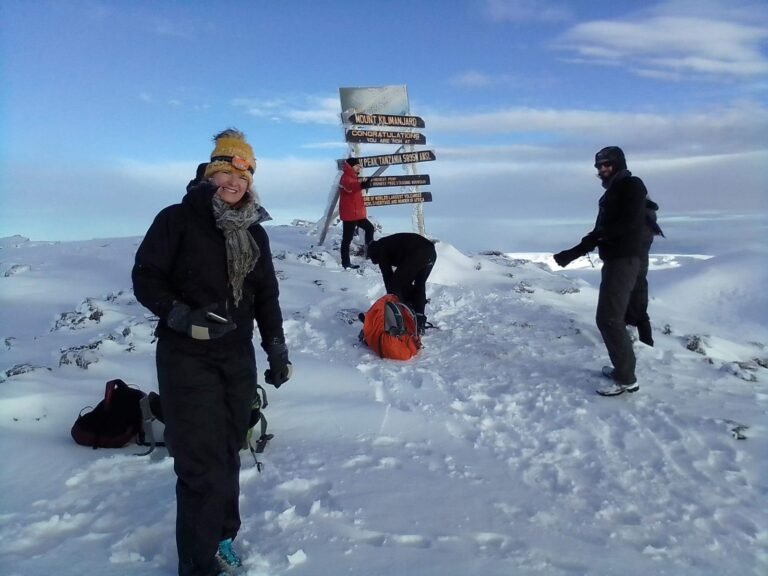
6 Days Machame Route Kilimanjaro Group Trek – 3–8 December 2026-2027
A detailed guide to the 6-day Machame Route Kilimanjaro group trek departing 3–8 December 2026, covering route details, daily itinerary, preparation, and booking.
View package details
5 Days Marangu Kilimanjaro New Year Trek – 29 December – 2 January 2026-2027
5 Days Marangu Kilimanjaro New Year Trek – 29 December 2026 – 2 January 2027 is explained with current 2026-2027 planning, price, itinerary and booking.
View package details
5 Days Marangu Kilimanjaro Christmas Trek – 22–26 December 2026-2027
5 Days Marangu Kilimanjaro Christmas Trek – 22–26 December 2026 is explained with current 2026-2027 planning, price, itinerary and booking information.
View package details
5 Days Marangu Kilimanjaro Full Moon Trek – 21–25 December 2026-2027
5 Days Marangu Kilimanjaro Full Moon Trek – 21–25 December 2026 is explained with current 2026-2027 planning, price, itinerary and booking information.
View package details
5 Days Marangu Kilimanjaro December Trek – 19–23 2026-2027
5 Days Marangu Kilimanjaro December Trek – 19–23 December 2026 is explained with current 2026-2027 planning, price, itinerary and booking information.
View package details5 Days Marangu Route Kilimanjaro Group Climb – 8–12 December 2026-2027
5 Days Marangu Route Kilimanjaro Group Climb – 8–12 December 2026 is explained with current 2026-2027 planning, price, itinerary and booking information.
View package details
6 Days Marangu Kilimanjaro Hut Trekking – 6–11 December 2026-2027
6 Days Marangu Kilimanjaro Hut Trekking – 6–11 December 2026 is explained with current 2026-2027 planning, price, itinerary and booking information.
View package details
6 Days Marangu Kilimanjaro Full Moon Climb – 20–25 December 2026-2027
6 Days Marangu Kilimanjaro Full Moon Climb – 20–25 December 2026 is explained with current 2026-2027 planning, price, itinerary and booking information.
View package details
6 Days Machame Kilimanjaro New Year Trek – 28 December – 2 January 2026-2027
6 Days Machame Kilimanjaro New Year Trek – 28 December 2026 – 2 January 2027 is explained with current 2026-2027 planning, price, itinerary and booking.
View package details
6 Days Marangu Kilimanjaro New Year Climb – 28 December – 2 January 2026-2027
6 Days Marangu Kilimanjaro New Year Climb – 28 December 2026 – 2 January 2027 is explained with current 2026-2027 planning, price, itinerary and booking.
View package details6 Days Marangu Kilimanjaro Group Hiking – 9–14 December 2026-2027
6 Days Marangu Kilimanjaro Group Hiking – 9–14 December 2026 is explained with current 2026-2027 planning, price, itinerary and booking information.
View package details7 Days Machame Route Kilimanjaro Christmas Trek – 20–26 December 2026-2027
7 Days Machame Route Kilimanjaro Christmas Trek – 20–26 December 2026 is explained with current 2026-2027 planning, price, itinerary and booking information.
View package detailsNo closely related package is available yet for this topic.

Our Guest Reviews, Currently Feedback from Clients in 2026
Reviews from different sources, including Google Business, Tripadvisor, other platforms, and social media.