
You should spend 3 to 4 full days inside Serengeti National Park for the ideal wildlife balance, allowing two to three nights in central Seronera for resident big cats and at least one or two nights tracking the Great Migration herds in the north or south. If you are traveling on a strict budget or tight flight schedule, a 2-day / 1-night visit is the absolute minimum to touch the plains, while keen photographers, birders, and travelers tracking the Mara River crossings or calving season benefit most from 5 to 7 days split between distinct ecological sectors across the 2026-2027 safari seasons.
Serengeti Duration Decision Matrix: At a Glance
Choosing the right number of days for Serengeti National Park comes down to three operational variables: the specific sector of the park you need to reach, whether you are arriving by bush flight or overland vehicle, and how much time you want to spend observing animal behavior rather than staring at transit roads. Because the park covers nearly 15,000 square kilometers of protected wilderness, treating the Serengeti as a single destination where you check off sightings in a single afternoon leads to disappointment and long, exhausting drives.
For most travelers planning trips for 2026 and 2027, spending between 3 and 4 days inside the park gates delivers the highest return on investment. This window allows you to absorb the vastness of the plains, navigate around unpredictable predator movements, and account for the rigid 24-hour park permit cycles managed by the Tanzania National Parks Authority (TANAPA).
| Duration Inside Park | Best Suited For | Primary Sector Covered | Pace & Transit Balance | Estimated Daily Cost Level |
|---|---|---|---|---|
| 2 Days / 1 Night | Time-pressed travelers, quick add-on from Arusha | Central Serengeti (Seronera) only | Very fast, 60% driving transit, minimal tracking | Budget to Mid-range: $350 – $650 pp/day |
| 3 Days / 2 Nights | First-time safari goers, standard northern circuit | Seronera + Moru Kopjes or Western Corridor | Balanced, allows dawn game drives and unhurried lunches | Mid-range to Luxury: $400 – $850 pp/day |
| 4 Days / 3 Nights | Migration watchers, wildlife enthusiasts, families | Two sectors (e.g., Central + North or Central + South) | Optimal, full morning/afternoon tracking windows | Mid-range to Luxury: $450 – $1,100 pp/day |
| 5 to 7 Days | Photographers, specialized birders, deep migration tracking | Multiple regions (Seronera, Mara River, Kogatende, Ndutu) | Relaxed, multiple river crossing attempts, private pace | Luxury fly-in: $650 – $1,800+ pp/day |
When reviewing these figures, consider whether your total safari itinerary accounts for buffer days outside the park. A typical 3 day Serengeti and Ngorongoro safari features roughly 36 to 40 actual hours within the Serengeti boundaries, whereas a dedicated 7 day Tanzania safari provides multiple uninterrupted days of tracking predators without packing your luggage every morning.
The Geography Problem: Why Serengeti Distances Dictate Your Days
The single most common mistake safari planners make is looking at an aerial map of northern Tanzania and underestimating road transit times. The distance from the entrance gate at Naabi Hill to the Seronera wildlife hub in the center of the park is over 50 kilometers of corrugated gravel and fine silt. From Seronera north to the Mara River airstrips at Kogatende is another 120 kilometers through winding dirt tracks where speed limits are strictly capped at 50 km/h by TANAPA rangers.
If you commit only 24 to 48 hours to the park, a substantial chunk of that time is eaten up by practical necessities: clearance through the entry gates, slow progress across corrugations, checking into remote tented camps, and mandatory transit back out before your park entry fees expire. As noted in our logistics breakdown of how far Serengeti National Park is from Arusha by road, driving from Arusha consumes roughly 7 to 8 hours just to reach central Seronera. Spending a single night means you spend nearly as much time sitting on the rough main highway as you do watching lions.
Understanding park zones helps explain why duration matters so profoundly:
- Central Serengeti (Seronera): Rich in resident leopards, lion prides, and year-round water along the Seronera River valley. It is accessible, but heavily visited. You need at least two full mornings here to break away from the safari vehicle clusters and work the quieter side tracks along the Maasai and Moru Kopjes.
- Northern Serengeti (Kogatende & Lamai): The prime stage for dramatic Mara River crossings between July and October. Because it sits far to the north against the Kenyan border, traveling here overland requires an entire driving day from central Seronera, making a minimum stay of 3 nights in this sector mandatory unless you choose a fly-in safari.
- Southern Plains & Ndutu: The calving grounds for over 1.5 million wildebeest between January and March. While technically straddling the Ngorongoro Conservation Area boundary, spending 2 to 3 days here gives you front-row access to high predator action, cheetah hunts, and newborn calves.
- Western Corridor (Grumeti): Flanked by the Grumeti River, this area peaks from May to July as the migration marches west toward Lake Victoria. River crossings here feature massive Nile crocodiles, requiring patience and dedicated hours parked under acacia trees waiting for nervous herds to plunge into the water.
If you attempt to see all of these zones in 3 days, you will spend your entire safari through a dusty Land Cruiser window. If you limit yourself to one or two zones, your days become rich, in-depth, and productive.
Spending 2 Days in the Serengeti: The Rushed Reality
Can you visit the Serengeti in two days? Yes, but you must enter with realistic expectations. A 2-day visit generally takes the form of an overnight stay: you enter the park around midday on Day 1, take an afternoon game drive until sunset, sleep at a central tented camp, conduct an early morning dawn drive on Day 2, and exit the park by midday to avoid incurring a second 24-hour TANAPA permit charge.
This duration suits travelers on a tight travel budget or individuals pairing a short safari with a trek on Kilimanjaro. It allows you to see the sweeping golden horizon, check off plains game like zebras, giraffes, and impalas, and almost certainly locate resident lions or hyenas around Seronera. If this matches your time constraints, joining an organized overland departure such as a budget group joining Serengeti safari reduces vehicle and fuel overhead while giving you a professional driver-guide who knows where the resident prides were spotted the previous evening.
What You Can Realistically Achieve in 2 Days
- One afternoon game drive: Focusing on the river loops near Seronera (Retima Hippo Pool, Makoma Hill).
- One sunrise game drive: The prime window between 06:30 and 09:00 AM when leopards and lions are active before the midday heat.
- Iconic landscape viewing: Passing through the sweeping grasslands of the southern plains and Naabi Hill.
- Trade-off to accept: You will not reach the Great Migration river crossings in the north or the deep wilderness pockets of the western corridor. You will also spend considerable time packing and unpacking your gear.
If you only have two days, our operational advice is straightforward: do not try to chase the migration if it is stationed far to the north. Stay anchored in central Seronera, maximize your golden-hour drives, and ensure your camp is positioned inside the park rather than outside the gates to save an hour of gate clearance in the morning.
The Sweet Spot: Why 3 to 4 Days Fits Most Travelers
For roughly 75% of safari travelers heading to Tanzania in 2026-2027, a duration of 3 to 4 days (2 to 3 nights) is the strategic sweet spot. This timeframe unlocks the true magic of the Serengeti: the ability to wait quietly at a sighting without feeling the pressure of having to reach an exit gate across the park.
With three full days, your safari transforms from a checklist into an observational experience. When your guide locates a female cheetah scanning the plains from a termite mound, you do not have to leave after five minutes to make camp check-in. You can shut off the engine, listen to the warning calls of nearby Thomson’s gazelles, and watch the hunting sequence unfold across an entire morning.
A Field-Tested 4-Day Serengeti Flow
- Day 1: Entry via Ngorongoro Highlands & Central Plains. Descend past the rim of Ngorongoro, enter through Naabi Hill, and track across the southern short-grass plains. Afternoon arrival in Seronera with game viewing along the river valleys. Overnight in a central tented camp.
- Day 2: Full-Day Exploration of Central Seronera & Moru Kopjes. Morning search for tree-climbing leopards around the sausage trees of the Seronera River. Midday picnic lunch out in the bush. Afternoon tracking the rare black rhinos residing in the Moru Kopjes region.
- Day 3: Seasonal Sector Movement (North or West). Move northward toward Kogatende (July–October) or westward toward the Grumeti (May–June), following the movement of the mega-herds. Afternoon game drive along river staging areas. Overnight in a mobile migration camp.
- Day 4: Dawn Migration Tracking & Airstrip Departure. Early morning tracking along the crossing points or riverbanks. Transfer to the local bush airstrip (Seronera or Kogatende) for a scenic scheduled flight direct to Arusha or Zanzibar, saving 8 hours of rough overland driving.
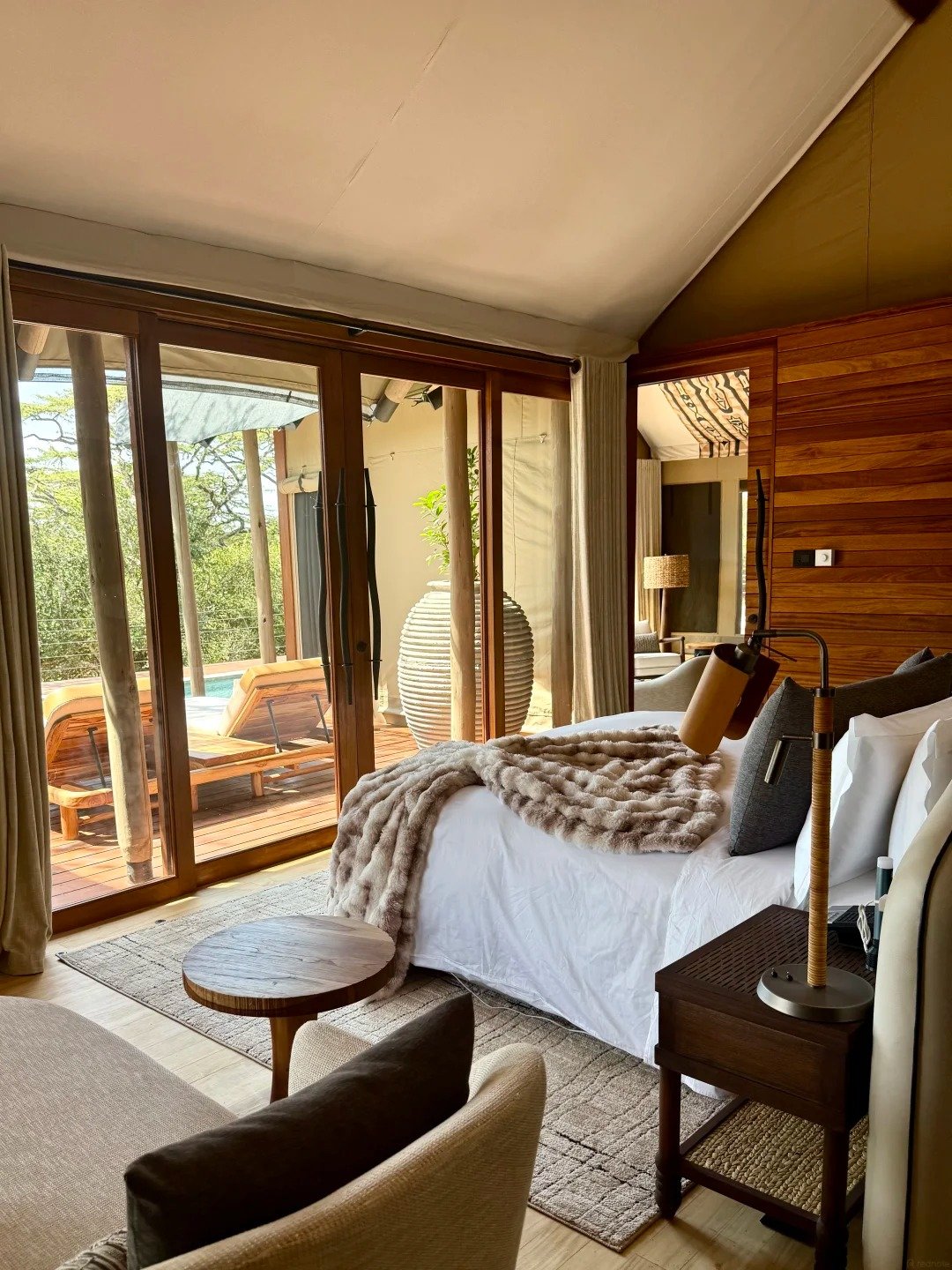
This 4-day framework balances predator country with herd dynamics. It pairs exceptionally well with travelers booking a mid-range Serengeti lodge package where comfortable canvas camps offer hot showers, hearty dinners, and solar-powered charging stations to prepare camera batteries for the next dawn departure.
Spending 5 to 7 Days: Deep Exploration and Migration Focus
Extending your stay to 5, 6, or 7 days moves you into specialized safari territory. This length of stay is rarely necessary for casual vacationers who simply want to see the Big Five, but it is indispensable for serious wildlife photographers, birding specialists, and travelers whose primary life goal is witnessing a dramatic Mara River crossing.
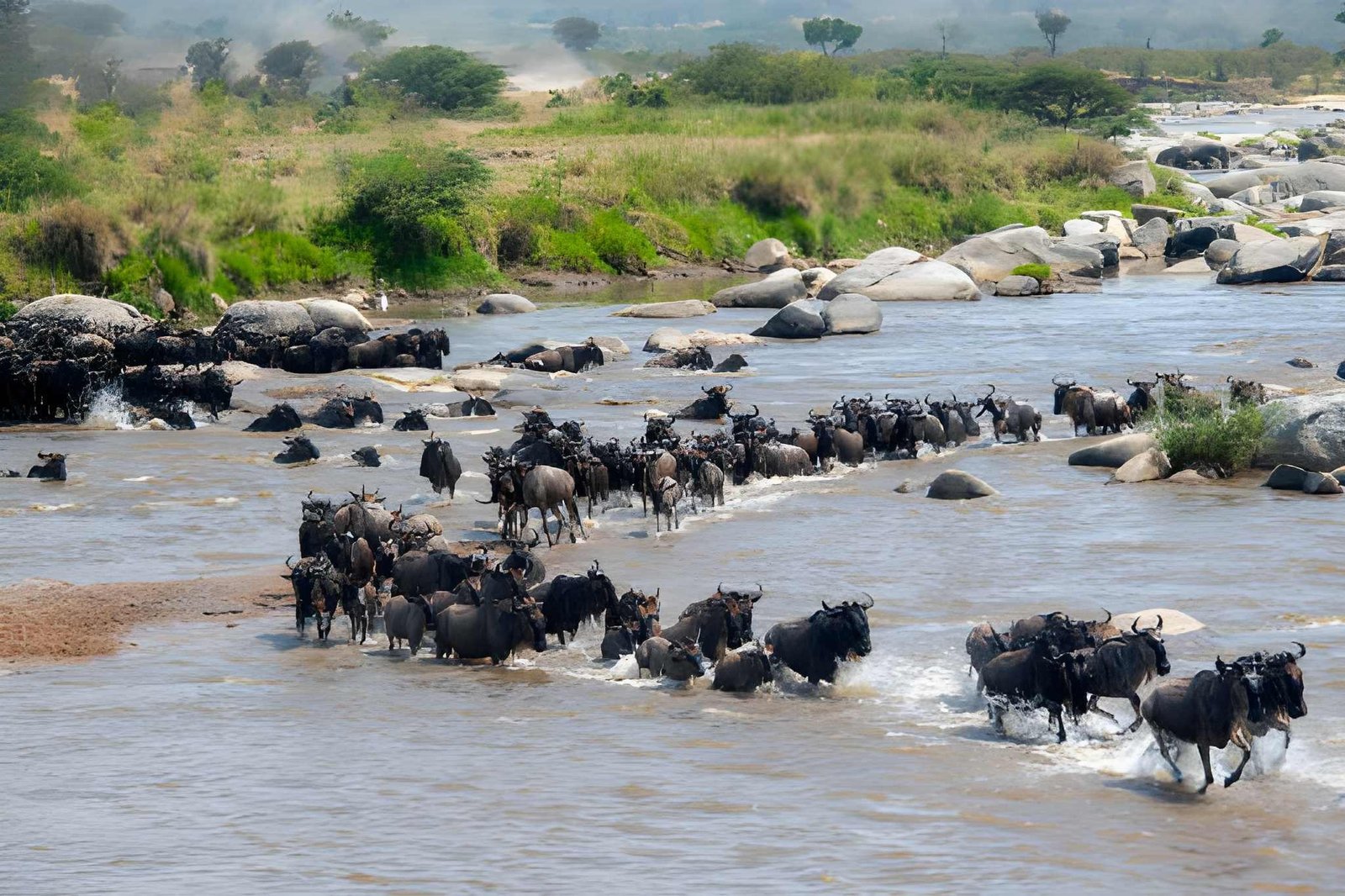
River crossings are volatile events dictated entirely by animal psychology. A herd of 10,000 wildebeest may gather at the edge of the Mara River, raise clouds of dust, vocalize with frantic grunts, and inch toward the water for six straight hours—only to be spooked by an opening crocodile jaw or a rustle on the opposite bank and bolt back into the bush. If you only spend one day in northern Serengeti, you may spend the entire day waiting on the riverbank and see nothing more than frustrated dust.
A 5 to 7 day itinerary provides the luxury of time:
- Split-Camp Strategy: You can split your nights between two entirely different ecosystems—for instance, 3 nights in Central Seronera for resident big cats and hyena clans, followed by 3 nights in northern Kogatende or southern Ndutu.
- Photographic Patience: Photographers can wait for optimal low-angle lighting, track specific lion prides across multiple hunts, and position vehicles without the rush to complete standard circuits.
- Off-the-Beaten-Track Circuits: You can explore neglected regions such as the Gol Kopjes (famed for high cheetah concentrations during wet months), the Bologonja springs near the Kenyan frontier, or the Nyabogati river loops.
- Walking Safaris: Multi-day stays allow you to schedule walking safaris led by armed TANAPA wilderness rangers in designated wilderness zones, an activity completely impossible on short, rushed itineraries.
The primary barrier to spending 5 to 7 days is cost. With TANAPA conservation fees, vehicle fees, camping fees, and professional guide wages calculating on a strict per-day basis, every additional 24 hours adds substantially to your balance. You can review the exact park tariff components inside our detailed Tanzania safari cost breakdown guide before committing to an extended booking for 2026 or 2027.
How Migration Season Dictates Your Required Days (2026-2027)
The time of year you travel should directly dictate how many days you allocate to the Serengeti. The Great Migration is not a static event; it is a year-round circular voyage driven by rainfall, pasture growth, and phosphorus-rich soils. Because the herds shift hundreds of kilometers between seasons, your required safari length changes dramatically depending on the month you step foot in Tanzania.
Seasonal Allocation Guide for 2026-2027
January to March (Southern Serengeti & Ndutu Calving): Allocate 3 to 4 days. The herds are concentrated on the flat, open plains south of Seronera and around Lake Ndutu. Because the terrain is open and flat, off-road tracking is permitted in designated Ndutu sectors, allowing you to locate cheetahs, lions, and newborn wildebeest quickly without massive transit days between camps.
April to May (The Long Rains & Central Plains): Allocate 3 days. The central Seronera valley remains active, predator sightings are reliable, and accommodation rates drop significantly. However, heavy rains can turn black-cotton soil tracks into thick mud. Spending more than 3 to 4 days during the height of the rains can become physically tiring unless you stay at permanent luxury lodges with all-weather road access.
June to July (Grumeti & Western Corridor Transition): Allocate 4 to 5 days. The herds funnel through narrow corridors toward the western border and cross the treacherous Grumeti River. Movements during this transitional phase can be unpredictable, so an extra day gives your guide buffer time to locate the front lines of the mega-herds.
August to October (Northern Serengeti Mara River Crossings): Allocate 4 to 6 days. The most sought-after window for 2026 and 2027 bookings. Getting to Kogatende takes time, and witnessing river crossings requires immense patience. Spending less than 3 dedicated nights in the northern sector during these months is a logistical gamble that frequently results in missing the crossings entirely.
November to December (Short Rains & Southward March): Allocate 3 to 4 days. The migration sweeps back down from Kenya through the eastern Serengeti and Lobo kopjes toward Seronera. Splitting your days between central Seronera and the eastern valleys offers an exceptional balance of predator encounters and moving herds.
Check Availability for How Many Days Should I Spend In Serengeti National Park? 2026-2027
Ready to compare dates, prices, and the best option for your group? Send the package name and travel month so the team can reply with a clear quote, availability, and what is included.

Can I Stay Inside Serengeti National Park In A Tent With A Bathroom? 2026-2027
Can I Stay Inside Serengeti National Park in a Tent with a Bathroom? is explained with current 2026-2027 planning, price, itinerary and booking information.
View package details
Is It Better To Fly Or Drive To Serengeti National Park? 2026-2027
Is It Better to Fly or Drive to Serengeti National Park? is explained with current 2026-2027 planning, price, itinerary and booking information.
View package details
How Far Is Serengeti National Park From Arusha By Road? 2026-2027
How Far Is Serengeti National Park from Arusha by Road? is explained with current 2026-2027 planning, price, itinerary and booking information.
View package details
Can I Fly Directly From Zanzibar To Serengeti National Park? 2026-2027
Can I Fly Directly from Zanzibar to Serengeti National Park? is explained with current 2026-2027 planning, price, itinerary and booking information.
View package details
Can I Visit Serengeti National Park On A Safari From Zanzibar? 2026-2027
Can I Visit Serengeti National Park on a Safari from Zanzibar? is explained with current 2026-2027 planning, price, itinerary and booking information.
View package details
Best Serengeti Safari Packages With Two Nights Inside The Park 2026-2027
Best Serengeti Safari Packages with Two Nights Inside the Park is explained with current 2026-2027 planning, price, itinerary and booking information.
View package details
Can A Serengeti Safari Guide Guarantee A River Crossing Sighting? 2026-2027
A detailed travel planning assessment clarifying why no ethical safari guide can guarantee a wildebeest river crossing in the Serengeti, detailing herd dynamics, crossing points, and field...
View package details
Can I Book A Serengeti Safari With A Hot Air Balloon Experience? 2026-2027
Can I Book a Serengeti Safari with a Hot Air Balloon Experience? is explained with current 2026-2027 planning, price, itinerary and booking information.
View package details
Is Ngorongoro Crater Better Than Serengeti For A Short Safari? 2026-2027
Is Ngorongoro Crater Better Than Serengeti for a Short Safari? is explained with current 2026-2027 planning, price, itinerary and booking information.
View package details
Best Serengeti Safari Camps For Couples And Honeymooners 2026-2027
Best Serengeti Safari Camps for Couples and Honeymooners is explained with current 2026-2027 planning, price, itinerary and booking information.
View package details
Central Serengeti Vs Northern Which Is Better For Safari? 2026-2027
Central Serengeti vs Northern Serengeti: Which Is Better for Safari? is explained with current 2026-2027 planning, price, itinerary and booking information.
View package details6 Day Ndutu Serengeti And Ngorongoro Safari With Private Guide 2026-2027
6 Day Ndutu Serengeti and Ngorongoro Safari with Private Guide is explained with current 2026-2027 planning, price, itinerary and booking information.
View package detailsNo closely related package is available yet for this topic.

Our Guest Reviews, Currently Feedback from Clients in 2026
Reviews from different sources, including Google Business, Tripadvisor, other platforms, and social media.



