
Yes, one day is enough to explore the Ngorongoro Crater floor because the caldera spans just 260 square kilometers (100 square miles) with an exceptionally dense resident wildlife population, allowing you to see four or five of the Big Five during a single five-to-six-hour game drive. However, strict conservation rules enforced by the Ngorongoro Conservation Area Authority limit vehicle descent time, and staying beyond six hours on the floor triggers steep additional crater service fees. The decision hinges on where you wake up: departing from Karatu or the rim provides a relaxed, high-reward day, whereas a single-day round trip from Arusha requires an intense 14-to-15-hour marathon with up to eight hours of driving on the road.
The Quick Reality Check: What You Can Actually See in One Day
When travelers ask whether a single day is sufficient for the Ngorongoro Crater, they often compare it to boundless wilderness ecosystems like the Serengeti or Ruaha. That comparison is flawed from the beginning. Ngorongoro is not an open, endless savannah where animals migrate across hundreds of miles every week. It is a closed volcanic caldera ringed by 600-meter-high forested walls that create a natural sanctuary for roughly 25,000 to 30,000 large mammals.
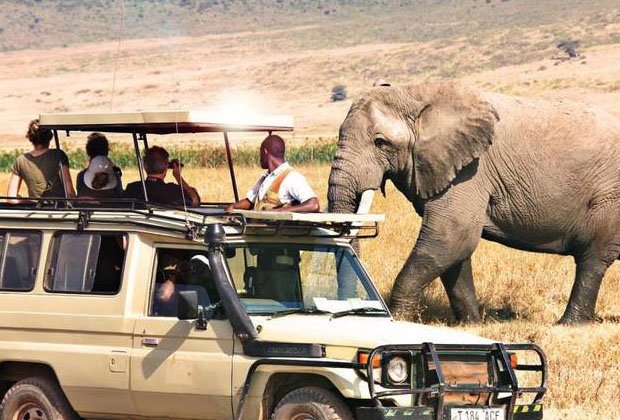
Because the animals are resident rather than migratory, your safari guide does not spend half the day tracking footprints through trackless bush. Once your 4×4 descends the narrow, steep track through the montane mist and levels out on the crater floor, you are immediately inside the viewing area. Within your first thirty minutes on the valley floor, you will likely encounter thousands of blue wildebeest, common zebras, Thomson’s gazelles, buffalos, and spotted hyenas grazing in plain sight.
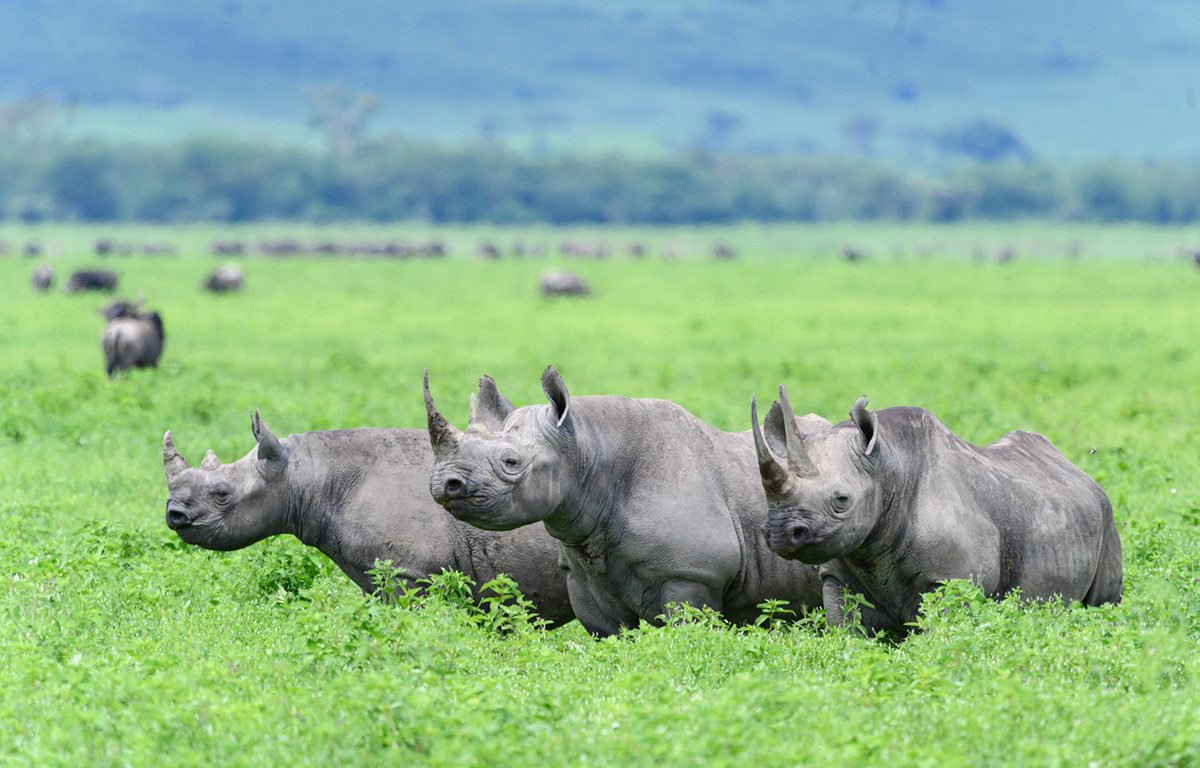
For most travelers planning trips in 2026-2027, a single full-morning game drive delivers the core experience people look for: dense predator-prey dynamics, close-up photography, and the distinct possibility of seeing a black rhino against the distant caldera rim. If your goal is to experience this specific geological marvel and see an extraordinary density of animals, one day on the crater floor is fully adequate. Where travelers run into frustration is not the crater itself, but the rushed logistics of getting there and back when their itinerary is poorly constructed.
Caldera Geography: Why 260 Square Kilometers Works for a Single Day
To evaluate if one day is enough, you have to understand the spatial dynamics of the crater floor. At roughly 19 to 20 kilometers across and 260 square kilometers in area, the floor can be circumnavigated at moderate safari driving speeds over the course of four to five hours, including regular stops for photography and wildlife observation.
The caldera floor contains several distinct micro-ecosystems packed into this relatively small basin:
- Lake Magadi: A shallow alkaline soda lake in the southwestern quadrant that attracts tens of thousands of lesser and greater flamingos, along with pods of hippos submerged along the reed-fringed shorelines.
- Lerai Forest: A classic yellow-fever tree (Vachellia xanthophloea) woodland located near the southern rim ascent road. This is the primary refuge on the floor for elusive leopards, massive old tusker elephants, vervet monkeys, and bushbucks.
- Gorigor Swamp: A perennial wetland fed by freshwater springs from the crater walls, providing year-round hydration and cooling mud for giant bull elephants, wallowing cape buffalos, and aquatic birds.
- Central Open Grasslands: Vast swathes of short and medium sweet grasses that support enormous grazing herds of zebras, wildebeest, and Grant’s gazelles, monitored closely by several resident lion prides and roaming hyena clans.
- Munge Swamp and Ngoitokitok Springs: Permanent water bodies in the northern and eastern sectors where safari vehicles pause for designated picnic stops, surrounded by open waters frequented by hippos and opportunistic black kites.
Because these diverse habitats sit directly adjacent to one another, moving from a forest-dwelling bull elephant to an open-plains lion hunt takes only twenty minutes of driving. In sprawling parks, crossing between riverine forest and open grassland might take two hours. In Ngorongoro, the entire landscape is compressed into a natural bowl, which is precisely why a single day does not feel incomplete.
The Six-Hour Rule and NCAA Permit Fees Explained for 2026-2027
One structural reality that many visitors overlook during early planning is that you cannot simply spend twelve leisurely hours driving across the crater floor on a single standard entry permit. The Ngorongoro Conservation Area Authority (NCAA) regulates vehicle congestion and conservation impact through strict access windows and fee structures.
For the 2026-2027 travel period, the standard vehicle crater descent permit is valid for a maximum of 6 hours from the exact moment your vehicle checks through the descent gate. If your guide crosses the descent barrier at 06:30 AM, your vehicle must ascend back to the rim checkpoint before 12:30 PM, or you incur punitive overstay charges or require a second descent fee payment.
Key Permit & Regulatory Facts (2026-2027 Estimates)
- NCAA Conservation Entry Fee: Approximately $70.80 USD per adult non-resident (inclusive of 18% VAT), valid for 24 hours within the wider conservation area.
- Crater Service Fee: A mandatory flat vehicle descent fee of approximately $295 USD per vehicle per descent (inclusive of VAT), granting up to 6 hours on the crater floor.
- Gate Operating Hours: Descent gates open at 06:00 AM and all vehicles must be off the crater floor by 06:00 PM. No night game drives are permitted inside the caldera.
- Multiple Descents: If you wish to spend an entire morning and an entire afternoon on the floor, your tour operator must purchase two separate descent permits for the same vehicle, doubling the crater service cost.
Because the six-hour limit is strictly policed, almost all standard day trips are designed around a focused, five-to-six-hour morning drive. Experienced guides at TOP GUIDE ADVENTURES know that these six morning hours coincide precisely with peak wildlife movement, cool temperatures, and active predator hunting, rendering an additional afternoon descent largely redundant for most visitors.
Where You Wake Up Matters: Arusha vs. Karatu vs. The Rim
Whether one day feels like a brilliant safari highlight or an exhausting vehicular endurance test depends entirely on where you sleep the night before your crater descent. The physical game drive inside the crater takes roughly the same amount of time regardless, but the approach journey transforms the entire quality of your day.
| Base Location | One-Way Drive to Crater Gate | Departure Time Needed | Practical Suitability |
|---|---|---|---|
| Arusha City | 3.5 to 4 hours (160 km tarmac + 25 km gravel) | 05:00 AM – 05:30 AM | Viable for time-crunched travelers; creates a very long 14-hour day. |
| Karatu Town | 45 to 60 minutes (tarmac to Loduare Gate + dirt track) | 05:30 AM – 06:00 AM | The golden balance of comfort, lodge variety, and sensible pricing. |
| Crater Rim Lodges | 15 to 30 minutes straight down the descent road | 06:00 AM | Fastest floor access; premium prices; often cold and foggy mornings. |
Option A: The Single-Day Return Trip from Arusha
Departing directly from Arusha for a single-day crater tour is common among business travelers, international conference attendees, and those who have just completed a Kilimanjaro climb. For a detailed breakdown of this specific route, review our analysis on visiting Ngorongoro Crater on a one day safari from Arusha.
To make this work, your guide must collect you from your Arusha hotel between 05:00 AM and 05:30 AM. You drive westward past Mount Meru, through the Maasai plains of Monduli, past Lake Manyara, and up the Great Rift Valley escarpment to the NCAA Loduare Gate by approximately 08:30 AM. After transit clearance and descending through the rim forest, you reach the floor around 09:30 AM.
You then conduct your game drive until roughly 03:00 PM, take a packed picnic lunch near the hippo pool, ascend the crater wall, and start the four-hour highway drive back to Arusha, arriving around 07:30 PM or 08:00 PM. While entirely possible and deeply rewarding if you have only 24 hours of spare travel time, you must accept that you will spend roughly seven to eight hours sitting in the vehicle traveling on paved roads to earn five to six hours of game viewing.
Option B: Starting from Karatu (The Practical Sweet Spot)
The far superior method for exploring Ngorongoro in one day is to travel out to the highland market town of Karatu the afternoon before. Karatu sits just outside the conservation area boundary, surrounded by verdant coffee estates and rural farms.
By sleeping in Karatu, your morning drive to the Loduare Gate is only 15 to 20 minutes, followed by a scenic 30-minute climb through the lush montane forest to reach the crater rim viewpoint. You can pass through the descent barrier right at 06:00 AM or 06:30 AM, putting your vehicle on the crater floor during the quietest, most magical golden light of the day before the day-tripper convoy from Arusha arrives.
You finish your complete six-hour loop by 12:30 PM or 01:00 PM, ascend the crater rim, and return to Karatu for a hot lunch, or continue onward toward Tarangire or Lake Manyara. If you are comparing multiple destinations on a tight schedule, consider pairing this with a 2 day Tarangire and Ngorongoro Crater safari from Arusha, which eliminates excessive road fatigue while doubling your wildlife variety.
A Realistic Hour-by-Hour Timeline for a One-Day Crater Exploration
To visualize how five to six hours translates into wildlife viewing, consider this realistic timetable based on an early descent, which represents the optimal way to deploy your time:
Field Itinerary: Maximizing the 6-Hour Descent Window
- 06:00 AM – 06:30 AM: Rim Descent. Drop down the narrow, one-way Seneto descent track. You pass through dense mist, giant heather, and moss-draped evergreen forest before breaking beneath the cloud line to see the wide savannah basin stretching below.
- 06:30 AM – 08:30 AM: Open Plains & Predator Search. The morning air is crisp (often 10°C to 12°C / 50°F to 54°F). Lions are active, frequently walking along vehicle tracks or hunting near herds of zebra and wildebeest. This is also your highest-probability window for sighting endangered black rhinos out in the open before the midday sun prompts them to lie low in tall scrub or scrubby depressions.
- 08:30 AM – 10:00 AM: Lake Magadi & Central Saline Flats. Drive along the edge of Lake Magadi. View flamingos feeding in the shallows, jackals skimming the shoreline for bird kills, and hyena packs returning from nighttime hunts to cool their bellies in muddy runoffs.
- 10:00 AM – 11:30 AM: Lerai Forest & Gorigor Swamp. Transition into the acacia fever tree forest. Scan the large boughs for leopards, observe majestic bull elephants carrying massive ivory tusks, and watch baboon troops foraging along the track edges. Move along the marsh to watch hippos resting and cape buffalos grazing shoulder-deep in mud.
- 11:30 AM – 12:30 PM: Ngoitokitok Springs Picnic & Ascent. Enjoy a bush lunch near the spring while viewing hippos in the pool. Watch your food carefully, as local black kites are adept at snatching sandwiches from open hands. Complete the final track loop and ascend the Lerai climb road back to the rim crest before your permit window expires.
This structured progression covers every major landscape and biological habitat inside the caldera. Stretching this across two separate days on the floor often leads to revisiting the exact same tracks and waterholes, which is why travelers generally find that one well-executed day satisfies their crater goals completely.
What Wildlife You Will Confirmedly See vs. What Requires Pure Luck
Understanding wildlife probabilities prevents unrealistic expectations. While Ngorongoro is widely celebrated as one of the best locations in East Africa to view the Big Five (lion, leopard, elephant, buffalo, and rhinoceros), not all five are guaranteed in a single day.
High-Certainty Sightings (95%+ Probability)
In a standard single-day excursion, you are virtually guaranteed to see hundreds of Cape buffalos, roaming herds of zebras and wildebeest, abundant spotted hyenas, common warthogs, hartebeests, and hippopotamuses. Lions are also extremely common; several prides reside permanently on the floor and are habituated to safari cruisers, frequently resting within five to ten feet of parked vehicles or sheltering in the shade cast by vehicle tires.
Check Availability for Is One Day Enough To Explore Ngorongoro Crater? 2026-2027
Ready to compare dates, prices, and the best option for your group? Send the package name and travel month so the team can reply with a clear quote, availability, and what is included.
Can I Visit Ngorongoro Crater On A One Day Safari From Arusha? 2026-2027
Can I Visit Ngorongoro Crater on a One Day Safari from Arusha? is explained with current 2026-2027 planning, price, itinerary and booking information.
View package details
Can I Combine Ndutu And Ngorongoro Crater In Four Days? 2026-2027
Can I Combine Ndutu and Ngorongoro Crater in Four Days? is explained with current 2026-2027 planning, price, itinerary and booking information.
View package details
7 Day Tanzania Great Migration Safari With Ngorongoro Crater 2026-2027
7 Day Tanzania Great Migration Safari with Ngorongoro Crater is explained with current 2026-2027 planning, price, itinerary and booking information.
View package details
Best Ngorongoro Crater Safari Tours With 6 Am Game Drive 2026-2027
Best Ngorongoro Crater Safari Tours with 6 AM Game Drive is explained with current 2026-2027 planning, price, itinerary and booking information.
View package details
Is Ngorongoro Crater Better Than Serengeti For A Short Safari? 2026-2027
Is Ngorongoro Crater Better Than Serengeti for a Short Safari? is explained with current 2026-2027 planning, price, itinerary and booking information.
View package details3 Day Ndutu And Ngorongoro Crater Safari From Arusha 2026-2027
3 Day Ndutu and Ngorongoro Crater Safari from Arusha is explained with current 2026-2027 planning, price, itinerary and booking information.
View package details
Can I Combine Ngorongoro Crater With A Maasai Village Visit? 2026-2027
Can I Combine Ngorongoro Crater with a Maasai Village Visit? is explained with current 2026-2027 planning, price, itinerary and booking information.
View package detailsBest Ngorongoro Crater Safari Packages From Moshi 2026-2027
Best Ngorongoro Crater Safari Packages from Moshi is explained with current 2026-2027 planning, price, itinerary and booking information.
View package details
Ngorongoro Crater And Lake Manyara Safari With Overnight Lodge 2026-2027
Ngorongoro Crater and Lake Manyara Safari with Overnight Lodge is explained with current 2026-2027 planning, price, itinerary and booking information.
View package detailsBest Ngorongoro Crater Safari For Families With Young Children 2026-2027
Best Ngorongoro Crater Safari for Families with Young Children is explained with current 2026-2027 planning, price, itinerary and booking information.
View package details
Ngorongoro Crater Safari With Private 4X4 Land Cruiser 2026-2027
Ngorongoro Crater Safari with Private 4x4 Land Cruiser is explained with current 2026-2027 planning, price, itinerary and booking information.
View package details
What Is Included In A Ngorongoro Crater Safari Package? 2026-2027
What Is Included in a Ngorongoro Crater Safari Package? is explained with current 2026-2027 planning, price, itinerary and booking information.
View package detailsNo closely related package is available yet for this topic.

Our Guest Reviews, Currently Feedback from Clients in 2026
Reviews from different sources, including Google Business, Tripadvisor, other platforms, and social media.



