
Tarangire National Park is better than Lake Manyara for most wildlife safaris due to its massive dry season animal concentrations, unmatched elephant herds numbering in the hundreds, and open savannah terrain that makes predator spotting far easier. Lake Manyara offers a distinct, compact experience best suited for birdwatchers, primate enthusiasts, and travelers seeking groundwater forest scenery beneath the Great Rift Valley escarpment. For a classic game-viewing expedition in 2026-2027, Tarangire delivers significantly higher wildlife numbers and diverse savannah drama, whereas Lake Manyara serves primarily as an scenic, half-day complementary stop on northern circuit itineraries.
Quick Verdict: When Tarangire Wins and When Manyara Makes Sense
Choosing between Tarangire National Park and Lake Manyara National Park is one of the most common decision points when structuring a northern Tanzania safari. Both parks sit within easy reach of Arusha and Moshi, serving as the traditional gateways to the Ngorongoro Conservation Area and the Serengeti. However, their physical geography, animal populations, and day-to-day safari mechanics are strikingly different.
If your primary goal is checking off heavy wildlife tallies, photographing big cats, and observing uninterrupted herds of large mammals grazing across expansive vistas, Tarangire is almost certainly the superior choice. It spans roughly 2,850 square kilometers—nearly eight times the landmass of Manyara’s dry-ground driving area—and anchors an entire ecosystem that swells with migratory game. Travelers considering whether they can see large elephant herds in Tarangire will find that the park hosts some of the highest elephant densities found anywhere on the African continent.
Lake Manyara, covering approximately 325 square kilometers of which two-thirds can be submerged under water depending on seasonal lake levels, operates on a very different scale. It is an intimate, forest-heavy park dominated by groundwater springs, baboon troops, hornbills, and the dramatic backdrop of the western Great Rift Valley wall. It rarely provides the vast, open-plain predator chases typical of Tarangire or the Serengeti. Instead, it offers an atmospheric transition zone where forest, wetland, and alkaline shores collide.
Here is an operational overview comparing the two parks for safari planning in 2026-2027:
| Safari Parameter | Tarangire National Park | Lake Manyara National Park |
|---|---|---|
| Total Park Area | ~2,850 km² (broad rolling terrain) | ~325 km² (up to 200 km² lake water) |
| Primary Wildlife Draw | Huge elephant herds, lions, leopards, oryx, zebras, wildebeest | Large baboon troops, flamingos, waterbirds, tree-climbing lions (rare) |
| Peak Viewing Window | July to late October (Dry Season) | Late November to April (Birds/Green) or June to October (Lake shores) |
| Standard Safari Time Needed | Full day to 2 nights minimum | Half day (3 to 5 hours driving) |
| Tsetse Fly Presence | Moderate to high in acacia woodlands | Low to moderate in forest tracks |
| Best Suited For | Classic big-game viewing, photography, multi-night lodge stays | En-route stopover, birdwatchers, botanical variety |
For most travelers booking through Top Guide Adventures, the question is not merely which park has more animals, but how each park fits into an efficient schedule. A traveler on a tight 4-day or 5-day northern circuit often has to decide whether to give a full game drive day to Tarangire or split that time with Manyara on the way up to Ngorongoro.
Wildlife Density, Predator Sightings, and Elephant Herds
When evaluated strictly on mammalian biomass and predatory action, Tarangire establishes an unmistakable lead. The Tarangire River serves as the primary freshwater draw for thousands of square kilometers of surrounding dispersal areas during the parched months between June and November. Consequently, the concentration of herbivores—including wildebeest, plains zebras, buffalo, gazelles, and eland—draws resident lion prides into visible ambush points along the sandbanks and drainage channels.
The Elephant Factor
Elephants define Tarangire. During the peak dry season, it is routine to encounter family groups coalescing into super-herds of 100 to 300 individuals around Silale Swamp and along the main riverbed. These animals dig into dry sandy channels to expose clean groundwater, strip bark from ancient baobab trees, and bathe in mud pools with their calves. If your safari dream involves sitting quietly in a pop-top Land Cruiser while a multi-generational matriarch-led herd passes within arm’s reach of your vehicle, Tarangire provides that experience daily.
Lake Manyara does shelter resident elephant herds, famously studied by researcher Iain Douglas-Hamilton decades ago. However, due to the dense canopy of the groundwater forest at the northern end of the park, spotting them requires patient tracking through tangled figs and mahogany trees. Herd sizes encountered along Manyara’s narrow tracks are typically smaller—often 6 to 15 individuals—and the dense vegetation frequently obstructs clear photographic angles.
Predators: Realities vs. Safari Myths
Manyara gained international fame for its so-called tree-climbing lions. While lions in Manyara do occasionally rest in the lower forks of mahogany and acacia trees—likely to escape biting ground insects and seek afternoon breezes—this behavior is not unique to Manyara, nor is it guaranteed. In modern safari reality, tree-climbing lions are spotted sporadically, and visitors who enter Manyara expecting tree branches dripping with big cats are frequently disappointed. Tarangire lions also climb trees, particularly in the southern swamplands, and the sheer volume of lions in Tarangire makes a predator sighting considerably more statistically probable.
Leopards maintain healthy populations in both parks. In Manyara, leopards favor the heavily wooded escarpment slopes, where camouflage is almost impenetrable. In Tarangire, leopards regularly drag kills into the lower limbs of sausage trees (Kigelia africana) lining the river loops, providing far clearer viewing opportunities for safari travelers armed with telephoto lenses. Cheetahs are rare in Manyara due to the lack of open sprint terrain; Tarangire, by contrast, features open plains in the north and near the Lokisale boundary where cheetahs are periodically recorded hunting gazelles.
Key Wildlife Takeaways
- Elephant Quantity: Tarangire dominates with daily sightings of large groups; Manyara offers smaller forest sightings.
- Big Cats: Tarangire yields significantly more lion and leopard encounters per safari day.
- Rare Herbivores: Tarangire protects fringe-eared oryx, gerenuk, and lesser kudu—species not found in Manyara.
- Primate Diversity: Manyara easily wins, hosting immense baboon troops, blue monkeys, and vervet monkeys.
Landscape and Ecology: River Basins vs. Rift Valley Soda Lake
Beyond wildlife tallies, the aesthetic environment of these two protected areas could hardly be more distinct. The terrain directly dictates how a safari feels, how bumpy the tracks are, how long you stay stationary, and what style of photography you will produce.
Tarangire: Baobab Hills, Seasonal Marshes, and River Circuits
Tarangire feels massive and wild. Its landscape is punctuated by thousands of massive baobab trees (Adansonia digitata), some estimated to be over a thousand years old. These colossal succulent trees define the skyline, standing like silent sentinels over yellow-grass savannahs, rocky inselbergs, and sweeping acacia woodlands.
The park is divided into several distinct ecological zones:
- The River Corridor: The primary lifeline where game clusters during midday heat. The tracks follow the winding river bluffs, offering panoramic views down onto sand bars and watering points.
- Silale and Gurusi Swamps: Expansive southern wetland basins that act like sponges, remaining green long after the surrounding bush has dried out. Silale Swamp is a magnet for elephants, Cape buffalo herds numbering in the thousands, and pythons.
- Kitibong Hills and Gursi Plains: Rocky ridges and western flats that offer sanctuary to dry-country antelope and fewer safari vehicles.
The open architecture of Tarangire’s savannah means your eyes are constantly scanning horizons hundreds of meters away, creating a classic “Out of Africa” atmosphere.
Lake Manyara: The Rift Escarpment, Groundwater Canopies, and Soda Flats
Lake Manyara provides an ecological microclimate shaped entirely by tectonic activity. As you drop down from the Arusha-Babati road into the park gate, you are positioned at the foot of the 600-meter-high Western Rift Valley Escarpment, which towers over the park to the west.
Immediately past the entrance gate, you enter a dense groundwater forest fed by subterranean springs filtering down from the Ngorongoro highlands. This section feels almost like a tropical jungle: towering wild fig trees, mahogany, and palm species create a closed canopy where sunlight filters through green leaves. Baboon troops groom each other directly on the dirt roads, and silvery-cheeked hornbills vocalize from the high branches.
As you motor south, the forest thins out into open acacia woodland before opening onto the alkaline mudflats of the lake shore. Lake Manyara itself is a shallow, endorheic soda lake with high salt concentrations. The open shoreline provides expansive views across mirror-like water, frequently tinted pale pink by tens of thousands of lesser and greater flamingos feeding on blue-green algae.
This dramatic compression of habitats within a short driving corridor means you experience jungle, savannah, and wetland within a two-hour window. However, because the drivable tracks are constrained between the steep escarpment wall and the lake water, the road network in Manyara is strictly linear. You drive south down the single spine road, explore minor loop spurs, and return north along the same route.
Seasonality: How the Dry and Wet Seasons Flip the Advantage
Safari timing is the single most critical factor when choosing between these two parks. A traveler visiting in September will have an entirely different experience than one visiting in April, and failing to understand this seasonal migration can lead to mismanaged expectations.
Critical Seasonal Rule: If you are traveling between July and October 2026 or 2027, Tarangire is virtually unmatched in northern Tanzania outside of the northern Serengeti Mara River crossings. If you are traveling between January and April, Manyara holds its own far better, as Tarangire’s wildlife disperses widely into the Maasai Steppe.
The Dry Season (June to October)
During the dry months, Tarangire operates at maximum intensity. Rain pools across the wider Maasai Steppe dry out, forcing animals across thousands of square kilometers to move toward the permanent water of the Tarangire River. Wildlife densities skyrocket. Grass cover is eaten down or trampled, leaving clear lines of sight through the acacia thornscrub. Predators stage ambushes near riverbanks, and elephant numbers reach their impressive peak.
Manyara during the dry season remains scenic, but the lake water retreats, sometimes leaving wide, baked mudflats between the safari track and the distant water’s edge. Flamingos may shift to other Rift Valley lakes (such as Lake Natron) if salinity levels change unfavorably. While game drives along the groundwater forest remain pleasant, total animal counts along the lake shore are dwarfed by Tarangire’s dry-season abundance.
The Green Season (November to May)
With the arrival of the short rains in November and the long rains from mid-March to May, the dynamic shifts. In Tarangire, the parched plains burst into tall green grass, and seasonal waterholes fill throughout the surrounding pastoral lands. Because water is now everywhere, the migratory herds scatter far outside the national park boundaries into community wildlife management areas.
A safari in Tarangire in April can feel surprisingly quiet compared to August. You will still encounter resident elephants and lions, but the massive congregations vanish into the bush, and the tall grass makes spotting smaller species and cats challenging. Furthermore, black cotton soil in southern Tarangire can turn tracks into slippery mud bogs requiring experienced four-wheel-drive maneuvering.
Lake Manyara, on the other hand, flourishes during the green season. The groundwater forest is lush, waterfalls cascade down the rift escarpment, and migrant birds arrive from Europe and northern Africa, bringing the park’s avian checklist to over 400 species. For bird enthusiasts, photography lovers drawn to intense greenery, and travelers who enjoy uncrowded roads, Manyara between December and March is wonderfully vibrant.
Itinerary Logistics, Circuit Routing, and Transit Times from Arusha
Understanding drive times and park positioning is essential to constructing a comfortable itinerary that avoids hours wasted on rough roads. Both parks sit southwest of Arusha, but their positions relative to other northern parks affect driving flow.
Transit from Arusha and Moshi
Tarangire National Park gate sits approximately 120 kilometers southwest of Arusha. The drive is on smooth, paved tarmac road up to the turnoff at Kwakuchinja, followed by a short gravel access road. Typical transit time from central Arusha is roughly 2 to 2.5 hours; from Moshi, expect around 3.5 to 4 hours. Because of this quick transit, travelers with limited vacation schedules often book a dedicated Tarangire day safari from Arusha, leaving early morning and returning by sunset with a full day of game viewing completed.
Lake Manyara’s main northern gate at Mto wa Mbu is located approximately 126 kilometers west of Arusha. The drive follows the paved Great North Road straight to the bustling cultural hub of Mto wa Mbu, taking roughly 2 to 2.5 hours. The entrance gate sits right at the edge of the town market, making logistical entry swift and smooth.
Connecting to Ngorongoro and Serengeti
Where the difference becomes operationally meaningful is how each park links to the Ngorongoro Conservation Area and Serengeti National Park:
- Lake Manyara to Ngorongoro Gate: The climb from Mto wa Mbu up the escarpment road to the Loduare Gate of the Ngorongoro Conservation Area takes just 30 minutes on paved road. This makes Manyara the ideal stepping-stone park. Many travelers do a half-day game drive in Manyara, exit at lunchtime, and sleep at a lodge on the rim or in Karatu, ready for an early-morning crater descent the next day. This strategy is highlighted in packages like the Ngorongoro Crater and Lake Manyara safari with overnight lodge.
- Tarangire to Ngorongoro Gate: Exiting Tarangire’s main gate and driving through to Karatu or the Ngorongoro gate takes roughly 1.5 to 2 hours. While still completely manageable, Tarangire sits somewhat off the direct ascent route, meaning it demands more dedicated travel time.
For high-efficiency short itineraries, pairing Tarangire directly with Ngorongoro is an extremely popular 2-day circuit. Operators frequently run combinations like the best 2 day Ngorongoro Crater and Tarangire safari packages, skipping Manyara entirely to prioritize the denser animal populations of Tarangire and the crater floor.
Park Fees, Accommodation Styles, and Budget Realities for 2026-2027
Safari pricing across northern Tanzania is heavily influenced by statutory conservation fees set by the Tanzania National Parks Authority (TANAPA), lodging tiers, and vehicle charter rates. Comparing costs between Tarangire and Lake Manyara requires evaluating both official government fees and where you actually lay your head at night.
Check Availability for Is Tarangire Better Than Lake Manyara For A Wildlife Safari? 2026-2027
Ready to compare dates, prices, and the best option for your group? Send the package name and travel month so the team can reply with a clear quote, availability, and what is included.

Ngorongoro Crater And Lake Manyara Safari With Overnight Lodge 2026-2027
Ngorongoro Crater and Lake Manyara Safari with Overnight Lodge is explained with current 2026-2027 planning, price, itinerary and booking information.
View package details
Best Tarangire National Park Safari Tours With Prices For 2026-2027
Best Tarangire National Park Safari Tours with Prices for 2027 is explained with current 2026-2027 planning, price, itinerary and booking information.
View package details
Best Tarangire Safari Tours From Kilimanjaro Airport 2026-2027
Best Tarangire Safari Tours from Kilimanjaro Airport is explained with current 2026-2027 planning, price, itinerary and booking information.
View package detailsFamily-Friendly Tarangire Safari Packages With Short Driving Distances
Family-Friendly Tarangire Safari Packages with Short Driving Distances is explained with current 2026-2027 planning, price, itinerary and booking information.
View package details
Tarangire Day Safari From Arusha With Lunch And Park Fees 2026-2027
Tarangire Day Safari from Arusha with Lunch and Park Fees is explained with current 2026-2027 planning, price, itinerary and booking information.
View package details
Best 2 Day Ngorongoro Crater And Tarangire Safari Packages 2026-2027
Best 2 Day Ngorongoro Crater and Tarangire Safari Packages is explained with current 2026-2027 planning, price, itinerary and booking information.
View package details
Tanzania Safari Packages Including Serengeti Tarangire And Ngorongoro
Tanzania Safari Packages Including Serengeti Tarangire and Ngorongoro is explained with current 2026-2027 planning, price, itinerary and booking information.
View package details
Tanzania Safari Tours For With Affordable Lodge Options 2026-2027
A practical booking blueprint for Tanzania safari tours in 2027 featuring comfortable, budget-conscious lodges across the Serengeti, Ngorongoro, and Tarangire.
View package details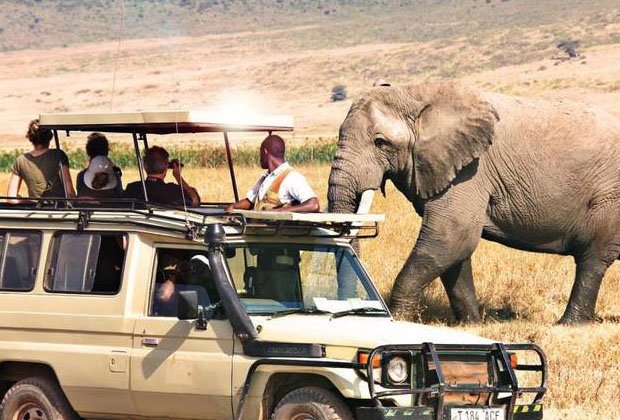
Best Time To Visit Tarangire National Park For Elephant Sightings 2026-2027
Best Time to Visit Tarangire National Park for Elephant Sightings is explained with current 2026-2027 planning, price, itinerary and booking information.
View package details
How Much Does A Tarangire Day Trip Cost From Moshi? 2026-2027
How Much Does a Tarangire Day Trip Cost from Moshi? is explained with current 2026-2027 planning, price, itinerary and booking information.
View package details
Can I See Large Elephant Herds In Tarangire National Park? 2026-2027
Can I See Large Elephant Herds in Tarangire National Park? is explained with current 2026-2027 planning, price, itinerary and booking information.
View package details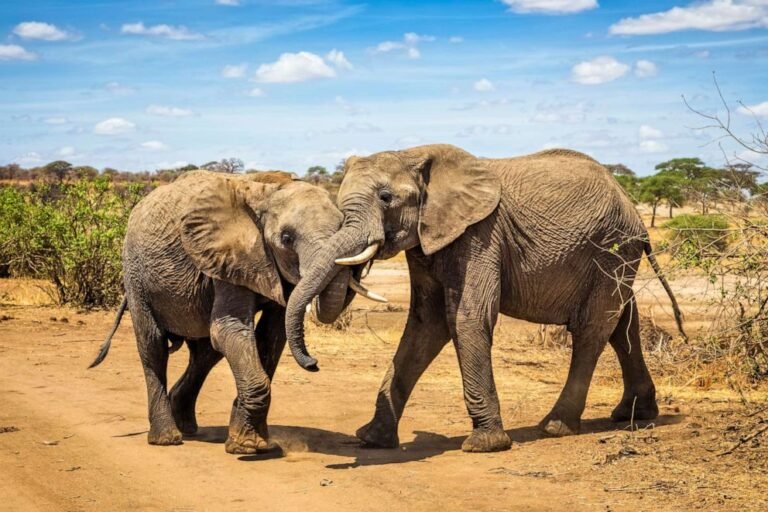
Is Tarangire National Park Worth Visiting For One Day? 2026-2027
Is Tarangire National Park Worth Visiting for One Day? is explained with current 2026-2027 planning, price, itinerary and booking information.
View package detailsNo closely related package is available yet for this topic.

Our Guest Reviews, Currently Feedback from Clients in 2026
Reviews from different sources, including Google Business, Tripadvisor, other platforms, and social media.



