
Joining a group safari in Tanzania saves between 30% and 60% compared to booking an identical private itinerary, translating to direct cash savings of $150 to $450 per person per day. On classic Northern Circuit routes spanning Tarangire, Ngorongoro Crater, and the Serengeti departing from Arusha or Moshi, a budget group-joining camping trip runs roughly $200 to $280 per person daily, while an entry-level mid-range lodge group trip averages $350 to $480 per day. In contrast, a solo traveler booking a private vehicle pays upwards of $600 to $900 daily, and a traveling couple pays roughly $450 to $650 per person daily because vehicle transit fees, fuel, driver-guide day rates, and crater descent permits are absorbed individually rather than split across 4 to 6 window-seat occupants.

The Direct Math: Why Vehicle Dynamics Determine Your Daily Savings
To understand exactly how much you can save by joining a group safari in Tanzania, you first have to grasp the brutal economics of moving a customized 4×4 overland vehicle across the East African wilderness. In northern Tanzania, whether you are traversing the dusty tracks of Tarangire National Park or bumping across the endless plains of the Serengeti, your base operational cost is dictated by one central asset: a heavy-duty, long-wheelbase Toyota Land Cruiser with an extended chassis, heavy suspension, pop-up roof, and VHF radio.
Running that vehicle incurs significant daily operational baseline costs regardless of whether there is one person sitting inside or six. A professional safari-ready Land Cruiser rents out at an operational base rate of $200 to $300 per day. That base expense covers the vehicle hire, the high commercial insurance required by local transport authorities, the driver-guide’s certified daily wage and sustenance allowance, and relentless wear-and-tear from washboard gravel roads. On top of that, fuel consumption across thousands of square kilometers of rough wilderness adds an average of $70 to $120 per day in diesel.
When you opt for a private vs group joining Tanzania safari cost comparison, this vehicle-and-guide overhead is the precise pivot point where your budget either balloons or stabilizes:
- For a Solo Traveler: If you hire a private vehicle and driver, you bear 100% of that $270 to $420 daily operational cost completely on your own, before setting foot in a park or booking a single night’s sleep.
- For a Couple: You divide that vehicle expense by two, which means you are still subsidizing roughly $135 to $210 per person per day just to keep the wheels turning and the guide behind the wheel.
- In a Group Joining Departure: When you book a seat through an operator matching like-minded travelers—such as standard departures capped at 5 to 6 passengers—that entire $270 to $420 baseline gets divided across all seats. Each passenger’s share of the vehicle, fuel, and guide fees plummets to just $45 to $70 per day.
That single vehicle split immediately yields a clean baseline saving of $90 to $350 per day for an individual traveler. Across a typical 5-day or 7-day Northern Circuit route, that mechanism alone puts anywhere from $450 to $2,450 back into your bank account.
Fixed Park Fees vs. Shared Operational Costs: What Changes and What Stays Flat
Many travelers planning their 2026-2027 Tanzania safari budget mistakenly believe that joining a group slashes every line item in half. In reality, Tanzanian safari costs fall into two distinctly separate financial categories: statutory individual fees that are legally untouchable, and shared collective expenses that shrink with vehicle occupancy.
Critical Budgeting Principle: Conservation authorities such as the Tanzania National Parks Authority (TANAPA) and the Ngorongoro Conservation Area Authority (NCAA) levy their statutory conservation fees per person, per 24-hour cycle. These fees do not care whether you arrive in a 30-vehicle convoy or alone; every international adult pays the statutory fee plus 18% Value Added Tax (VAT).
Here is how the breakdown works on paper across the classic Northern Circuit:
1. The Non-Negotiable Individual Costs (You Cannot Save Here)
- Park Entry / Conservation Fees: Serengeti National Park charges approximately $70 to $82.60 per adult per 24 hours depending on the season (peak versus low), inclusive of VAT. Tarangire and Lake Manyara charge roughly $59 per adult per 24 hours. These fees are identical for private guests and group members.
- Public Campsite or Concession Fees: If you are camping inside public parks, TANAPA charges roughly $35.40 per person per night. If you are staying in a lodge or seasonal tented camp inside park boundaries, the special campsite/concession fee adds between $59 and $70.80 per adult per night to your bill. Joining a group does not reduce this state-mandated accommodation tax.
- Individual Meals and Accommodation Charges: Whether you sleep in a two-person dome tent or an en-suite tented lodge, the actual bed and board charges calculated by the lodge or safari camp are quoted per guest.
2. The Highly Compressible Shared Expenses (Where You Save Massively)
- Ngorongoro Crater Service Fee: The NCAA levies a separate descent fee of $295 per vehicle (including VAT) for each single descent into the crater floor, limited to a six-hour game drive window. In a private safari carrying a solo traveler, that $295 is paid entirely by one traveler. In a group of six, that cost drops to less than $50 per person—instantly stripping $245 off that single day’s excursion.
- Driver-Guide Daily Allowances: A skilled professional guide with deep track-spotting knowledge commands an industry-standard daily day-rate, overnight lodge/camp crew allowance, and park access levy. Splitting this crew overhead across 4 to 6 people reduces the cost burden to a minor daily surcharge.
- Vehicle Commercial Park Entry Fees: Vehicles entering Tanzanian national parks must pay weight-based entry tariffs (typically around $23.60 to $41.30 per day depending on tare weight). Grouping together ensures this vehicle entry ticket is shared rather than borne individually.
- Safari Cook Wages (Camping Itineraries): For budget shared camping departures, a dedicated camp cook accompanies the vehicle to prepare three hot meals daily, wash dishes, and pitch public site tents. Splitting the cook’s daily wage across five or six guests makes full-board catering extraordinarily cheap compared to private private-chef deployments.
Head-to-Head Comparison: Group Joining vs. Private Safari Prices (2026-2027 Estimates)
To evaluate the realistic scope of your total savings, look at the following realistic pricing landscape. These operational estimates reflect typical market rates for well-maintained, safety-inspected vehicles and certified guides covering standard northern itineraries across Tarangire, Lake Manyara, Ngorongoro Crater, and the Serengeti.
| Safari Format & Duration | Private Safari (Solo Traveler) | Private Safari (2 Traveling Together) | Group Joining (4-6 per Vehicle) | Typical Savings by Joining a Group |
|---|---|---|---|---|
| 3-Day Express (Tarangire, Ngorongoro, Manyara) – Basic Camping | $1,450 – $1,800 | $850 – $1,050 pp | $580 – $690 pp | Solo: Save up to 60% ($870+) Couple: Save 30%–35% ($270+ pp) |
| 4-Day Classic (Serengeti & Ngorongoro Crater) – Budget Camping | $2,100 – $2,550 | $1,200 – $1,450 pp | $790 – $960 pp | Solo: Save up to 62% ($1,300+) Couple: Save 32%–35% ($400+ pp) |
| 5-Day Comprehensive (Tarangire, Serengeti, Crater) – Mid-Range Tented Lodges | $3,800 – $4,600 | $2,200 – $2,700 pp | $1,550 – $1,950 pp | Solo: Save 50%–58% ($2,250+) Couple: Save 25%–30% ($650+ pp) |
| 7-Day Full Northern Circuit – Comfort Mid-Range Lodges | $5,400 – $6,600 | $3,100 – $3,800 pp | $2,200 – $2,700 pp | Solo: Save up to 58% ($3,200+) Couple: Save 26%–30% ($900+ pp) |
As the table demonstrates, total monetary savings scale directly with the length of the safari and the baseline travel party size. While a couple traveling together can easily save $800 to $1,800 total by joining a scheduled departure instead of booking a private guide, a solo explorer frequently pockets $1,300 to well over $3,000 in raw savings on standard multi-day circuits.
For travelers planning their route logistics, checking fixed-date options such as the Tanzania safari group departures table lets you cross-reference seasonal departures with these exact pricing tiers.
Solo Travelers vs. Couples: Calculating Who Saves the Most
The financial incentive to join a shared group safari is not evenly distributed across all traveler demographics. Your baseline group size dictates your financial leverage before booking.
The Solo Traveler Reality: Avoiding the Solo Penalty
In standard safari logistics, traveling solo is an expensive luxury. Most international visitors do not realize that booking a private safari as a solo person means paying for an empty vehicle, an underutilized guide, and an empty front passenger seat. Outside of shared groups, a solo traveler routinely faces an effective surcharge of 80% to 120% over per-person rates quoted for duos.
By securing a seat on a Tanzania safari for solo travelers with daily group departures, the single traveler escapes the punitive vehicle penalty entirely. Instead of paying $700 per day for an exclusive game drive setup, you slide into an established departure for $200 to $390 per day.
Solo Traveler Savings Breakdown
- Zero Vehicle Monopolization Cost: You pay 1/6th of vehicle fuel, crater descent, and guide tariffs.
- Accommodation Flexibility: On basic camping group departures, you sleep in your own single dome tent without paying any single supplement fee.
- Lodge Single Supplement Management: If joining a lodge-based group, you either pay a modest single-room fee or opt into a twin-share match with another traveler of the same gender to eliminate lodging surcharges completely. For specific lodging policies, review details on joining a safari group without sharing a hotel room.
Couples and Pairs: The Balance of Cost vs. Autonomy
For couples, honeymooners, or pairs of friends, the calculus shifts slightly. A party of two is already splitting the vehicle and fuel costs in half. Thus, shifting from a private tour to a group departure saves an average of 25% to 35% per person, rather than the 55% saved by a solo traveler.
On a 5-day lodge itinerary, a couple paying $2,400 per person privately might pay $1,700 per person in a shared vehicle. The net saving for the couple combined is roughly $1,400. Here, the decision often hinges on personal travel priorities: is holding onto $1,400 worth sharing vehicle space, compromising on personalized wake-up times, and coordinating game drive duration with four strangers? For budget-conscious couples, the answer is an easy yes—those saved funds routinely pay for a relaxing follow-on beach week in Zanzibar or international flights.
The Real Trade-offs: What You Compromise to Save 35% to 55%
Transparent local operators will never tell you that a group safari offers the exact same flexibility as a bespoke private safari. When you save hundreds or thousands of dollars by sharing a vehicle, you are fundamentally trading personal autonomy for collective efficiency. Understanding these practical compromises beforehand ensures you don’t face unwanted surprises on the trail.
1. Strict Fixed Timing and Itinerary Inflexibility
On a private safari, if you encounter a pride of lions stalking a zebra herd at 11:30 AM in the Seronera Valley, you can instruct your guide to stay parked in position for three hours straight until the hunt plays out. You can also decide to leave camp at 5:30 AM for first light or stay back until 8:30 AM if you prefer a slow breakfast.
In a shared group safari, the vehicle operates on a democratic, scheduled consensus. If two members of the vehicle want to stay watching the lions, but three others are eager to press on toward the Mara River or need a bathroom stop at a TANAPA visitor center, the guide must prioritize the overall timetable. Game drives adhere to standardized morning and afternoon departures to ensure the itinerary covers promised park sectors on schedule.
2. Luggage Restrictions in the Land Cruiser
A classic extended safari Land Cruiser has seating for six to seven passengers in the main passenger cabin, plus a dedicated rear luggage compartment. When every seat is occupied, space in the boot becomes extremely tight. Group departures enforce strict baggage rules:
- Soft-Sided Duffels Only: Hard suitcases with rigid frames are difficult to stack and frequently will not fit into the rear storage cage when five or six people are onboard.
- Weight Ceilings: Most shared departures require passengers to limit their main luggage to 15 kg (33 lbs) per person, plus a small personal daypack for cameras and fleece jackets inside the seating cabin. Private tours allow far more leeway because unused seats double as luggage space.
Check Availability for How Much Can I Save By Joining A Group Safari In Tanzania? 2026-2027
Ready to compare dates, prices, and the best option for your group? Send the package name and travel month so the team can reply with a clear quote, availability, and what is included.

Tanzania Safari Group Joining Departures In January 2026-2027
Tanzania Safari Group Joining Departures in January 2027 is explained with current 2026-2027 planning, price, itinerary and booking information.
View package detailsTanzania Safari Group Joining Tours For Couples And Friends 2026-2027
Tanzania Safari Group Joining Tours for Couples and Friends is explained with current 2026-2027 planning, price, itinerary and booking information.
View package details
Tanzania Group Joining Safari Tours With Airport Pickup 2026-2027
Tanzania Group Joining Safari Tours with Airport Pickup is explained with current 2026-2027 planning, price, itinerary and booking information.
View package details
Where Can I Find Tanzania Safari Group Joining Tours With Fixed Dates?
Where Can I Find Tanzania Safari Group Joining Tours with Fixed Dates? is explained with current 2026-2027 planning, price, itinerary and booking information.
View package details
Private Vs Group Joining Tanzania Safari Cost Comparison 2026-2027
Private vs Group Joining Tanzania Safari Cost Comparison is explained with current 2026-2027 planning, price, itinerary and booking information.
View package details
How Many People Share A Vehicle On A Tanzania Group Safari? Guide 2026-2027
A comprehensive operational breakdown of vehicle capacity, passenger seating arrangements, window seat guarantees, and luggage space on Tanzania group joining safaris for 2026 and 2027.
View package details
Tanzania Safari Group Departures With Shared Camping Accommodation 2026-2027
A comprehensive operational guide to Tanzania safari group departures featuring shared public campsite accommodation across the Northern Circuit for 2026-2027.
View package details
Can I Join A Safari Group From Moshi Instead Of Arusha? 2026-2027
Can I Join a Safari Group from Moshi Instead of Arusha? is explained with current 2026-2027 planning, price, itinerary and booking information.
View package details
Tanzania Safari Packages For Solo Travelers Without Expensive Single
A comprehensive practical guide to booking Tanzania safari packages for solo travelers without paying punitive single supplements, covering group departures, room-share models, private...
View package details
Can I Join A Safari Group Without Sharing A Hotel Room? 2026-2027
Can I Join a Safari Group Without Sharing a Hotel Room? is explained with current 2026-2027 planning, price, itinerary and booking information.
View package details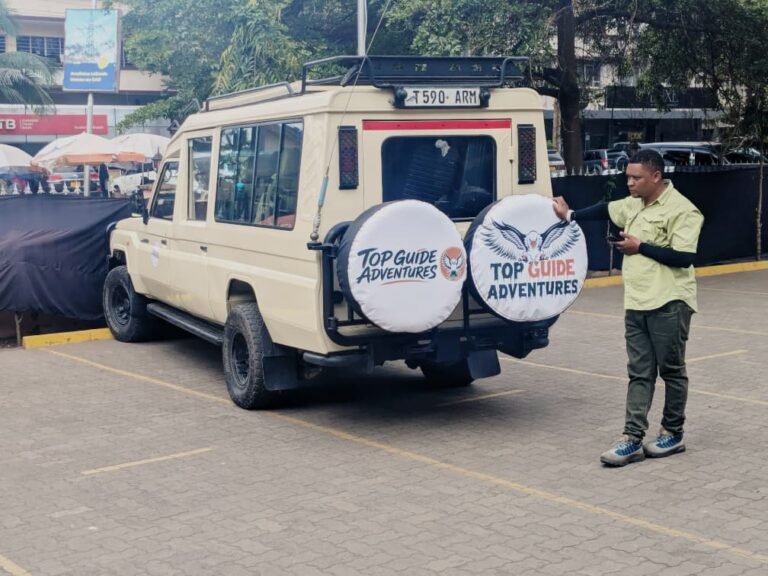
Affordable Tanzania Wildlife Safari Holidays For Small Groups 2026-2027
Affordable Tanzania Wildlife Safari Holidays for Small Groups is explained with current 2026-2027 planning, price, itinerary and booking information.
View package details
How Much Does A Luxury Tanzania Safari Cost Per Night? 2026-2027
How Much Does a Luxury Tanzania Safari Cost Per Night? is explained with current 2026-2027 planning, price, itinerary and booking information.
View package detailsNo closely related package is available yet for this topic.

Our Guest Reviews, Currently Feedback from Clients in 2026
Reviews from different sources, including Google Business, Tripadvisor, other platforms, and social media.



