
The 6 Days Marangu Kilimanjaro Full Moon Climb – 20–25 December 2026 is a classic hut-accommodated high-altitude trek that positions climbers to make their final midnight summit push from Kibo Hut (4,720 m) to Uhuru Peak (5,895 m) on the exact night of lunar fullness, 24 December 2026. Unlike camping routes, this departure utilizes fixed A-frame wooden cabins at Mandara, Horombo, and Kibo, eliminating ground tenting during the variable weather of late December. The total journey spans approximately 72 kilometers out-and-back from Marangu Gate, incorporating a vital acclimatization day at Horombo Hut (3,720 m) that significantly increases summit success over the compressed 5-day variation. Expect fully supported mountain logistical teams, comprehensive pulse oximeter monitoring, emergency medical oxygen, and peak season pricing between $2,250 and $2,780 USD per climber depending on group size.
Astronomical Timing: Lunar Illumination on Christmas Eve 2026
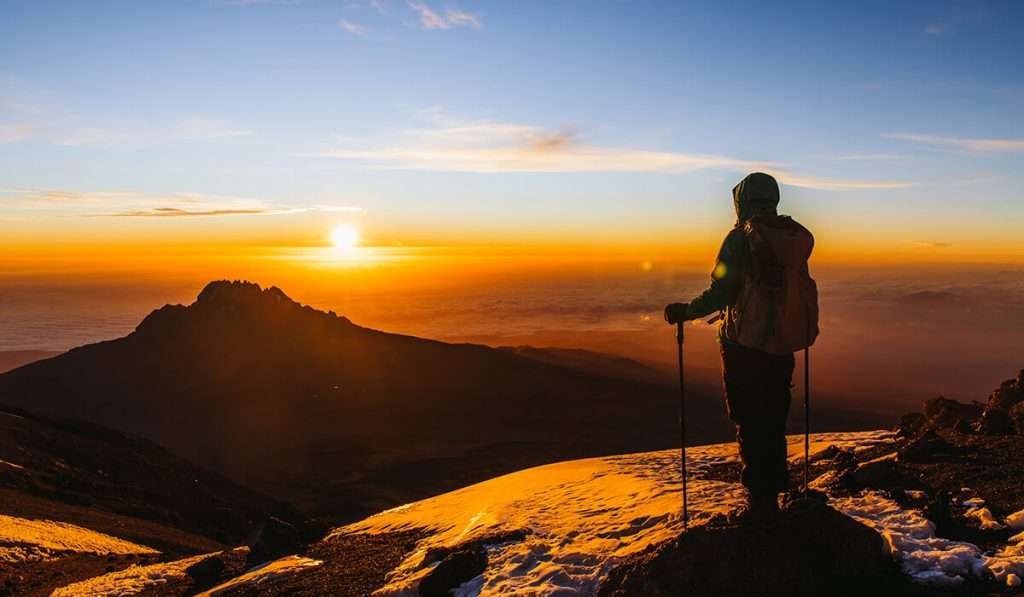
Trekking under a full moon on Mount Kilimanjaro transforms the final midnight ascent from an insular, headlamp-focused grind into an expansive traverse across a glowing volcanic amphitheater. In December 2026, the astronomical full moon peaks on the afternoon of 24 December 2026. For climbers following a standard 6-day itinerary starting on 20 December, this timing is mathematically ideal.
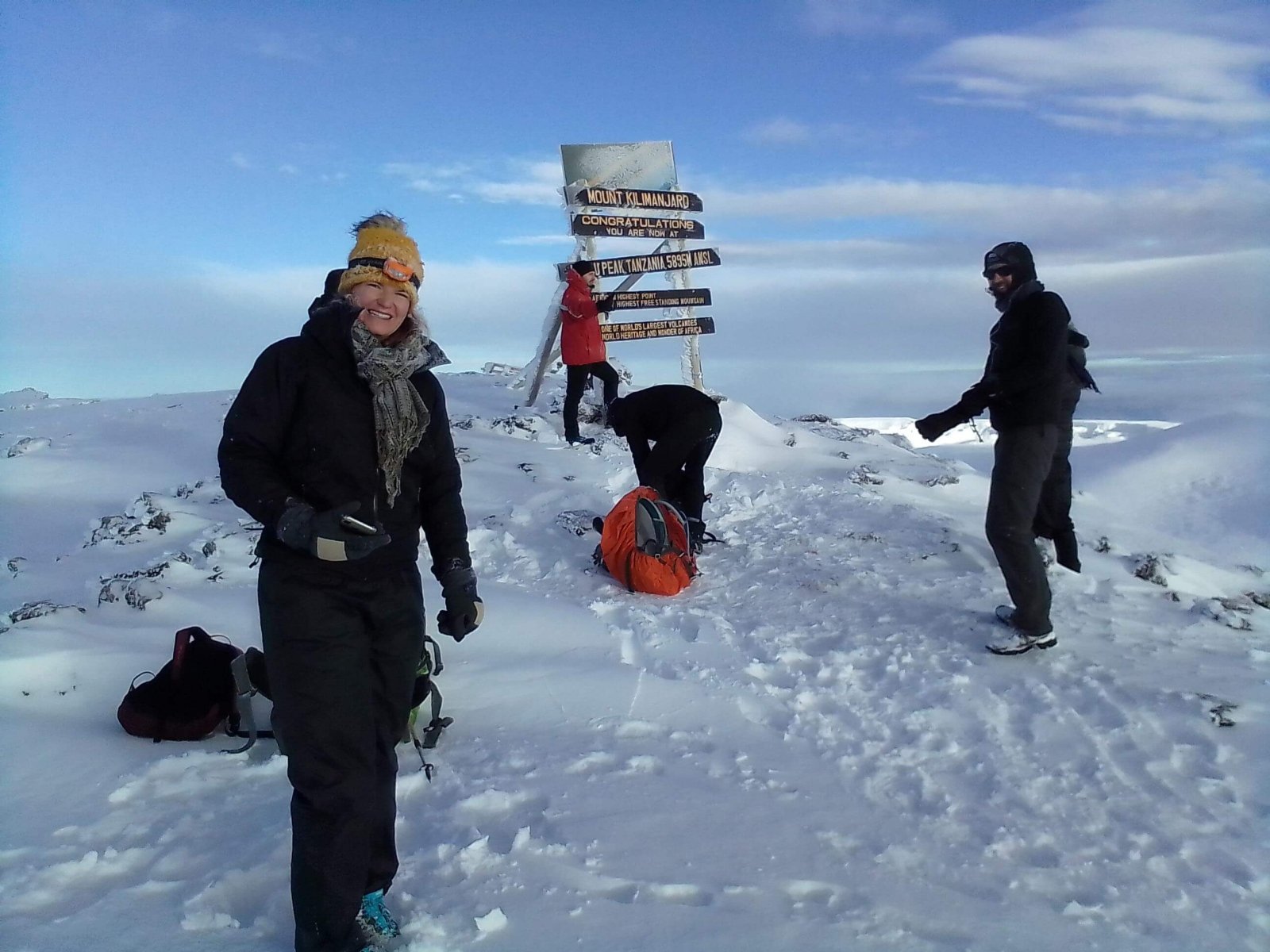
You will depart Kibo Hut at roughly 23:30 on the night of 23 December or the earliest hours of 24 December. As you climb past Hans Meyer Cave (5,150 m) and navigate the steep switchbacks toward Gilman’s Point (5,681 m), the moon hangs high over the plains below, casting silvery reflections across the Mawenzi peaks and the upper glaciers. Trekkers routinely turn their headlamps off entirely on the open scree slopes above the Saddle. The psychological benefit of seeing the terrain ahead rather than being confined to an eight-foot circle of battery light cannot be overstated.
Timing this ascent during Christmas week also carries logistical nuances. The holiday period is one of the two major annual booking spikes in Tanzania. While wilderness camping itineraries like the 8 Days Machame Kilimanjaro Full Moon Climb – 18–25 December 2026-2027 or the 6 Days Machame Kilimanjaro Full Moon Climb – 20–25 December 2026-2027 experience high congestion across shared tenting platforms, the Marangu route is constrained strictly by bed capacity at the huts. This makes the route feel structured, but it mandates securing hut allocations months in advance through the Tanzania National Parks Authority (TANAPA).
The 6-Day Strategic Advantage: Acclimatization vs. 5-Day Itineraries
The Marangu route was historically marketed as a 5-day route, earning the misguided reputation of being an easy trail. In reality, attempting to ascend from Marangu Gate (1,870 m) to Uhuru Peak (5,895 m) in five days leaves an unacceptably high percentage of climbers suffering from Acute Mountain Sickness (AMS). The compressed schedule skips critical staging, forcing an ascent of over 4,000 vertical meters in just 80 hours.
The 6-day profile adds a mandatory acclimatization day at Horombo Hut (3,720 m) on Day 3. This single operational change fundamentally alters blood oxygen saturation rates and cardiac resting stability before climbers confront the barren, low-pressure expanse of the Alpine Saddle.
Comparative Metrics: 5-Day vs. 6-Day Marangu Departures
- Acclimatization Day: The 6-day itinerary inserts an active rest day at Horombo Hut with a conditioning hike to Zebra Rocks (4,020 m), stimulating erythropoietin (EPO) production; the 5-day itinerary marches directly to Kibo Hut without intermediate altitude pauses.
- Uhuru Peak Success Rate: Historically, 5-day climbers log summit success rates below 50-55%. The additional day on the 6-day route boosts historical group success beyond 75-80% under standard weather conditions.
- Physiological Impact: Skipping the Horombo rest day forces climbers to jump from 3,720 meters straight into the high-altitude zone at Kibo (4,720 m), leading to rapid onset headaches, nausea, and early summit abandonment.
- Alternative Dates: Climbers who are severely restricted by time sometimes inspect the 5 Days Marangu Kilimanjaro Full Moon Trek – 21–25 December 2026-2027 or the 5 Days Marangu Kilimanjaro Christmas Trek – 22–26 December 2026-2027, but Top Guide Adventures consistently advises the 6-day layout for physical safety and summit certainty.
When trekking the Marangu trail during the 2026-2027 season, planning for that auxiliary 24 hours at Horombo is the clearest boundary between enduring an agonizing evacuation and safely standing on the crater rim as the full moon sinks beneath the western horizon.
2026-2027 Pricing, Fixed Costs, and Park Fee Realities
Kilimanjaro climb pricing is dictated by non-negotiable statutory fees levied by TANAPA, combined with ethical crew provisioning, transport, safety apparatus, and hut maintenance surcharges. Understanding the cost breakdown clarifies why bargain-rate operators often compromise on guide licensing, porter nutritional allocations, or emergency safety gear.
For the 6 Days Marangu Kilimanjaro Full Moon Climb – 20–25 December 2026, realistic market pricing sits between $2,250 and $2,780 USD per person for small private groups (2–4 trekkers) or scheduled group departures. Solo climbers naturally incur higher transport and guide-ratio surcharges, landing closer to $2,890 to $3,150 USD.
Estimated Cost Framework (Per Climber, USD – 2026-2027 Cycle)
| Expense Category | Estimated Range (USD) | Operational Detail |
|---|---|---|
| TANAPA Mandatory Fees | $1,120 – $1,250 | Includes daily conservation fees, hut accommodation fees, rescue fees, and 18% Tanzanian VAT. |
| Crew Logistics & Wages | $650 – $800 | Licensed head guide, assistant guides, camp chef, and registered porters adhering to fair wage regulations. |
| Medical & Safety Apparatus | $120 – $180 | Continuous pulse oximeters, baseline medical kits, emergency oxygen bottles, and hyperbaric access protocols. |
| Sanitation & Food Supply | $200 – $280 | Three hot cooked meals daily, purified mountain drinking water, dining cabin logistics, and waste control. |
| Transfers & Coordination | $160 – $270 | Private round-trip road transfers between Moshi/Arusha hotels and Marangu Gate. |
| Total Realistic Cost | $2,250 – $2,780 | Mid-range, fully supported ethical standard (excludes hotel nights before/after and crew tips). |
When assessing pricing for late December 2026, keep in mind that December is a high-demand logistical window. Airport pickups at Kilimanjaro International Airport (JIA/JRO) and hotel nights in Moshi should be locked in alongside route bookings. Those considering neighboring departure dates can also review our alternative December timelines such as the 6 Days Marangu Kilimanjaro Hut Trekking – 6–11 December 2026-2027 or post-holiday options like the 6 Days Marangu Kilimanjaro New Year Climb – 28 December – 2 January 2026-2027.
Cabin Realities: What Sleeping at Mandara, Horombo, and Kibo Entails
The distinctive feature of the Marangu route is its built infrastructure. Unlike all other Kilimanjaro routes (Machame, Lemosho, Rongai, Northern Circuit) where you sleep on ground sleeping mats inside mountain tents, Marangu routes host climbers inside communal wooden huts. This brings distinct benefits during December, alongside unique environmental factors you must manage.
Mandara Huts (2,700 m)
Located in the montane rainforest belt, Mandara consists of several A-frame timber chalets. Each cabin typically accommodates 4 to 8 people on basic bunk beds fitted with dense foam mattresses covered in heavy-duty vinyl. Solar-powered lighting is present in the main dining hall, though charging ports should not be relied upon. Ablution blocks feature communal flush toilets and sinks with cold running mountain water. The surrounding canopy retains moisture, meaning wet boots and outer layers do not dry quickly here; keeping your gear inside waterproof dry bags is essential.
Horombo Huts (3,720 m)
Positioned on an open heath ridge overlooking the plains and flanked by the dramatic spires of Mawenzi, Horombo is the largest hut settlement on the mountain. Because climbers both ascending and descending converge here, the complex can house up to 120 guests alongside their support crews. The sleeping quarters are multi-bed wooden chalets. At 3,720 meters, nightly temperatures drop toward freezing (0°C to -4°C) in late December. Cold running tap water is available outside the cabins, and modern flush toilets have replaced historical pit latrines in the main blocks. Earplugs are mandatory gear here: the sound of boots on wooden floors, rustling synthetic gear, and neighboring hikers coughing due to dry air can interrupt sleep.
Kibo Hut (4,720 m)
Kibo is not a cluster of romantic chalets; it is a spartan, thick-walled stone shelter built to withstand alpine desert gale-force winds and extreme cold. Sleeping rooms are large dormitory-style chambers with double-decker bunks containing up to 10–12 climbers per section. There is no running water at Kibo; all water for drinking, cooking, and hand washing is hauled up from the Last Water Point below Horombo by your porter crew. Temperatures inside Kibo regularly sink well below zero Celsius at night. You will only sleep here for roughly 4 to 5 hours on Day 4 before your midnight summit wake-up call, making thermal efficiency, a high-quality 4-season sleeping bag (-10°C to -20°C rating), and mental focus paramount.
Check Availability for 6 Days Marangu Kilimanjaro Full Moon Climb – 20–25 December 2026-2027
Ready to compare dates, prices, and the best option for your group? Send the package name and travel month so the team can reply with a clear quote, availability, and what is included.
5 Days Marangu Kilimanjaro Full Moon Trek – 21–25 December 2026-2027
5 Days Marangu Kilimanjaro Full Moon Trek – 21–25 December 2026 is explained with current 2026-2027 planning, price, itinerary and booking information.
View package details
6 Days Machame Kilimanjaro Full Moon Climb – 20–25 December 2026-2027
6 Days Machame Kilimanjaro Full Moon Climb – 20–25 December 2026 is explained with current 2026-2027 planning, price, itinerary and booking information.
View package details
6 Days Marangu Kilimanjaro New Year Climb – 28 December – 2 January 2026-2027
6 Days Marangu Kilimanjaro New Year Climb – 28 December 2026 – 2 January 2027 is explained with current 2026-2027 planning, price, itinerary and booking.
View package details5 Days Marangu Route Kilimanjaro Group Climb – 8–12 December 2026-2027
5 Days Marangu Route Kilimanjaro Group Climb – 8–12 December 2026 is explained with current 2026-2027 planning, price, itinerary and booking information.
View package details
8 Days Machame Kilimanjaro Full Moon Climb – 18–25 December 2026-2027
8 Days Machame Kilimanjaro Full Moon Climb – 18–25 December 2026 is explained with current 2026-2027 planning, price, itinerary and booking information.
View package details
9 Days Lemosho Kilimanjaro Full Moon Climb – 17–25 December 2026-2027
9 Days Lemosho Kilimanjaro Full Moon Climb – 17–25 December 2026 is explained with current 2026-2027 planning, price, itinerary and booking information.
View package details
5 Days Marangu Kilimanjaro New Year Trek – 29 December – 2 January 2026-2027
5 Days Marangu Kilimanjaro New Year Trek – 29 December 2026 – 2 January 2027 is explained with current 2026-2027 planning, price, itinerary and booking.
View package details
5 Days Marangu Kilimanjaro Christmas Trek – 22–26 December 2026-2027
5 Days Marangu Kilimanjaro Christmas Trek – 22–26 December 2026 is explained with current 2026-2027 planning, price, itinerary and booking information.
View package details
5 Days Marangu Kilimanjaro December Trek – 19–23 2026-2027
5 Days Marangu Kilimanjaro December Trek – 19–23 December 2026 is explained with current 2026-2027 planning, price, itinerary and booking information.
View package details6 Days Marangu Kilimanjaro Group Hiking – 9–14 December 2026-2027
6 Days Marangu Kilimanjaro Group Hiking – 9–14 December 2026 is explained with current 2026-2027 planning, price, itinerary and booking information.
View package details
6 Days Marangu Kilimanjaro Hut Trekking – 6–11 December 2026-2027
6 Days Marangu Kilimanjaro Hut Trekking – 6–11 December 2026 is explained with current 2026-2027 planning, price, itinerary and booking information.
View package details5 Days Marangu Route Kilimanjaro Trek – 2–6 December 2026-2027
5 Days Marangu Route Kilimanjaro Trek – 2–6 December 2026 is explained with current 2026-2027 planning, price, itinerary and booking information.
View package detailsNo closely related package is available yet for this topic.

Our Guest Reviews, Currently Feedback from Clients in 2026
Reviews from different sources, including Google Business, Tripadvisor, other platforms, and social media.